Languages
Friday, October 9, 2026



News and Views from the Global South
Women & Economy

Native Women Bring Solar Energy to Chile’s Atacama Desert
Three indigenous communities from the Chilean highlands have just received solar panels, which will be set up and maintained by unlikely solar engineers: five native women who travelled halfway around the world to India and overcame language and other barriers to bring photovoltaic energy to their villages.
‘Every Day Is a Fukushima Memorial’
Japan prepares to mark the second anniversary of the Mar. 11 triple disaster - an earthquake, tsunami and a critical nuclear reactor accident - with much soul searching across the country.
Women Entrepreneurs Overcoming Barriers in Mexico
The culture of entrepreneurship is weak among women in Mexico, despite the positive influence that it has on women’s development, in a world where women continue to face greater obstacles than men when it comes to setting up and running a business.
Q&A: “A Pastoralist Woman Is Like a Working Machine”
"In some communities, you can’t talk about violence against women," says Agnes Leina, executive director of Il'laramatak Community Concerns (ICC), a group that promotes the human rights of pastoralist communities in northern and southern Kenya, with a special emphasis on women and girls.
Gaza Women Suffer on ‘Their’ Day
“In Gaza we don't lead normal lives, we just cope, and adapt to our abnormal lives under siege and occupation,” says Dr. Mona El-Farra, a physician and a long-time human rights and women's rights activist in the Gaza Strip. On International Women's Day, when many of the world's women are fighting for workplace equality and an end to domestic violence, Farra and the majority of Gaza's women fight for the most basic of rights.
Guardians of Life and of the Earth
Around the world, but especially in the planet’s poorest regions, women represent a life force that renews itself daily, sometimes against all odds.
24 Nails Dug Into Body, Luckily
Lahandapurege Ariyawathie feels she got off lightly - if returning home with 24 nails embedded in your body is lucky.
No Rest for Weary Massage Workers
Times are tough in this Southeast Asian nation of 14 million people, where over 30 percent of the population lives below the poverty line of a dollar a day. Formal employment is hard to come by and many workers find themselves drifting in the murky waters of the “informal” market, where wages are unregulated and labour laws are seldom honoured.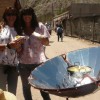
Carnival Food Carts Go Solar in Northern Argentina
It’s carnival time in sunny northwest Argentina, and as usual, food vending carts are everywhere. But some of the carts are different this year: they offer food cooked on the spot – by the sun.
Obama Pushes Universal Preschool Coverage for U.S.
Following on a surprise announcement supporting a universal preschool guarantee during his annual State of the Union address earlier this week, President Barack Obama spent much of Thursday pushing a suite of new policy initiatives aimed at vastly increasing access to high-quality education and development programmes for a child’s first few years of life.
Female Journalists Walk on Eggshells in Sri Lanka
The year was 1998 and porters at the wholesale vegetable market in the Sri Lankan capital Colombo had gone on strike, virtually suspending vegetable distribution in the city and its suburbs.
Spain’s Crisis Pits Fair Trade Against Empty Wallets
The Spanish public is well aware of the widespread exploitation of workers in the globalised garment industry. But low prices, shrinking buying power and the lure of brand names act as strong disincentives to responsible clothes shopping.
Japan Values Women Less – As It Needs Them More
Despite anti-discrimination laws and a steadily growing number of employed women, Japan is falling behind the rest of the world on gender equality. Widespread discrimination persists, and has only grown more subtle over the past years.
Rural Water Projects Depend on Women
During the dry season, when dirt roads are cracked from the relentless heat, the sight of women walking miles, balancing pots of water on their heads, is common in rural Sri Lanka.
New Push for U.S. to Ratify Major Women’s Treaty
The United States continues to be in the dubious company of six countries that have either refused or are reluctant to ratify the landmark U.N. Convention on the Elimination of All Forms of Discrimination Against Women (CEDAW).
The Rise of Ethiopia’s Sole Rebels
Innovative Ethiopian footwear manufacturer Sole Rebels will open its second retail outlet in Taiwan this year. With ambitions to open 30 more franchise stores across the world in countries like the United States, Australia, Italy and Japan, Sole Rebels, the largest African footwear brand, is now fast becoming a global competitive brand.
Women Demand Equality in Papua New Guinea
 Papua New Guinea, the most populous nation in the Pacific Islands, is ranked 153 out of 187 countries worldwide for gender equality, which is evident in education, employment, health and political representation.
War Widows Struggle in a ‘Man’s World’
Sita Tamang’s husband went missing sometime in 2004, two years before Nepal’s civil war came to an end. A native of Dharan, a town about 600 kilometres southeast of Kathmandu, Tamang waited seven years after his disappearance before she tried to claim compensation offered by the government after a 2006 peace deal ended this country’s bloodshed.
Q&A: The Challenges of Women’s Empowerment and Equality
Today, approximately 125 countries have laws that penalise domestic violence - a great advance from a decade ago. Yet 603 million women around the world still live in countries where domestic violence is not a crime, and up to seven in ten women are targeted for physical or sexual violence, or both.
Longer Lives, Lower Incomes for Japanese Women
When Hiroko Taguchi retired this past April, at the age of 64, from her job as an insurance sales agent, she joined the rapidly growing ranks of Japan’s aging women who now outnumber their male counterparts.Immigrant Caregivers in Spain Hit Hard by Crisis
“It’s really painful to work and not get paid. And I can’t report them, because I don’t have documents, or a contract,” Rossana, one of the many immigrant women working as domestic employees and caregivers in Spain, told IPS.« Previous Page — Next Page »





Around the world, women make great contributions to different economies. From the field of business, to carrying the bulk of unpaid care, women are essential to economic growth. However, due to gender inequality, women face economic discrimination. Taking many forms, including disproportionate wages, greater exposure to vulnerable employment, and reduced economic opportunity, this inequality continues to curtail economic development. Yet women continue to work past these obstacles and reduce this disparity, furthering economic empowerment. These stories help to identify women’s economic struggles, and those that are working towards empowerment.

The Week with IPS

NEXT STOP - SDGs
Tracking global progress towards a sustainable world
Tracking global progress towards a sustainable world
