
Thursday, October 22, 2026



News and Views from the Global South
Women in Politics

Why Are Women Shut Out of Peace Talks?
Against the backdrop of an upcoming U.N. Security Council (UNSC) meeting on women, peace and security, a coalition of some 63 international women's groups and non-governmental organisations (NGOs) has decried the absence of women during peace negotiations in post-conflict situations.
Using the Airwaves to Empower Quechua Women in Bolivia
"Atispa mana atispa ñawpajman rinanchis tiyan" ("Power without power, we have to keep moving forward”) in the Quechua language, Ruth Rojas told her listeners at the end of a series of radio programmes on political culture, broadcast to indigenous women in Bolivia.
Young Women Face Double Whammy in Pacific Islands
With youth populations growing faster than jobs in the Pacific Islands, young women, who are also confronting social pressures to conform to traditional gender roles, account for the highest rates of unemployment in most countries.
Q&A: Honouring the Silent Courage of Afghan Women
Violence against women is internationally recognised as a threat to democracy, a burden on national economies, and a serious human rights violation.
Security Council Vow on Women Lives Mostly on Paper
When the U.N. Security Council (UNSC) adopted a landmark resolution numbered 1325 back in 2000, it was supposed to integrate gender into its core mandate: the establishment and maintenance of international peace and security.
Tough Foreign Policy Challenges for Somalia’s “Iron Lady”
As little-known politician Fauzia Yusuf Haji Adan was sworn in as Somalia's first female foreign minister and deputy prime minister on Monday Nov. 19, the stateswoman who hails from the unrecognised, self-proclaimed republic of Somaliland is tipped to become the country’s “Iron Lady”.

Q&A: “They Demanded I Behave. I Decided Not To”
Khadija Ismayilova has been threatened with blackmail by her own government. She has been branded an "enemy of the state", mainly for her exposés of official corruption.
It Was the Demographics, Stupid
Twenty years ago, Democratic pol James Carville immortalised the phrase “It’s the economy, stupid” in explaining how former Arkansas governor Bill Clinton would unseat President George H. W. Bush, who was riding high off his smashing military victory in the first Gulf War.
Brazil Emerging as Key Player at U.N.
When a U.N. member state agrees to hold an international conference in its capital, the host country is not only offered the privilege of chairing the mega meeting but also given pride of place as the keynote opening speaker.
Keeping the Veil on Women’s Electoral Participation
Cameroon’s new biometric registration of voters may end up disenfranchising many potential voters, especially women in the country’s predominantly Muslim north where cultural practices may prevent them from having their photos taken.
Sierra Leone – Women Shoot Themselves in the Foot in Elections
Only 38 women - of a total of 586 candidates - will contest parliamentary seats in Sierra Leone’s November elections, and the blame for this can be laid squarely on the shoulders of the current group of female lawmakers, according to Barbara Bangura, the director of the women’s organisation Grassroots Empowerment for Self Reliance.
Q&A: Exposing the Good, the Bad and the Lack of Media Freedom
Pansy Tlakula, the African Union's Special Rapporteur on Freedom of Expression and Access to Information, has done her best to address the continued harassment of journalists in the Gambia.
Q&A: Kenyan Women Set to Take on Men in Elections
As Kenya gets ready for voter registration this month, ahead of the country’s Mar. 4, 2013 polls, women’s rights organisations are hoping that the provisions for gender equality in the new constitution will mean significantly increased representation in the government.
Algeria Skips the Revolutionary Spring
As the Arab Spring continues to rage across the Middle East and North Africa, the gaze of the international media has largely passed over a country that was once known for its restive population, its long and bloody decolonisation struggle and revolutionary zeal.
Egypt Revolution Makes It Worse for Women
During the uprising that toppled Egyptian dictator Hosni Mubarak women stood shoulder to shoulder with men in Cairo’s Tahrir Square, pressing the revolution’s demands for freedom, justice and dignity. But those who hoped the revolution would make them equal partners in Egypt’s future claim they may be worse off now than under Mubarak’s authoritarian rule.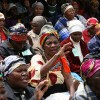
Entrepreneurs and Women: Keys to Growth in Africa
The international financial crash of the late 2000s created more than a global economic recession: it accentuated popular doubts about the paradigms on which our economies are built and prompted a closer look at two crucial drivers of economic growth: women and entrepreneurship.
Cooperatives Help Women Farmers Tighten Ranks
It is a tried and tested truth that when women come together in groups they can address their issues more powerfully than they can as individuals.
Violence Against Women Surging in India
As gender-based violence across India becomes more frequent, and more savage, increasing numbers of women are speaking out against the cruelty.
Q&A: Disaster Resilience Starts with Grassroots Women
Women and girls can be powerful agents of change, but they are disproportionately affected by disasters because of social roles, discrimination and poverty.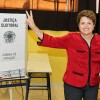
Brazil’s Gender Quota Law Off to Underwhelming Start
Brazil’s new law requiring that 30 percent of candidates must be women made a less than impressive debut in Sunday’s municipal elections, although female candidates for mayor made better headway than women running for town councils.
Q&A: Colombia’s FARC Guerrillas “Took Up Arms to Make Ourselves Heard”
It's hard to imagine her in guerrilla fatigues, carrying a 25-kg backpack and firing shots to repel an enemy attack, or diving for cover from aerial bombardment. She is known as Sandra Ramírez, and she has left the field of battle in Colombia to come to the Cuban capital to talk peace.« Previous Page — Next Page »





In societies throughout the world, women’s participation in political and leadership roles is limited. Underrepresented as voters and position holders, women are restricted at local and at global levels. A variety of obstacles bar women’s political participation. Reduced access to education in many countries, as well as weaker political connections make it more difficult for women to enter the political stage. In addition, there are many discriminatory laws that severely reduce the opportunity for women to gain leadership positions. As has been seen, there are many individuals who have overcome these obstacles with great success. There have been great strides to increase women’s political participation. In the last 20 years, the percentage of women in parliamentary positions has nearly doubled. This promising, albeit slow progress, is necessary to empower women and reduce gender inequality. These articles look at various aspects of women’s participation politics.

The Week with IPS

Tracking global progress towards a sustainable world
