Languages
Friday, November 13, 2026



News and Views from the Global South
Headlines
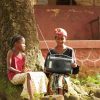
When Girls Have Access to Technologies, A True Digital Revolution Will Be In Sight
This year’s International Day of the Girl theme, Digital Generation, Our Generation, celebrates the potential of digital technologies while calling for the inclusion of all girls in accessing technology. The digital revolution will not be realized if girls without access to digital solutions are left behind. For years, advocates of technology for development have been repeating the mantra that technology is not a panacea. Yet in racing to connect, catch up, and create greater access, we ignore at our own peril the inconsistent or non-existent household- and community-level access girls have to technologies. While digital solutions are available and evolving all the time, they should be accompanied by hybrid methods which include new ways to use analog technologies, so that existing local resources are reimagined and redistributed in ways that support more girls learning.
UN Chief, in an Unprecedented War of Words, Battles it out with a Member State
A growing diplomatic battle is being played out at the United Nations between Secretary-General Antonio Guterres and one of the world body’s member states: the politically-troubled Ethiopia which is desperately in need of international humanitarian assistance.
Pandemic Highlights Urgent Need to Improve Sanitation in Brazil
Basic sanitation, a sector that is undervalued because, according to politicians, it does not bring in votes, has gained relevance in Brazil due to the pandemic that has hit the poor especially hard and the drought that threatens millions of people.
Rural Communities in El Salvador United to Supply Water for Themselves – VIDEO
 As the saying goes, united we stand, divided we fall, hundreds of families in rural communities in El Salvador are standing together to gain access to drinking water.

Mounting Scramble for Coronavirus Vaccines in Zimbabwe
More than a month ago, she lost her parents, brother, and wife, to the coronavirus. Then her fiancé battled COVID-19, but 27-year-old Melinda Gavi said she had not contracted the disease.
Build Forward Fairer in the Wake of the COVID-19 Pandemic
Cities have been epicentres of the COVID-19 pandemic since 2020. City authorities have been the frontlines responders—from running testing stations, to managing food distribution, to disposing of corpses. Yet they are often under-resourced, and their critical role in policy implementation is often overlooked.
Mangrove Blue Carbon for Climate Change Mitigation
Smelly, boggy, and full of bugs, mangroves’ superpowers are well hidden. However, there is rising confidence that mangroves are the silver bullet to combat the effects of climate change.
The CDC Turns Its Back on Migrants and Science
Last month, asylum-seeking families at the U.S.-Mexico border appeared to have won a victory, however temporary, in their last-ditch bid for safety in the United States. It was also a victory for evidence-based public health policy.
Where on Earth is a Water-Secure World?
It is not uncommon for a water-centric research, policy or development organization or network to declare its long-term vision of the “water-secure world”. It reads nicely and feels great.
Stop Calling the Military Budget a ‘Defense’ Budget
It’s bad enough that mainstream news outlets routinely call the Pentagon budget a “defense” budget. But the fact that progressives in Congress and even many antiwar activists also do the same is an indication of how deeply the mindsets of the nation’s warfare state are embedded in the political culture of the United States.
Will Taliban Honour UN Treaties Signed by Afghanistan Over the Last 20 Years?
When the Islamic Emirate of Afghanistan receives the political blessings of the 193-member General Assembly-- and eventually inherits its seat at the United Nations-- it will have to ultimately prove its credentials as a member of good standing by adhering to the UN Charter and the Universal Declaration of Human Rights (UDHR) – as all member states do.
Less Overseas Coal Is Good, But Developing Countries Still Need More Electricity
President Xi announced last month that China is stopping its financing for new coal-fired power plants overseas. With this announcement from Beijing, the governments of the world’s largest economies have now achieved a consensus to halt their overseas funding of coal plants in developing countries, thereby advancing global efforts to reduce future carbon dioxide (CO2) emissions.
Afghan Women – The Emerging Narrative and Why it is Wrong
The USA and its allies have repeatedly stated that promoting women’s rights was one of the key reasons they were in Afghanistan. The US military top brass, in a letter to marines stated that they were in Afghanistan “for the liberty of young Afghan girls, women, boys, and men who want the same individual freedoms we enjoy as Americans”.
Education Cannot Wait Annual Results Reveals the Devastating Impact of COVID-19 on Learning for Children in Emergencies and Protracted Crises
The COVID-19 pandemic has changed the face of education globally, but for children in emergencies and protracted crises, its blow has been particularly devastating.
Multilateral Financial Institutions Can Catalyze Public Development Banks (PDB) to Deliver SDGs
There is broad consensus that realizing the Sustainable Development Goals (SDGs) and the Paris Agreement on climate change require a transformative agenda for agriculture and food systems. In this context, the importance of mobilizing more investments and aligning them to sustainable development and inclusive rural transformation objectives, is widely acknowledged.
Making Online Health News Reliable, Accessible
Telemedicine and health-related information have experienced a massive uptake since the COVID-19 pandemic began last year. While online health services are seen as a panacea for many ills, disinformation and fake news reports have tarnished their credibility.
UN Warned of Two Dangers Ahead: Health of the Human Race & Survival of the Planet
Addressing the UN General Assembly last month President Gotabaya Rajapaksa of Sri Lanka raised several concerns, two that had to do with health. One concerned the health of the human race; the other the health of Planet Earth on which man struggles increasingly to survive.
Stop New Washington Putsch
As finance ministers and central bank governors gather next week for the IMF-World Bank annual meetings in the US capital, the first shots of a new putsch against multilateralism have been fired. The target: Kristalina Georgieva, Fund Managing Director (MD) since 2019.
IUCN World Conservation Congress Warns Humanity at ‘Tipping Point’
The world’s most influential conservation congress, meeting for the first time since the onset of the COVID-19 pandemic, has issued its starkest warning to date over the planet’s escalating climate and biodiversity emergencies.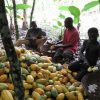
Ivorian Cocoa Farmers Are Beating a System To Reduce Child Labour: Here’s How
The evidence of child labour on cocoa farms in West Africa became public knowledge in the late 1990s. This followed press reports documenting the existence of hazardous child labour on cocoa farms. Pressure on the cocoa industry to end child labour has been growing ever since, particularly from civil society and more recently from both US and European regulators.
‘Trauma and struggle’: Being Black in America – Podcast
 Today we’re talking about the aftermath of the horrendous murder of George Floyd in 2020 and the protests that ensued. But first, this is the fourth episode of the show, and we’d really like to hear what you think of it. So could you please take a minute to rate and review us on Apple Podcasts. Thank you!
« Previous Page — Next Page »


