Languages
Saturday, November 14, 2026



News and Views from the Global South
Headlines

Sri Lanka’s Deteriorating Human Rights Situation Raises Multiple Alarms
A decade has passed since the end of Sri Lanka’s civil war between the government and the LTTE, where at least 100,000 people were killed in the over three-decade long conflict. Families of victims of enforced disappearances continue to seek justice, the government is yet to end impunity and put accountability for crimes under international law and human rights violation and abuses in its transitional justice process.
Myanmar Coup Sends ‘Chilling Message that Military won’t Tolerate Dissent’
Responding to reports this morning that Myanmar’s military has seized control of government in a coup on the eve of the country’s opening session of its new parliament, rights group Amnesty International said it “sends a chilling message that the military authorities will not tolerate any dissent amid today’s unfolding events”.
A Grey Cloud Over Lebanon: Mental Health Burdens
Humankind is no stranger to the destabilizing events of 2020. The state of the global economy and the outbreak of the COVID-19 pandemic hit the headlines. In this ever escalating global crisis, Lebanon, has been facing what can only be described as unimaginable hardships. For the past year the country has seen challenges which have resulted in an utter state of hopelessness and rapid deterioration in mental health of many of its citizens.
UN Humanitarian Staff in Geneva Experience Anxiety, Job Insecurity & Fear of Tomorrow
For the staff of the United Nations Office for the Coordination of Humanitarian Affairs (OCHA), 2021 is likely to be even more difficult than 2020, with job cuts, forced departures, transfers to Istanbul or The Hague, restructuring and too many rumours.
Making Seawater Potable in Mexico Has High Costs and Environmental Impacts
Mexico is seeking to mitigate water shortages in part of its extensive territory by resorting to seawater, through the expansion of desalination plants. But this solution has exorbitant costs and significant environmental impacts.
Internationally COVID-19 Extracted a Heavy Toll on Older People
Internationally COVID-19 extracted a heavy toll on older people – raising concerns in the Asia Pacific region where more than half of the world’s ageing population live.
How COVID-19 Adds to the Challenges of Leprosy-affected People
Lilibeth Evarestus of Lagos, Nigeria doesn’t like the concept of handouts — she is against the idea of thinking of leprosy-affected people as weak. Yet, for several months now, Evarastus – a human rights lawyer and founder of community welfare organisation, Purple Hope Foundation – has been spending a lot of time on the road, distributing food items and hygiene products among the leprosy-affected people in her community.
Lebanon: How to Build Back Better after Political and Economic Crisis
Lebanon must “shield and preserve” the skills, knowledge, and experience of its people in order to move forward with its development, according to Christophe Abi-Nassif, the Lebanon programme director for the Middle East Institute (MEI).
Elections in Africa go on Amid COVID-19
Central African Republic and in Niger held their presidential and parliamentary elections on 27 December 2020 to round up a challenging year where despite fears of disruption from the COVID-19 pandemic, most countries in Africa managed to stick to their scheduled elections.
Despite Petitions & Mounting Pressure, Namibian Government Proceeds with Sale of 3% of Country’s Last Elephants
Over 100,000 concerned petitioners have urged the Namibian government to scrap its plan to auction off 170 wild elephants -- which include rare desert-adapted elephants -- but the country’s Ministry of Environment, Forestry and Tourism said this week that today’s Jan. 29 sale will go on as planned.
French Editor Pays Tribute to Civil Rights Icon Angela Davis
Renowned activist and intellectual Angela Davis turned 77 years old on Jan. 26, marking more than five decades of her fight against systemic racism and inequality.
Cuban Farm Explores Sustainability by Hand
Most beginnings are rocky and sometimes the obstacles seem insurmountable, before they are finally overcome. This was certainly the case for the Finca Marta, a farm in Cuba that had to begin by digging a well in search of water and with the hard-scrabble work of clearing an arid, stony and overgrown plot of land.
Q&A: What Nigerian Feminists Hope will Come Out of the #EndSARS Movement & Pandemic
As Nigeria’s biggest city, Lagos, reportedly experienced a massive shortage of oxygen cylinders last week — with demand increasing fivefold in one of the city’s main hospitals just as the country recorded some of its highest number of coronavirus cases — its youth leaders are concerned about the impact on vulnerable women.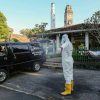
Sri Lanka on Alarming Path Towards Recurrence of Grave Human Rights Violations, Says UN
A new UN report published on Wednesday warns that the failure of Sri Lanka to address past violations has significantly heightened the risk of human rights violations being repeated.
Incitement to Violence Is Rarely Explicit – Here Are Some Techniques People Use to Breed Hate
As senators plan for an impeachment trial in which former President Donald Trump is accused of inciting his supporters to mount a deadly insurrection at the Capitol, global concern is growing about threats of violent unrest in multiple countries, including the U.S. The United Nations reports the proliferation of dangerous speech online represents a “new era” in conflict.
The Struggle to End Female Genital Mutilation: A Dark Secret No More
Survivors of female genital mutilation or cutting (FGM/C), are determined to share their stories to end this practice – even though they face ostracisation by their communities. Masooma Ranalvi, an FGM/C survivor and founder of ‘WeSpeakOut’, an organisation committed to eliminating FGM/C or khafd/khafz/khatna explains that FGM/C is practised by various communities in India but is prominently practised among the Dawoodi Bohras.
“Saving Journalism: A Vision for the Post-Covid World”
In the midst of the COVID-19 pandemic, journalists everywhere are feeling the consequences; job cuts, layoffs and closures have swept the world.
60 Days on, India’s Biggest Farmers’ Protest Shows No Sign of Weakening
“This road is my home now and it will decide my future,” Sukhvinder Singh, a 27-year old farmer from the Moga district of Punjab, tells IPS. Last November, weeks after the government of India passed three farm bills he felt were anti-farmer, Singh travelled to Singhu, a village near Delhi, to demand the laws be repealed. Since then, he has been living in a tent he shares with five other fellow farmer-protesters.
An American Horror story
Occasionally some of us might suffer from a feeling of maximal overload, overwhelmed by COVID-19 and the reign of Donald Trump. It can maybe be conceived as far too euro-centric to be concerned about the disastrous situation in the U.S., with media stuffed to the brim by news about Donald Trump while the global environmental crisis is steadily getting worse and war, injustices and famine continue to agonize people in places like Darfur, Yemen, Afghanistan, and Syria.
COVID-19’s Social & Economic Fallout Hits Women Harder
With over 90 million confirmed cases and 1.9 million deaths globally, and a second wave sweeping into 2021, the COVID-19 pandemic continues to hold the world hostage.
What World’s Largest Climate Change Public Opinion Poll Says
Between October and December 2020, something was different for people playing popular video games like Words with Friends, Angry Birds and Subway Surfers. Instead of a traditional 30-second ad, gamers across the world were invited to participate in a climate change survey. It was an unconventional way of polling that gave University of Oxford researchers an opportunity to tap into the 2.7 billion user-strong gaming market and produce the world’s largest climate change public opinion poll.« Previous Page — Next Page »


