Languages
Wednesday, November 25, 2026



News and Views from the Global South
Headlines

Women Inmates Sow Hope in Prisons in El Salvador
Doris Zabala squats down in the field to pull up radishes. She is working on a prison farm in El Salvador, where more and more penitentiaries are incorporating agricultural work and other activities to keep prisoners busy.
Foreign Direct Investment: Myths and realities
Foreign direct investment (FDI) is perhaps one of the most ambiguous and the least understood concepts in international economics. Common debate on FDI is confounded by several myths regarding its nature and impact on capital accumulation, technological progress, industrialization and growth in emerging and developing economies.
Insecurity in Dominican Countryside Threatens Local Food Supply
“Sometimes we have too much water, which washes everything away,” Cecilia Joseph, originally from Haiti, said in heavily accented Spanish while pulling up a ñame root (a kind of yam) on her farm in the municipality of Santo Domingo Norte in the Dominican Republic.American Mining Giant Escaped Indonesian Law with ISDS
If you want to make your developing country more attractive for foreign investors, try signing bilateral investment treaties (BITs) with rich countries. With these treaties countries promise to look after each others' investors.
Displacement Climbs, No Respite Near in 2016
Nearly a million people have crossed the Mediterranean as refugees and migrants so far this year, and conflicts in Syria and elsewhere continue to push up levels of human suffering. This makes 2015 likely to exceed all previous years of forced displacement, according to a new United Nations High Commission for Refugees report.
The Power of the Pen
“How would you like it if you were just expressing your feelings and someone just put you in jail?” This is how an eight-year-old American schoolchild asked King Salman of Saudi Arabia not to flog imprisoned blogger Raif Badawi.
Initiatives Revive Palestinian Heritage Boosting Economy and ‘Homeland’
Deep into the subtly monochrome landscape of the southern West Bank, Abu Ismaeel’s tent stands out amongst bare rolling hills that stretch into the horizon. A lonely gate, with no fence around it, signals the official entrance to two large tents in the Rashayda Desert.French firm attacks Ugandan tax using ISDS
The heavily criticized legal mechanism, known as ISDS, is an important tool for European companies to pressurize developing countries. This year Uganda joins the rank of developing nations asking themselves: "Why have we ever signed this?"Saudi Women Make Huge Advances After Victory in Polls
The triumph of 19 women in what is being seen as a landmark and historical election in a largely traditional and conservative country is a massive gain for women. A United Arab Emirates (UAE) daily newspaper called this a right step in the Islamic spirit.UN Sees Key Role for Women in Post-2015 Development Agenda
The United Nations, which has launched an intense world-wide campaign to ensure the full implementation of its post-2015 development agenda, is unequivocal in asserting that gender equality and women’s empowerment are indispensable to the realization of the 17 Sustainable Development Goals (SDGs) adopted by world leaders last September.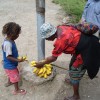
Malnutrition a Silent Emergency in Papua New Guinea
High up in the mountainous interior of Papua New Guinea (PNG), the most populous Pacific Island state of 7.3 million people, rural lives are marked by strenuous work toiling land in rugged terrain with low access to basic services.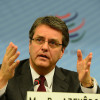
WTO: Giant Steps in the World Conference
World Trade Organization (WTO) members concluded the Tenth Ministerial Conference in Nairobi on 19 December by securing an historic agreement on a series of trade initiatives. The “Nairobi Package” pays fitting tribute to the Conference host, Kenya, by delivering commitments that will benefit in particular the organization’s poorest members.
Mexican Government Ignores Social Impact of Energy Projects
Mexico’s hydrocarbons law stipulates that oil contracts must include a social impact assessment. But this has not been done in the case of the oilfields granted to the country’s former oil monopoly, Pemex, or to private companies since the industry was opened up to private investment.Despite Health Risks, Many Argue GMOs Could Help Solve Food Security
Cameroon is on the path to introduce genetically modified organisms (GMO’s). This would be overseen by the Cameroon Academy of Sciences, in collaboration with the National Biosafety Committee, if the Cameroon Cotton Corporation successfully implements a three-year test cultivation of cotton.
Climate Smart Coffee and Banana Set to Boost East African Farmers’ Income
 Ugandan farmers are increasingly inter-planting coffee, the country’s primary export, and banana, a staple food, as a way of coping with the effects of climate change.
World’s Poor Trailing Far Behind Rich in Digital Technology
The world’s developing nations, numbering over 130, are still lagging far behind the 34 rich industrialized countries in the race for digital technology.
Disabled Persons Not Part of AIDS Success in Zimbabwe
Wheelchair-bound, her body now skeletal from full blown AIDS, disabled 38-year-old Melisa Chigumba attempts to wave away a swarm of flies hovering around her face as she sits outside her home in Chachacha, a remote area in Shurugwi, 278 kilometers south of the capital, Harare.
Accord Calls for First Global Conference on Peace
On 21 November 2015, during ACCORD’s 2015 Africa Peace Award celebration, I made a call for the United Nations to convene the first ever UN Global Conference on Peace.
Indigenous Villagers Fight “Evil Spirit” of Hydropower Dam in Brazil
At dusk on the Tapajós River, one of the main tributaries of the Amazon River in northern Brazil, the Mundurukú indigenous people gather to bathe and wash clothes in these waters rich in fish, the staple of their diet. But the “evil spirit”, as they refer in their language to the Sao Luiz Tapajós dam, threatens to leave most of their territory – and their way of life – under water.Companies Sue Developing States through Western Europe
Many Europeans fear the Transatlantic Trade and Investment Partnership (TTIP) because it could enable American companies to file claims against their states. The strange thing, however, is that Western Europe is becoming a big hub in this mechanism, called the Investor-State Dispute Settlement (ISDS), leading to billion dollar claims against poorer countries.
UN Discovery of Secret Detention Centre Revives Nightmares
Details of a secret detention center, where serious human rights abuses took place, deep inside the sprawling Tricomalee Naval base in the east of Sri Lanka are slowly emerging.« Previous Page — Next Page »


