Languages
Sunday, October 18, 2026



News and Views from the Global South
Aid

Poverty, Vulnerability and Social Protection
According to the World Bank, the MDG target of halving the share of the poor was achieved by 2008, well in advance of 2015, the target year. However, increased unemployment and lower incomes in recent times remind us that poverty is not an unchanging attribute of a shrinking group, but rather, a condition that billions of vulnerable persons risk experiencing.
The Next UN Secretary General Should Be a Woman – and Must Be a Feminist
The process for arguably the top political job on the planet is well underway. And the time is right for a woman and a feminist to take the helm.
Nutrition – Small Investments Can Make a Huge Impact
Bangladesh has made great strides in many areas, including poverty eradication and life expectancy. There are still many opportunities for investments that improve the nation's future and transform lives.
New Alliance to Shore Up Food Security Launched in Africa
As over 20 million sub-Saharan Africans face a shortage of food because of drought and development issues, representatives of the U.N. Food and Agriculture Organisation (FAO) and the Pan African Parliament (PAP) met in Johannesburg to forge a new parliamentary alliance focusing on food and nutritional security.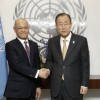
Q&A: Representing Developing Countries at the United Nations in New York
IPS spoke with the Virachai Plasai, Ambassador and Permanent Representative of the Kingdom of Thailand to the United Nations and Chair of the Group of 77 about what it’s like to represent 134 developing countries, including China, at UN meetings in New York. Plasai spoke about some of the group’s priorities for 2016, including the selection of the ninth UN Secretary-General, the 2030 Development Agenda, including the 17 Sustainable Development Goals, and the implementation of the Paris Climate Change Agreement.
Newly Empowered Black Farmers Ruined by South Africa’s Drought
Almost half a decade of drought across most of South Africa has led to small towns in crisis and food imports for the first time in over 20 years, as well as severely hampering the government’s planned land redistribution programme.
UN Trade and Development Conference a “Big Win” for Multilateralism
The UN Conference on Trade and Development (UNCTAD) concluded its five-day meeting in Nairobi on a positive note—the launch of a new e-trade initiative and a multi-donor trust fund on trade and productive capacity.
Feed the Children
Hunger still stalks many of our countrymen. It is particularly destructive with our children who, because of poverty, do not get enough to eat, become vulnerable to disease and exploitation and end up unhealthy, uneducated and unhappy. Uneducated because the need to eat superimposes itself over everything, so that all their waking hours are spent looking to satisfy hunger, eschewing going to school. Unhappy because in the long run, without education, there will be a long, hard climb to get a job; most of all, a job that will provide a decent livelihood.
Chronic Hunger Lingers in the Midst of Plenty
In a fraught global economic environment, exacerbated by climate change and shrinking resources, ensuring food and nutrition security is a daunting challenge for many nations. India, Asia's third largest economy and the world's second most populous nation after China with 1.3 billion people, is no exception.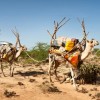
Climate Victims – Every Second, One Person Is Displaced by Disaster
Climate change and related extreme weather events have devastated the lives and livelihoods of tens of millions of most vulnerable people worldwide-- by far exceeding the total of all the unfortunate and unjustifiable victims of all terrorist attacks combined. However, the unstoppable climate crisis receives just a tiny fraction of mainstream media attention. See these dramatic facts.
Climate Migrants Lead Mass Migration to India’s Cities
Deepa Kumari, a 36-year-old farmer from Pithoragarh district in the Himalayan state of Uttarakhand, lives in a one-room tenement in south Delhi's Mongolpuri slum with her three children. Fleeing devastating floods which killed her husband last year, the widow landed up in the national capital city last week after selling off her farm and two cows at cut-rate prices.
Fertilizer Access Grows Farmers, Food and Finance
Brightly coloured cans, bags of fertilizer and packets containing all types of seeds catch the eye upon entering Nancy Khorommbi’s agro dealer shop tucked at the corner of a roadside service station.
Uganda Ill-Equipped for Growing Cancer Burden
Lying on a dirty bed in a crowded, squalid hostel in Kampala, emaciated Jovia, 29, managed a weak smile as a doctor delivered her a small green bottle containing a liquid.
Beyond Rhetoric: UN Member States Start Work on Global Goals
UN member states “are going beyond rhetoric and earnestly working to achieve real progress” towards the Sustainable Goals, the members of the Group of 77 and China said in a ministerial statement delivered here on 18 July.
Devastating Droughts Continue as El Nino Subsides
Although the devastating El Niño of 2015 to 2016 has now subsided, in many parts of Africa, Central America and Southeast Asia rains and harvests are not expected to recover until 2017.
Implementing the Sustainable Development Goals: The Sooner, the Better
The first 1000 days after the adoption of the Sustainable Development Goals are critical, according to a report published last week, urging UN member states to take action quickly.
Fast-track Development Threatens to Leave Indigenous Peoples Behind
Fast-tracked development often means that indigenous people and their territories get run over and their rights are not taken into consideration, Roberto Borrero, from the International Indian Treaty Council and Indigenous Peoples Major Group, said here Friday.
Rewriting Africa’s Agricultural Narrative
Albert Kanga Azaguie no longer considers himself a smallholder farmer. By learning and monitoring the supply and demand value chains of one of the country’s staple crops, plantain (similar to bananas), Kanga ventured into off-season production to sell his produce at relatively higher prices.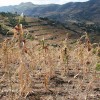
‘Monster’ El Niño Subsides, La Niña Hitting Soon
As if human-made armed conflicts, wickedness, rights abuse, gender violence, cruel inequality and climate catastrophes were not enough, now the saying “God Always Forgives, Men Sometimes, Nature Never” appear to be more true than ever. See what happens.
What can Development Banks do to Protect Human Rights?
In a petition signed by 150 NGOs, the Coalition for Human Rights in Development have called for development banks to make sure that human rights are respected by their beneficiaries.
South Sudan Tense but Calm Following Intense Fighting: UN
The situation in Juba, South Sudan on Thursday was "tense" but "calm" following recent intense fighting, UN Spokesperson for the Secretary General Stephane Dujarric told journalists here Thursday.« Previous Page — Next Page »





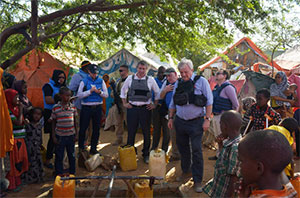 UN Emergency Relief Coordinator Visits Somalia. Credit: UN Photo/Tobin Jones
In recent years, conflicts have broken out across the world with no sign of slowing down or stopping. In times like this, millions of people globally are in dire need of humanitarian aid. Famine, warfare, natural disasters, and economic decline plague a host of nations, including Palestine, Sudan, Chad, Lebanon, and Haiti, to name a few. Humanitarian aid provides millions of people with critical services including healthcare, food, clean drinking water, psychosocial support, housing, and access to education. UN agencies such as the UNDP, UNICEF, the World Food Programme (WFP), UNHCR, UNRWA, and UNEP work with the UN Office for the Coordination of Humanitarian Aid (OCHA) and local organizations to come up with the best possible strategies to support affected communities. At the same time, humanitarian aid and those working on the frontlines are consistently threatened by both actors directly involved in conflict as well as those who are meant to contribute to the international humanitarian regime at large. The near-collapse of United States international aid structures in 2025, including the termination of 83% of USAID’s 6,300 global initiatives, has left millions of people without access to vital humanitarian assistance. 98 million people in 2025, only 65% of people targeted for humanitarian assistance, received the help they needed. In contrast, 123 million people received some form of humanitarian assistance in 2024, and OCHA’s 2026 Global Humanitarian Overview estimates that 239 million people are in need of assistance in 2026. IPS is well-positioned to discuss current initiatives to provide aid and relief through in-depth reporting and opinion content.

The Week with IPS

NEXT STOP - SDGs
Tracking global progress towards a sustainable world
Tracking global progress towards a sustainable world
