Languages
Sunday, November 8, 2026



News and Views from the Global South
Armed Conflicts

Elections in Africa go on Amid COVID-19
Central African Republic and in Niger held their presidential and parliamentary elections on 27 December 2020 to round up a challenging year where despite fears of disruption from the COVID-19 pandemic, most countries in Africa managed to stick to their scheduled elections.
An American Horror story
Occasionally some of us might suffer from a feeling of maximal overload, overwhelmed by COVID-19 and the reign of Donald Trump. It can maybe be conceived as far too euro-centric to be concerned about the disastrous situation in the U.S., with media stuffed to the brim by news about Donald Trump while the global environmental crisis is steadily getting worse and war, injustices and famine continue to agonize people in places like Darfur, Yemen, Afghanistan, and Syria.
“Their Hope for a Brighter Future Inspires Us All”
Looking back upon 2020, we all bear the scars of a devastating year; none so much as girls and boys around the world. The COVID-19 pandemic disrupted education for over 1.6 billion children and youth globally and continues to do so. It has also deepened socio-economic inequities and heightened insecurities around the world, further impacting the lives of girls and boys everywhere. Ongoing, protracted conflicts, forced displacement and the worsening climate crisis were no less forgiving.
“Teach Us How to Become Carpenters” – South Sudanese Want to Shape Their Future
Located in Jonglei state, one of the most underdeveloped regions of South Sudan, Likuangole is a town badly hit by floods and often battered by conflict. Despite the lack of secondary schools and industry, its residents aspire to transform their lives. But real investment is needed to spur development.
Q&A: Why we Must Invest in Educating Children in Crisis-Hit Burkina Faso
Education Cannot Wait (ECW) - the first global fund dedicated to education in emergencies and protracted crises – was on the ground in Burkina Faso last week with its Director, Yasmine Sherif, to launch a new multi-year programme that aims to provide an education to over 800,000 children and adolescents in crisis-affected areas.
Biden’s Arms Control Ambitions are Welcome—but Delivering Them will not be Easy
A deadly pandemic to control. An urgent nationwide vaccination programme to roll out. An economic crisis to navigate. Political divisions and distrust deep enough to spark mob violence and terrorism.
With a War-Mongering President Gone, is the World Safe from Nuclear Brinkmanship?
A war-mongering president, with his finger on the nuclear trigger--- and who threatened to attack North Korea and Iran-- was unceremoniously drummed out of office on January 20.
Will Biden Administration Respond to the Treaty on Prohibition of Nuclear Weapons, End Threat of a Nuclear War & Bring Nuclear-armed States Together to Achieve Global Nuclear Disarmament?
Many of us around the world breathed a sigh of relief yesterday (Jan 20) as the ‘nuclear football’ (the briefcase with nuclear weapons codes and communication links for the President to launch a nuclear attack) was passed from Mr Trump to President Biden, as the new president was inaugurated.
Afghanistan Threatened With Rising Violence Once Again
When the Doha talks were launched in September, the Afghan people's hopes for an end of war and violence were high. So far, many have been disappointed as the negotiations have not done much to improve the security situation.
Unhinged with 5,800 Nuclear Warheads at his Fingertips
Between now and January 20,2021, the President of the United States has almost run out of arenas in which to impose his will. His reelection has soured in infamy. His concern for the COVID-19 pandemic faded long ago. There is only one last pursuit available to him to demonstrate that he is the most powerful man on earth, i.e. using the nuclear weapons at his disposal.
Stand Tall, UN Humanitarians
Most people around the world were glad to see the back of 2020: From the devastating bushfires in Australia to the plagues of locusts through East Africa stretching across Arabia to Pakistan, extreme weather, melting ice sheets at the poles, and Covid-19 that still engulfs the globe.
2020: A Yet More Devastating Year Closes With At Least Some Signs Of Hope
Despite its grim record of multiple natural disasters and a deepening climate crisis, one could be forgiven for looking back on 2019 with a degree of nostalgia. There is no disguising the extent of the calamity wrought this year by COVID-19, yet as we approach the end of 2020 we may also draw strength from positive developments emerging.
Afghanistan’s Historic Year: Peace Talks, Security Transition but Higher Levels of Violence
While Afghanistan ends a historic year, filled with the hope for peace as the government and Taliban sat down for almost three months of consecutive peace talks for the first time in 19 years, it was also a year filled with violence with provisional statistics by the United Nations showing casualties for this year being higher than 2019.
Biden’s Opportunity To End Israeli-Palestinian Conflict
Recently I had an opportunity to brief a group of European diplomats and journalists on a variety of conflicts, with a focus on the Middle East. During the Q&A I was asked which of the region’s conflicts Biden should tackle first.
Nyagoa’s Long Journey
Nyagoa Dak was born to a world in chaos. Her story is one of loss, of redemption, of struggle and of triumph. At a very early age, Nyagoa lost her parents to the conflict in South Sudan. As the conflict escalated, she escaped with her grandmother to Ethiopia in 2014. There they settled in the Pugnido refugee camp in Ethiopia’s Gambella region.
Autocracy on the Rise: Should we Expect Military Spending to Follow?
Autocracies are once again the global majority. The 2020 Democracy Report of the Varieties of Democracy Institute (V-DEM), ‘Autocratization surges, resistance grows’, raises the alarm that while the world in 2019 was substantially more democratic than it was in the 1970s, an ongoing trend of autocratization may reverse this scenario.
Does WFP Deserve the Nobel Peace Prize?
On 10 December, representatives for the World Food Programme (WFP) will in Norway receive the Nobel Peace Prize at the Oslo City Hall. This is taking place while the COVID-19 pandemic is causing lock-downs and suffering all over world, limiting agricultural production and disrupting supply chains.
Farmers Will (Again) Feed the World
Wealthier countries struggling to contain the widening COVID-19 pandemic amid protests over lockdowns and restrictions risk ignoring an even greater danger out there – a looming global food emergency.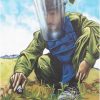
A Potential Weapon Kills Over 1.5 Million Worldwide –Without a Single Shot Being Fired
The world’s major military powers exercise their dominance largely because of their massive weapons arsenals, including sophisticated fighter planes, drones, ballistic missiles, warships, battle tanks, heavy artillery—and nuclear weapons of mass destruction (WMDs).
Despite Conflict and COVID-19, Children Still Dream to Continue Their Education in Afghanistan
As if four decades of war were not enough, then came the pandemic. For each of the past five years, Afghanistan has been identified by the United Nations as the world’s deadliest country for children and, despite progress made in peace talks between the government and the Taliban, child and youth casualties from the ongoing conflict continue to mount in 2020.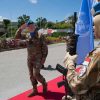
Peacekeeping is a Double-Edged Sword
UN peacekeeping dangerously overlooks the reality that peace operations have both unintended and negative consequences. Any intervention into the politics and culture of a community is bound to create tensions between local practices and foreign peacebuilding practices.« Previous Page — Next Page »





Armed conflicts are a sad constant on daily front pages worldwide. Wars, civil wars, revolts, coups, genocides, ethnic and political violence, and global terrorism capture our attention for the geopolitical landslides, human suffering, food crises and streams of migration that follow in their wake. As in times of natural disaster, man-made crises claim frequent casualties among the poor, women and children. IPS examines emerging and ongoing armed conflicts around the world with an eye on the underlying social and political dynamics, and special focus on the lived experiences of those most affected by armed conflict.

The Week with IPS

NEXT STOP - SDGs
Tracking global progress towards a sustainable world
Tracking global progress towards a sustainable world
