Languages
Monday, November 23, 2026



News and Views from the Global South
Civil Society

When Emergencies Last for Decades
For the millions of people whose lives have been uprooted by conflict and natural disasters the average amount of time before they can return home is now 17 years.
Indigenous Peoples Inclusion at United Nations Incomplete
The United Nations Indigenous Forum is one of the UN's most culturally diverse bodies yet its inclusion within the overall UN system remains limited.
Climate Change Compounds Humanitarian Crises in Global South
As the Global South works to overcome a history of weak institutions, armed conflict and poverty-driven forced exodus, key causes of its humanitarian crises, developing countries now have to also fight to keep global warming from compounding their problems.
A Latin American Humanitarian Emergency Invisible to the World
“This is a humanitarian crisis,” said Bertha Zúñiga Cáceres, referring to the generalised violence in Mexico and in Honduras and other countries of Central America, which has claimed hundreds of thousands of lives and is a product of transnational crime, but is invisible to the international community.
Industrial-Level Aid Logistics in Colombia’s Decades-Long Humanitarian Disaster
“If you’re going to talk about Colombia and the peace process, do it somewhere else,” was heard at a regional preparatory meeting for the World Humanitarian Summit, according to Ramón Rodríguez, with the Colombian government’s Unit for Attention and Integral Reparation for Victims (UARIV).
Justice for Berta Caceres Incomplete Without Land Rights: UN Rapporteur
The murder of Honduran Indigenous woman Berta Caceres is only too familiar to Victoria Tauli-Corpuz, the UN’s Special Rapporteur on the Rights of Indigenous Peoples.
Deadly Algal Bloom Triggers Social Uprising in Southern Chile
A ban on harvesting shellfish in Chiloé due to a severe red tide outbreak sparked a social uprising that has partially isolated thousands of local residents of the southern Chilean archipelago and revived criticism of an export model that condemns small-scale fishing communities to poverty and marginalisation.
Why Peacebuilding is Part of the Sustainable Development Agenda
We tend not to worry when things are going well. If people can take care of their daily business and send their kids to school without fear of violence, resolve disputes through a functioning justice system when the need arises, express their views both in private discussions and in public processes, feel they can truly contribute to decisions that affect their lives, and know effective institutions are in place to deliver basic services to their families and communities without interruption or the need for bribes, chances are they will be broadly content with the way their society is managed.
Kenyan Refugee Camp Closures will have Disastrous Consequences
The Kenyan government's decision to close its refugee camps will have disastrous consequences and must be reconsidered, international organisations have stated.
Asia’s Indigenous Communities Marred by Militarisation
Militarisation in indigenous territories in Asia is exacerbating conflict and human rights violations, said Secretary-General of the Asia Indigenous Peoples Pact Joan Carling at an event during the UN Permanent Forum on Indigenous Issues (UNPFII) held here Monday.
MSF Withdrawal Part of Ongoing Debate Over Humanitarian Aid
Aid organisations have differing views about the upcoming World Humanitarian Summit, after Médecins Sans Frontières (MSF) pulled out last week some still hope the Summit will help bring about much needed change.
Let’s Not Forget Disaster Risk as we Rush to Adapt to Climate Change
Helping at-risk communities adapt to climate change impacts is an important part of the Paris Climate Change agreement, but adaptation will not be complete without considering disaster risk.
Mexico Needs to Improve Control of Toxic Chemicals
A recent explosion at a petrochemical plant in southeast Mexico highlighted the need to strengthen monitoring of hazardous substances, step up inspections of factories and update regulations in this country.
Deteriorating Protection of Journalists’ Sources a Global Problem
The freedom of the press is a universally cherished democratic right, but what may have been overlooked as the World Day Freedom of Information was celebrated on Wednesday is that the ability of journalists to protect their source is increasingly coming under attack by authorities.
Is the System Broke or Broken?
Though the upcoming World Humanitarian Summit may seem timely, a debate ensues on an important question: is the world humanitarian system broke or broken?World Celebrates 250 Years Since First Freedom of Information Act
Press freedom is not just a beautiful idea but a very concrete thing, included in the UN's Sustainable Development agenda which is meant to lead the humankind to sustainable development, UNESCO's director general, Irina Bokova, said at the opening of the World Press Freedom Day here Tuesday.
On World Press Freedom Day, A View From Asia
Travel in many parts of Asia, as I do, and you are likely to find everyone looking at their smartphones – even in remote areas - hungry for information wherever they can find it.
Could the UN be Doing More to Protect Journalists?
As the world commemorates World Press Freedom Day, a coalition of some 35 press freedom groups is calling on the 193-member General Assembly to appoint a Special Representative of the Secretary General to monitor and oversee the safety of journalists worldwide.
Analysis: The Role of the Free Press in Sustainable Development
This year’s World Press Freedom Day marks the 250th anniversary of the first-ever freedom of information law, enacted in what are now Sweden and Finland. 3 May, 2016 is more than just an important anniversary, however; this is the first celebration of World Press Freedom Day since the adoption of the United Nations’ Sustainable Development Goals. Securing a free press is essential for progress towards achieving these ambitious goals for people and planet by the year 2030.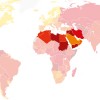
Mideast: 1 in 3 Bribes to Access Basic Public Services
Just an ordinary citizen living in a Middle East and North of Africa country and requring a birth certificate for your new-born daughter? No problem—just take something with you, either some cash, a pack of cigarettes or buy a glass of tea with milk and a lot of sugar.
The Family Garden Going Out of Style in Cuban Countryside
In the past, all rural homes in Cuba had gardens for putting fresh vegetables on the dinner table. The local term for these gardens is “conuco”, a word with indigenous roots that is still used in several Caribbean nations.« Previous Page — Next Page »


 Representatives of Civil Society, Sierra Leone. Credit: UN Photo/Eskinder Debebe
Civil society faces mounting threats worldwide, even as it remains essential for democratic accountability, especially in countries struggling with economic instability and social inequality. However, at the same time, nations with weak democratic governance structures also systemically suppress the power of civil society. Human rights activists across the Global South frequently challenge issues such as political persecution and gender oppression, but in return face state-sanctioned punishment for their advocacy. Imprisonment and exile are common mechanisms of punishment that seek to erode the strength of civil society. The 2026 World Press Freedom Index has reached its lowest level in 25 years, with more than half of the world’s countries now falling into the "difficult" or “very serious” category for press freedom. IPS seeks to highlight the work of civil society across the Global South as well as the challenges that they face.
Updated by Yilan Batista and Shuli Wong August 2026

The Week with IPS

NEXT STOP - SDGs
Tracking global progress towards a sustainable world
