Languages
Saturday, November 28, 2026



News and Views from the Global South
Civil Society

Culture of Peace Should Replace Culture of Violence
When U.N. Secretary-General Ban Ki-moon addresses the High-Level Forum on Culture of Peace later this week, he will transmit a message that underlines his political philosophy: all disputes need to be resolved by peaceful means, not through military might.Getting Into the Business of Environment
Regulations that stand in the way of conservation programmes lower their likely success, experts warned at the World Conservation Congress of the International Union of Conservation of Nature (IUCN) in Jeju, South Korea.
Taliban Need No Education
Samina Afridi, a lecturer at the University of Peshawar, regrets that down history the leaders of the Pashtun (also Pakhtun) tribes have conspired to keep them away from education and literacy. The Taliban are only the latest example.
Peace in Afghanistan, the Civil Society Way
More than a decade after the fall of the Taliban, Afghanistan is still in the midst of an irregular war. Talking peace is difficult because no one quite knows who to talk to.
Environment Congress Looks First at the Island It’s Meeting On
Before business could get under way, the controversy had to be dealt with. That appeared to be the strategy of the South Korean government just before the opening of the high profile International Union of Conservation of Nature (IUCN) World Conservation Congress here on Thursday.
Amidst Rising Xenophobia, U.N. to Reiterate Culture of Peace
Amidst growing attacks on religious groups and a rising intolerance toward migrants and minorities worldwide, the 193-member General Assembly will hold a High-Level Forum next week to discuss one of the key issues on the U.N. agenda aimed at promoting social, economic and political harmony: a culture of peace.
Israeli Women Fight Orthodox Curbs
After filing the first-ever class-action lawsuit on the issue of gender segregation in Israel, a local religious women’s rights group says it hopes to protect the rights of women in the public sphere of Israeli society.
Climate Adaptation Troubles Karachi’s Planners
Climate proofing this bustling port city is a daunting task for planners who must consider factors ranging from proneness to flooding and administrative malaise to the fact that 60 percent of its 18 million people live in slums.
Tibet Burns, On the Backburner
Two Tibetan teenagers set themselves on fire and took to the streets of Aba in southwestern China last week, managing to walk only a short distance before collapsing. They both died the following day.U.S.: Rights Activists Call on U.S. to Revise Bahrain Policy
Human rights activists are calling on the administration of President Barack Obama to radically revise its policy toward Bahrain in light of the decision by an appeals court in the kingdom this week to confirm harsh prison sentences against 13 opposition activists.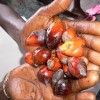
U.S. Company Accused of Greenwashing Cameroon ‘Land-Grab’
Environment groups are accusing a New York-based agricultural company, Herakles Farms, of going forward with plans for a 73,000-hectare palm-oil plantation and refinery in southwest Cameroon despite a lack of government authorisation, two court injunctions, and in the face of significant community opposition.
Indigenous Consultations in Peru to Debut in Amazon Oil Region
Peru will debut a new mechanism for prior consultation with indigenous peoples by seeking their approval for a new stage of oil drilling operations in the infamous Lot 1AB in the northeastern Amazon region of Loreto.Report Details Rising Police Brutality in the Maldives
A human rights crisis has engulfed the Indian Ocean nation of the Maldives since the ousting of the former president, Mohamed Nasheed, on Feb. 7, activists warned here Tuesday.
Families of ‘Disappeared’ and Forensic Institute on Good Terms Again
Relations between the families of people “disappeared” by Chile’s 1973-1990 dictatorship and the forensic institute, which have been tense since a 2006 scandal when the state body admitted that it had misidentified 96 of the 126 bodies found in a common grave in 1991, are beginning to mend.
Ruling Against Thermoelectric Plant Sparks Debate
A Chilean Supreme Court decision ordering a halt to the construction of the Castilla thermoelectric power plant has sparked a debate over the country’s energy security.
How to Get People to Make More Babies in Singapore
How to get Singaporeans to have more babies has become a major part of the debate about this country’s future, and the government is encouraging people to speak out on the issue.Nearer the Church, Farther From MDGs
When Philippines President Benigno Aquino III delivered his annual state of the union address in July, he appealed to the country’s lawmakers to break a deadlock on progressive birth control laws in this predominantly Catholic nation.
Angola’s “Free and Fair” Elections Could Be Contested
Question marks hang over the legitimacy of Angola’s general election as Africa’s second-longest serving leader Jose Eduardo dos Santos has won a five-year term in office following his party’s landslide victory.
Debate on Asbestos Safety Reaches Brazil’s Supreme Court
Brazil’s Supreme Court is assessing the level of risk posed by asbestos to human health, while industry defends its use under controlled conditions, and associations of people with asbestos-related diseases argue that it should not be used under any circumstances, even with regulations.
Women Take up Care of Tohoku Elders
Yumiko Yonekura, who survived last year’s massive earthquake and tsunami that devastated Tohoku in northeast Japan, has just launched ‘Hot Care Kesenuma’, a welfare company that provides special care for feeble elders in the affected region.Taiwan Verdict Exposes Death Penalty Dangers
The end of Taiwan’s most controversial death penalty case this week has “punctured the myth that the judicial system never makes mistakes in death penalty cases,” Judicial Reform Foundation (JRF) executive director Lin Feng-cheng told IPS.« Previous Page — Next Page »


 Representatives of Civil Society, Sierra Leone. Credit: UN Photo/Eskinder Debebe
Civil society faces mounting threats worldwide, even as it remains essential for democratic accountability, especially in countries struggling with economic instability and social inequality. However, at the same time, nations with weak democratic governance structures also systemically suppress the power of civil society. Human rights activists across the Global South frequently challenge issues such as political persecution and gender oppression, but in return face state-sanctioned punishment for their advocacy. Imprisonment and exile are common mechanisms of punishment that seek to erode the strength of civil society. The 2026 World Press Freedom Index has reached its lowest level in 25 years, with more than half of the world’s countries now falling into the "difficult" or “very serious” category for press freedom. IPS seeks to highlight the work of civil society across the Global South as well as the challenges that they face.
Updated by Yilan Batista and Shuli Wong August 2026

The Week with IPS

NEXT STOP - SDGs
Tracking global progress towards a sustainable world
