
Thursday, November 19, 2026



News and Views from the Global South
Climate Change
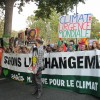
French Add Voice to Global Climate Action
As if to highlight the reality of climate change, the rain came pouring down here as demonstrators prepared to rally for political action to combat global warming.
Boosting the Natural Disaster Immunity of Caribbean Hospitals
When floods overwhelmed the Eastern Caribbean in December last year, St. Vincent’s new smart hospital, completed just a few months earlier, stood the test of “remaining functional during and immediately after a natural disaster.”
Africa Seeks Commitment to Adaptation in Climate Deal
It is a critical time for international climate change negotiations. By December 2015, world leaders are due to decide on an international climate change agreement covering all countries that will take effect in 2020.
Environmental Funding Bypasses Indigenous Communities
When she talks about the forests in her native Kalimantan, the Indonesian part of the island of Borneo, Maridiana Deren’s facial expression changes. The calm, almost shy person is transformed into an emotionally charged woman, her fists clench and she stares wide-eyed at whoever is listening to her.
Will Governments Keep Their Promises on the Human Right to Water?
It was a dramatic moment at the United Nations when it voted in 2010 to affirm water and sanitation as a human right.
New Fund to Build on “Unprecedented Convergence” Around Land Rights
Starting next year, a new grant-making initiative will aim to fill what organisers say has been a longstanding gap in international coordination and funding around the recognition of community land rights.
Latin America at a Climate Crossroads
World leaders gathered at the Climate Change Summit during the United Nations General Assembly on Sep. 23 will have a crucial opportunity to mobilise political will and advance solutions to climate change.
U.N. Pushes Climate-Smart Agriculture – But Are the Farmers Willing to Change?
United Nations Secretary-General Ban Ki-moon is expected to make a strong pitch to world political leaders at the U.N. Climate Summit in New York on Sep. 23 to accept new emissions targets and their timelines.
As Uganda Heats Up, Pests and Disease Flourish to Attack its Top Export Crop
When Abudu Zikusoka was a small boy his father would bring people to their home in Ndesse village in Central Uganda’s Mukono district. He would watch as they packed the family’s harvested coffee into sacks and then loaded it onto their bicycles.
Pushing for Cities to Take Lead on Climate Change
If former New York mayor Michael Bloomberg had used the Vélib’ - Paris’ public bicycle sharing system - to arrive at the headquarters of the Organisation for Economic Cooperation and Development here Wednesday, he might have sent a stronger message about the need for cities to be “empowered to take the lead in combating climate change”.
Tackling Climate Change and Promoting Development: A “Win-Win”
A widespread perception exists that developing countries must make a choice between tackling climate change and fighting poverty. This assumption is incorrect, according to the authors of a new report on green growth.
Will the Upcoming Climate Summit Be Another Talkathon?
As the United Nations hosts a Climate Summit Sep. 23, the lingering question is whether the meeting of world leaders will wind up as another talk fest.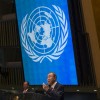
OPINION: A Climate Summit to Spark Action
On Sep. 23, I have invited world leaders from government, business, finance and civil society to a Climate Summit in New York so they can show the world how they will advance action on climate change and move towards a meaningful universal new agreement next year at the December climate negotiations in Paris.
Blue Halo: A Conservation Flagship, or Death Knell for Fishermen?
Local fishermen are singing the blues over a sweeping set of new ocean management regulations, signed into law by the Barbuda Council, to zone their coastal waters, strengthen fisheries management, and establish a network of marine sanctuaries.
U.N. Climate Summit: Staged Parade or Reality Show?
The much-ballyhooed one-day Climate Summit next week is being hyped as one of the major political-environmental events at the United Nations this year.
Majority of Consumer Products May Be Tainted by Illegal Deforestation
At least half of global deforestation is taking place illegally and in support of commercial agriculture, new analysis released Thursday finds – particularly to supply overseas markets.
World’s Last Remaining Forest Wilderness at Risk
The world’s last remaining forest wilderness is rapidly being lost – and much of this is taking place in Canada, not in Brazil or Indonesia where deforestation has so far made the headlines.Human Rights and Gender Equality Vague in Post-2015 Agenda
With the United Nations’ post-2015 development agenda currently under discussion, civil society actors in Europe are calling for a firmer stance on human rights and gender equality, including control of assets by women.
New Technology Boosts Fisherfolk Security
As the United Nations gears up to launch its newest set of poverty-reduction targets to replace the Millennium Development Goals (MDGs) in 2015, the words ‘sustainable development’ have been on the lips of policymakers the world over.
Will Climate Change Denialism Help the Russian Economy?
The recent call from Russian Prime Minister Dmitry Medvedev for “tightening belts” has convinced even optimists that something is deeply wrong with the Russian economy.
For Caribbean, no Climate Policy without Water Policy
 Amidst growing concern over the impact of climate change on water resources worldwide, Caribbean stakeholders are working to ensure it is included in the region’s plans for Integrated Water Resources Management (IWRM).
« Previous Page — Next Page »


As unsustainable human consumption and production systems are driving changes in average temperatures and weather patterns, "abnormal" is increasingly becoming the norm. So far, a lack of financing has been standing in the way of a comprehensive global plan for climate adaptation, and a global financial crisis has contributed to an increasing reliance on public-private partnerships. Our Climate Change page provides you with the latest news about international and local efforts to address what's frequently been called "the challenge of our time", the forces behind the climate change and the impact it has on the world's most vulnerable populations. Along the way, we bring you stories on growing citizen awareness, new scientific data, and emerging climate policies towards sustainable development.

The Week with IPS

Tracking global progress towards a sustainable world

