
Saturday, November 21, 2026



News and Views from the Global South
Climate Change

EL SALVADOR Women Fight Blows from Climate Change with Sewing Machines and Eggs
Amanda Menjívar is moved by the sight of the 16 sewing machines donated to help a group of local women set up a sewing centre to get over the devastating effects of the disaster caused by Hurricane Ida in the Salvadoran town of Verapaz.
When Energy Begins to Flow Long Distance
With rising energy prices and stringent requirements for producing a higher proportion of energy from renewable sources in the near future, long-distance electricity cables are increasingly thought of as a viable option for providing electricity.
Politics Heats Up Around Arctic Thaw
The best way to protect the Arctic is for all nations with an interest in the region to participate in its governance - including non-Arctic nations like China, Brazil, and Singapore - suggests a new report.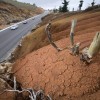
“Land Is Our Ally, But Its Patience Is Not Eternal”
Land degradation poses a threat to all life on Earth including humanity. To stop the enormous loss of life-giving land, the United Nations Convention to Combat Desertification (UNCCD) is pushing for a sustainable development goal of Zero Net Land Degradation (ZNLD) to be adopted at the upcoming Conference on Sustainable Development, known as Rio+20, in Brazil.
Turning Disaster Management Strategy Into Action – Part 1
Islanders on India’s Great Nicobar Island in the Bay of Bengal, barely 144 kilometres from Sumatra, fled when they felt the first tremors of the 8.6 magnitude earthquake on Apr. 11. They leaped across creeks inhabited by estuarine crocodiles, haunted by memories of the devastating 2004 Asian tsunami that took the lives of thousands of people.
U.N. Aims To Offset its Own Carbon Footprint
As the international community readies for a global mega-conference on sustainable development in Brazil mid-June, the United Nations is determined to practice what it preaches to the outside world: improve resource efficiency and drastically reduce its own greenhouse gas emissions.
For an Ailing Planet, the Cure Already Exists
The planet's climate recently reached a new milestone of 400 parts per million (ppm) of carbon dioxide in the Arctic.
Rio+20 – a Call to Responsibility, a Call to Action
We are all going through a period of great confusion and uncertainty.
Cultivating Food Security in Their Own Backyards
Misradi, a 58-year-old farmer from the Jelok neighborhood in Pacitan, East Java, some 524 kilometres east of Jakarta, has found a way to reduce his monthly expenses by 30 percent: instead of buying produce from the local market, he and his family now harvest most of their vegetables from their own yard.U.S. Corporations Send Mixed Messages on Climate Science
According to a report released by the Union of Concerned Scientists (UCS) here on Wednesday, at least half of the U.S. corporations under review have actively supported the misrepresentation of the science around climate change.
Q&A: The World Must Learn From Smallholder Farmers
As Africa's Sahel region faces a new food crisis, smallholder famers hold the key to making future development policies sustainable.
Biomass Plantations Can Power India
Valli, 50, and Sarasu, 60, have been working with Energy Plantation Projects India (EPPI) since inception in 2007, the income they earn forming an integral part of their household budgets. "We easily manage household work and a salary-paying job," they tell IPS.Energy Agency Looks to Natural Gas “Golden Age”
If a series of "golden rules" can be followed, a new report from the International Energy Agency (IEA) suggests, global natural gas usage could grow by more than 50 percent by 2035.
Brazilian Indigenous Community Seeks Survival Through Carbon Credits
Less than 45 years ago, the Paiter-Suruí, an indigenous people living deep inside the Amazon rainforest in Brazil, had never been in contact with the outside world. Today they hope to ensure their survival through the complex mechanisms of the carbon market.
Abrupt Shift from Drought to Flooding in Central Cuba
The sudden shift from drought to heavy rainfall that caused severe flooding in central Cuba drove home to the authorities the need to redesign preparedness and prevention plans for climate-related emergencies.
Climate Change and Family Planning – Twin Issues for LDCs
The reproductive rights agenda, from improving women’s access to education to systematic family planning to reducing birth rates and combating poverty, has become a cornerstone of most industrialised nations’ development policies toward the least developed countries (LDCs), comprised primarily of sub-Saharan African states.
Q&A: North-South Divide Looms Heavily Over Rio+20 Summit
The 1992 Earth Summit in Rio de Janeiro was to a large extent derailed by a North-South divide: a battle between a coalition of rich industrial nations versus the world's developing countries led by the Group of 77.
Rio+20 is Everyone’s Conference
The United Nations Conference on Sustainable Development, otherwise known as Rio+20, is a once-in-a-generation opportunity.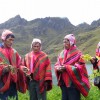
Elders in Peruvian Andes Help Interpret Climate Changes
A unique response to the challenge of global warming is happening in rural areas of Peru, where a network of indigenous elders is working out how to adjust weather forecasts in the light of climate change, while taking measures to safeguard their crops.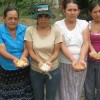
Rural Women in Peru Key to Adaptation of Seeds to Climate Change
For ages, rural women in the Peruvian highlands have been selecting and storing seeds, ensuring their preservation. But the authorities have failed to tap into this storehouse of knowledge and experience, despite the contributions it could make to the design of effective policies for adaptation to climate change, which poses a growing threat to the women’s livelihoods.
‘Green Economy’ – New Disguise for Old Tricks?
Though the current global economic and financial crises are undoubtedly devastating much of the world, they present the perfect opportunity for remodeling our economic system, according to participants at the ninth annual Terra Futura (Future Earth) exhibition of ‘good practices’ in social, economic and environmental sustainability held here from May 25-27.« Previous Page — Next Page »


As unsustainable human consumption and production systems are driving changes in average temperatures and weather patterns, "abnormal" is increasingly becoming the norm. So far, a lack of financing has been standing in the way of a comprehensive global plan for climate adaptation, and a global financial crisis has contributed to an increasing reliance on public-private partnerships. Our Climate Change page provides you with the latest news about international and local efforts to address what's frequently been called "the challenge of our time", the forces behind the climate change and the impact it has on the world's most vulnerable populations. Along the way, we bring you stories on growing citizen awareness, new scientific data, and emerging climate policies towards sustainable development.

The Week with IPS

Tracking global progress towards a sustainable world

