
Saturday, November 21, 2026



News and Views from the Global South
Climate Change
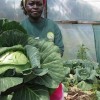
KENYA: Microloans, Greenhouses Help Women Cope with Climate Change
At Gakoromone Market in Meru, in Kenya’s Eastern Province, Ruth Muriuki arrives in a pickup full of tomatoes and cabbages despite the scarcity of rainfall in the area, thanks to the greenhouse technology she uses on her farm – and microcredit.
Q&A: Needed: Common Caribbean Strategies Against Climate Change
Subject to the double impact of the global economic crisis and climate change, the Caribbean island nations are in need of adaptation strategies in which international cooperation and citizen participation play key roles, says Cuban expert Ramón Pichs.
ZIMBABWE: Farmers Tackle Water Problems Fuelled by Climate Change
Beauty Moyo’s desire for access to water has finally been met. The rains that fell in the past week after a long dry patch have awakened this small-holder farmer deep in rural Plumtree, Zimbabwe on the border with Botswana to the reality of sparse rainfall, climate change and how she and her fellow villagers can respond.
PERU: Time to Adapt to Climate Change Impact on Women’s Lives
This year’s unusually rainy season in Peru is having a negative effect on the wellbeing and health of women in rural areas who are forced, for example, to spend three times as much time walking to collect firewood and water. But the authorities continue to turn a blind eye to the problems they face.
Q&A: No Magic Solutions for the Extinction of Species
The Earth's life support system, which generates the planet's air, water and food, is powered by 8.7 million living species, according to the latest best estimate. We know little about 99 percent of those unique species, except that far too many are rapidly going extinct.
CENTRAL AFRICA: Tentative Steps Towards Adaptation
Governments and civil society organisations in Central Africa are slowly developing strategies in response to global warming. But specialists say the steps being taken seem hesitant in the face of emerging realities.
Dwindling Resources Trigger Global Land Rush
A global scramble for land and mineral resources fuelled by billions of investment dollars is threatening the last remaining wilderness and critical ecosystems, destroying communities and contaminating huge volumes of fresh water, warned environmental groups in London Wednesday.Spanish Cities Far From Sustainable
Though Vitoria-Gasteiz, capital of the Basque Country, was elected the European Green Capital of 2012 – an award presented by the European Union to promote and reward efforts to mitigate climate change – Spain still has a long way to go to earn the label of ‘sustainable’ for others cities around the country.
CENTRAL AFRICA: Tentative Steps Towards Adaptation
Governments and civil society organisations in Central Africa are slowly developing strategies in response to global warming. But specialists say the steps being taken seem hesitant in the face of emerging realities.
Caribbean Hit Hard by Sargassum Seaweed Invasion
When scientists speak of the Sargasso Sea, which occupies part of the Atlantic Ocean, there is usually little mention of things drifting out because of the immobile currents.
Warming to Ignite the Carbon Bomb
Rising temperatures are drying out northern forests and peatlands, producing bigger and more intense fires. And this will only get much worse as the planet heats up from the use of ever larger amounts of fossil fuels, scientists warned last week at the end of the major science meeting in Vancouver.
Q&A: Climate Funding Needs Gender Equity
Gender considerations remain largely disregarded in existing climate funds, even though women are some of the hardest hit by the impacts of climate change on livelihoods and agriculture.
Caribbean Hit Hard by Sargassum Seaweed Invasion
When scientists speak of the Sargasso Sea, which occupies part of the Atlantic Ocean, there is usually little mention of things drifting out because of the immobile currents.
Airwaves Cut Distances in Rural Peru
The Onda Rural communication for development initiative in Peru has come up with a range of strategies to get information out to remote villages, to help them with decision-making on questions like climate change adaptation or disaster preparedness.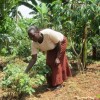
Rural Women Are Leading the Way – Will the World Follow? – Part 2
The United Nations’ 56th session of the Commission on the Status of Women (CSW) begins today in New York, with the empowerment of rural women high on a list of priorities for this year.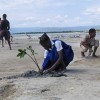
Eastern Caribbean Seeks Funds for Green Growth
As developing countries urgently seek new sources of financing to cope with problems linked to climate change, delegates from the nine-nation Organisation of Eastern Caribbean States (OECS) met here last week to evaluate potential funds and outline a more concrete vision of what is required for the subregion.
Eastern Caribbean Seeks Funds for Green Growth
As developing countries urgently seek new sources of financing to cope with problems linked to climate change, delegates from the nine-nation Organisation of Eastern Caribbean States (OECS) met here last week to evaluate potential funds and outline a more concrete vision of what is required for the subregion.Warming to Ignite the Carbon Bomb
Rising temperatures are drying out northern forests and peatlands, producing bigger and more intense fires. And this will only get much worse as the planet heats up from the use of ever larger amounts of fossil fuels, scientists warned last week at the end of a major science meeting in Vancouver.
Rural Women Are Leading the Way – Will the World Follow? – Part 1
Agriculture currently provides a livelihood for roughly 1.3 billion smallholder farmers and landless workers, of which nearly half – close to 560 million – are women.
Wanted: Climate-Smart Agriculture
As the links between food security and climate change become increasingly inextricable, the necessity for sustainable agriculture is now a universal concern.
Scientists Urge Reform for a Broken Global System
Unless governments work actively to build a brighter future for humanity, climate change, poverty and loss of biodiversity will worsen and continue to exacerbate existing global problems, top scientists warned ministers attending the United Nations Environment Programme's (UNEP) governing council meeting in Nairobi, Kenya, on Monday.« Previous Page — Next Page »


As unsustainable human consumption and production systems are driving changes in average temperatures and weather patterns, "abnormal" is increasingly becoming the norm. So far, a lack of financing has been standing in the way of a comprehensive global plan for climate adaptation, and a global financial crisis has contributed to an increasing reliance on public-private partnerships. Our Climate Change page provides you with the latest news about international and local efforts to address what's frequently been called "the challenge of our time", the forces behind the climate change and the impact it has on the world's most vulnerable populations. Along the way, we bring you stories on growing citizen awareness, new scientific data, and emerging climate policies towards sustainable development.

The Week with IPS

Tracking global progress towards a sustainable world

