Languages
Wednesday, November 18, 2026



News and Views from the Global South
Development & Aid

Invest in the Humanity of Those Left Furthest Behind
“To deny people their human rights is to challenge their very humanity,” Nelson Mandela once said. Today, the humanity of 128 million children and adolescents living in countries is impacted by armed conflicts, forced displacement and climate-induced disasters, where virtually every single one of their human rights are being challenged. The most central one, and in all too many cases, their only hope - their inherent right to an inclusive quality education, as enshrined in international human rights conventions - is brutally challenged, if not also willfully ignored or denied.
Ecological Cookstoves Help Preserve El Salvador’s Coastal Mangroves
 A score of coastal communities in El Salvador are staking their bets on sustainable development as a form of life that does not overexploit natural resources diminished by years of government neglect and a lack of environmental awareness, using instruments ranging from ecological cookstoves to mangrove reforestation.
COVID-19 Teaches Us to Better Manage Global Systemic Risks
Millions of lives lost. Trillions of dollars in economic damage. Over 120 million more people pushed into extreme poverty. The human and economic toll of the COVID-19 pandemic is almost unimaginable – a once-in-a-century catastrophe.
New Report Calls for Improved Eating Habits in a World of Extremes
With the two extremes of global hunger and obesity on the increase, a new report suggests a radical reset for food and nutrition to ensure the long-term sustainability of livelihoods and the environment.
Only Multilateral Cooperation Can Stop Harmful Tax Competition
US Treasury Secretary Janet Yellen has urged all governments to support a global minimum corporate tax rate of at least 21%. The US is working with other G20 nations to get other countries to end the “thirty-year race to the bottom on corporate tax rates”.
Barilla Foundation Brings Health and Climate Together in New Double Pyramid
Following an extensive scientific review, the Barilla Center for Food and Nutrition Foundation (BCFN) is preparing to launch a new food systems model which incorporates nutrition and climate.
Farmers in Brazil Benefit as Biogas Replaces Firewood
"Biogas is worth gold to us, we can no longer live without it," Claudete Volkswey, a poultry farmer in the municipality of Toledo, in the southwestern state of Paraná, Brazil, said enthusiastically about the new source of energy that has allowed her to get a good night’s sleep again, because she no longer has to get up to stoke the fire every two hours.
Education Cannot Wait Interviews Afghanistan’s Minister of Education Rangina Hamidi
H.E. Rangina Hamidi is the first female Minister of Education of Afghanistan in the last 30 years. Minister Hamidi was born in Kandahar, Afghanistan, fled with her family to Pakistan in 1981 during the Soviet Occupation and eventually immigrated to the United States. She attended high school in the United States and received her B.A. degree with a double major in Religion and Gender Studies at the University of Virginia.
Palestinians are Suffering from Hunger, Poverty, Conflict & a Global Pandemic
The Trump administration’s decision to cut off assistance to the United Nations Relief and Works Agency (UNRWA) caused considerable hardship for Palestinian refugees during the coronavirus pandemic, particularly those in Gaza where a majority of the population are refugees and poverty is rampant due to Israel’s blockade, Khaled Elgindy, a Senior Fellow at the Middle East Institute (MEI), told IPS.
Rohingya Children Find Refuge in Education
Although learning centres in Cox’s Bazar Kutupalong Refugee Camp are closed because of the COVID-19 pandemic, Mariom Akhter, a Rohingya mother of four, is grateful not only for the schooling her children have had but the training sessions she as a parent was able to attend. The skills she learnt has helped her assist her children with their education at home in a crisis. It’s something she’s likely needed to help her children with over the last few weeks after a Mar. 22 fire spread through the camp, destroying the shelters of at least 45,000 people as well as important infrastructure, including hospitals, learning centres, aid distribution points and a registration centre. At least 15 people were reported dead and 400 missing.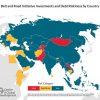
In the Secretive World of Government-to-Government Lending, 100 Chinese Debt Contracts Offer a Trove of New Information
Is Chinese financing good for developing countries? This has become a provocative question, freighted with ideology, geopolitics, and commercial rivalries. That doesn’t mean it isn’t worth trying to answer factually and empirically.
The Invisible Women in Energy: Biomass Producers Who Deserve More Recognition
As the world looks to address issues of gender equity, development and climate change, the importance of increasing the participation of women in the energy sector is gaining attention. To date, this topic has generally been framed around the underrepresentation of women in the energy workforce.
Overcoming COVID-19: World Leaders Must Finance a More Equal World to Beat Pandemics
Leaders at this year’s World Bank/IMF Spring Meetings (April 5-11) will determine how best to recover from one of the biggest crises the institutions have faced since their founding in 1944—COVID-19’s impact and its economic aftermath.
Helping Youth Agribusiness Keep Pace with Fast Growing Africa
From small towns to big cities, sub-Saharan Africa has the fastest urban growth rate in the world. The continent’s population is expected to double by 2050 with the youth representing 60% of the overall population. The UN Department of Global Communication, for example, projects that for the next 15 years urban growth is set to double for several African cities: Dar es Salaam will reach over 13 million inhabitants and Kampala will exceed seven million.
Indonesia’s Climate Villages Where Communities Work Together to Mitigate Climate Change
Residents of Ngadirejo village in Sukaharjo regency, Central Java province, had often found themselves helpless when their wells dried up or water flooded through their homes. But thanks to a national campaign called Program Kampung Iklim, known by its acronym ProKlim, they now have solutions to this flooding that generally occurs because of a lack of adequate water catchments.
A Post-COVID-19 Recovery will not be Possible if Water, Sanitation & Hygiene are not High on the Agenda
This World Health Day, G20 finance ministers will meet in Rome, Italy, to discuss how they will build back from the pandemic. The global economy is and concerted effort, coordination and imagination is needed to enable not only a worldwide recovery but also to ensure that the world’s poorest people are not left behind.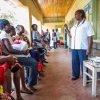
On World Health Day, a Call for Equity, Justice & the End of Paternalism
The past year has forced many of us to address difficult truths about how we treat and take care of each other — among them is a reckoning with racism and injustice.
Transforming Global Food Systems
Jose Graziano da Silva on the Path to Zero Hunger
The battle for the future of food has grown contentious, and José Graziano da Silva has become a lightning rod for criticism. In 2014, as Director General of the United Nations Food and Agriculture Organization (FAO), he presided over the institution’s first International Agroecology Symposium, opening what he called “a new window in the Cathedral of the Green Revolution.” The FAO has since then formalized support for “Scaling Up Agroecology” while continuing to promote the kinds of chemical-intensive agriculture associated with the Green Revolution.
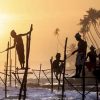
A Healthy Indian Ocean Feeds, Protects, and Connects all South Asians
It is the oceans that engendered life. The lives of humans remain connected to the seas, making the good health of the seas and the efficient management of sea-based activity essential elements for the wellbeing of people and nations.
Women and Girls to the Front
Women hold up half the sky. Some years ago, Sarah al-Amiri, a young Emirati engineer, had a fixed gaze beyond the sky and towards our galaxy. “Space was a sector that we never dared to dream growing up,” she noted.
Getting to Better than Normal in a Post-COVID-19 World
Girls in Asia don't want to go back to normal – they want to go "back to better than normal", says Zara Rapoport, a delegate during an online seminar on the impact of the COVID-19 pandemic on gender.« Previous Page — Next Page »


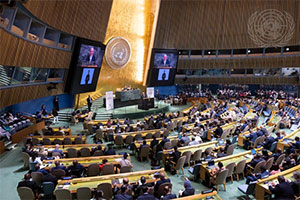 2026 High-level Political Forum on Sustainable Development. Credit: UN Photo/Eskinder Debebe
In 2015, the United Nations and its Member States adopted the Sustainable Development Goals (SDGs) in an effort to make the world a more sustainable and peaceful place for future generations. Progress on the 17 SDGs has been uneven, and inequality persists across the globe. 10 years after adoption, the 2025 UN SDGs Report revealed that only 35% of the SDG targets are on track, with more than half moving too slowly, and 18% moving backwards from the 2015 baseline. Poverty remains one of the world’s most pressing issues, with hunger, violence, and inequality impeding the opportunities for all people to achieve success. In September 2024, the United Nations Summit of the Future introduced a new goal: to eradicate global poverty by 2030, ensure universal rights to basic services, and increase the overall standard of living in terms of industrialization, economic well-being, citizen health, and literacy. Furthermore, recent shifts in United States foreign aid policy – notably, major budget cuts to USAID and the termination of thousands of development programmes– have severely threatened vital lifelines of financial aid to impoverished communities around the world. Additionally, the United States’ withdrawal from the Paris Climate Agreement has undercut international efforts at sustainable development. With the upcoming 2030 deadline, the UN Secretary-General has called for urgent multilateralism across six priority areas: food systems, energy, digital connectivity, education, jobs and social protection, and climate and biodiversity. IPS sheds light on marginalized communities that struggle on a daily basis to survive and have their stories heard and respected.
Updated by Yilan Batista and Shuli Wong August 2026

The Week with IPS

NEXT STOP - SDGs
Tracking global progress towards a sustainable world
Tracking global progress towards a sustainable world
