Languages
Friday, November 20, 2026



News and Views from the Global South
Development & Aid

Opting In: The Value of Vaccines
Since the introduction of vaccines, diseases such as measles and polio were quickly becoming a thing of the past. However, the world’s progress on immunisation is now being threatened.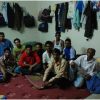
Are Migrant Workers Humans or Commodities?
The United Nations has estimated a hefty $466 billion as remittances from migrant workers worldwide in 2017—and perhaps even higher last year.
Benin’s Agriculture Has a Good Season, But it Wasn’t Easy
Théophile Houssou, a maize farmer from Cotonou, has spent sleepless nights lying awake worrying about the various disasters that could befall any farmer, often wondering, “What if it rains heavily and all my crops are washed away?” or “What if the armyworms invade my farm and eat up all the crops and I’m left with nothing?”
Coping With World Bank-Led Financialization
The World Bank has successfully promoted its ‘Maximizing Finance for Development’ (MFD) strategy by embracing the United Nations’ Sustainable Development Goals, internationally endorsed in September 2015. It has also secured support from the G20 of twenty biggest economies, and effectively pre-empted alternative approaches at the third UN Financing for Development summit in Addis Ababa in mid-2015.Sanctioning Iran: Will it work?
Sophocles in his tragedy Antigone has the line "evil[folly] appears as good in the minds of those whom god leads to destruction". First came the US unilateral exit from the historical Joint Comprehensive Plan of Action (JCPOA without the consent from our European allies with the resulting division between the US and Europe regarding policies towards Iran. US also restored sanctions against Iran but gave some time for energy-needy allies to import energy from Iran against a deadline. Some like Japan have complied grudgingly with the US orders. Others, particularly China and India have gone on importing Iranian energy.
Kenya and Ethiopia Cross-Border Initiative: A Move Towards Sustainable Peace
Many years of internecine conflict is being replaced by a new narrative of peace along the Kenya-Ethiopia border. Communities that once fought each other are now dreaming of a joint journey towards a better future.
Terror and Religion
Just before nine o´clock in the morning of April 21st, Christians in Sri Lanka were in their churches peacefully celebrating Easter Sunday, while tourists were waking up in their hotel rooms. Suddenly explosions blasted three churches and three hotels. Among the ruins lay hundreds of wounded people, as well as 253 corpses of men, women and children. They had been killed and maimed because some fellow human beings believed they acted in God´s name and out of promises of an unproven, heavenly bliss if they killed themselves after obliterating people they did not know; sowing death, lifelong suffering and sorrow.
Renewables to Become the Norm for the Caribbean
Jamaica and other Small Island Developing States (SIDS) are embracing renewable energy as part of their plans to become decarbonised in the coming decades.
Land Conservation: A Risky Business
In light of land degradation and climate change, the protection of the environment is crucial—but the protection of the very people working tirelessly and with much risk to preserve nature should be just as important.
Improving the Lives of Millions of Mothers and Children
It is slightly after 3pm on a hot Wednesday afternoon in Chipata district, eastern Zambia, and a group of women are gathering for a meeting. It is Elizabeth Tembo’s turn to stand amongst the other mothers like herself and share key lessons on nutrition.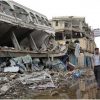
US & Western Arms in Yemen Conflict Signal Potential War Crime Charges
When US political leaders urged the Trump administration to either reduce or cut off arms supplies to Saudi Arabia – largely as a punishment for its indiscriminate bombings of civilians in the four-year old military conflict in Yemen—President Trump provided a predictable response: “If we don’t sell arms to Saudi Arabia, the Chinese and the Russians will.”
A Treaty to End Corporate Immunity?
When Ecuadorean diplomat Luis Gallegos first proposed a “Binding Treaty on Business and Human Rights,” many countries and environmental activists welcomed the idea with open arms.
Women and Girls “Preyed on as the Spoils of War”
“They forcefully took us away and kept us like prisoners,” Lydia Musa, a former Boko Haram captive who was abducted at the age of 14 during an attack on her village in Gwoza, in Nigeria’s north eastern Borno State, tells IPS. Musa and two other underaged girls were captured and forced to marry Boko Haram fighters in spite of their protests that they were too young to marry.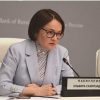
Russia’s First Female Central Bank Governor in a Challenging Job
Within a few short months after taking up her post as governor of the Central Bank of Russia in 2013, Elvira Nabiullina faced a growing economic crisis brought on by plunging oil prices, geopolitical tensions, and sanctions.
After the Rain: The Lasting Effects of Storms in the Caribbean
Sustainability is constitutive of the concept of development. Just as economist Amartya Sen has argued that there is no point in discussing the relationship between development and democracy, because democracy is constitutive of the concept of development, there is no point of trying to disentangle sustainability from the notion of development itself.
Against All Odds, Indigenous Villages Generate Their Own Energy in Guatemala
In the stifling heat, Diego Matom takes the bread trays out of the oven and carefully places them on wooden shelves, happy that his business has prospered since his village in northwest Guatemala began to generate its own electricity.
Why Climate Action Plans are not Good Enough to Deliver a Low-Carbon Future in Cities
Though climate policies aim to reduce GHG emissions, they miss out on emphasizing the importance of urban planning policies Cities that have ratified the Paris Agreement and pledged to reduce carbon emissions are adopting climate action plans aimed at reducing greenhouse gas (GHG) emissions.
Privatization Promotes Collusion and Corruption
At the risk of reiterating what should be obvious, the question of private or public ownership is distinct from the issue of competition or market forces. Despite the misleading claim that privatization promotes competition, it is competition policy, not privatization, that promotes competition.
Economic Empowerment of Women Good for All
Government staffer Souhayata Haidara enjoys talking about her life in a patriarchal society. Her career is a triumph of patience and perseverance, she tells Africa Renewal with a smile and a wink.
Global Energy Consumption is Up — So Are Emissions
Our acceptance of climate change doesn’t keep pace with our energy consumption reduction. However, the latest International Energy Agency’s (IEA’S) Global Energy and CO2 Status Report for 2018 has some good news.
Women in Ethiopia Still Struggle Despite Leadership in Government
Following 2018 elections in Ethiopia, a record-breaking number of women now hold leadership positions in the country's government. But women still struggle to rise up the ranks in other sectors.« Previous Page — Next Page »


 2026 High-level Political Forum on Sustainable Development. Credit: UN Photo/Eskinder Debebe
In 2015, the United Nations and its Member States adopted the Sustainable Development Goals (SDGs) in an effort to make the world a more sustainable and peaceful place for future generations. Progress on the 17 SDGs has been uneven, and inequality persists across the globe. 10 years after adoption, the 2025 UN SDGs Report revealed that only 35% of the SDG targets are on track, with more than half moving too slowly, and 18% moving backwards from the 2015 baseline. Poverty remains one of the world’s most pressing issues, with hunger, violence, and inequality impeding the opportunities for all people to achieve success. In September 2024, the United Nations Summit of the Future introduced a new goal: to eradicate global poverty by 2030, ensure universal rights to basic services, and increase the overall standard of living in terms of industrialization, economic well-being, citizen health, and literacy. Furthermore, recent shifts in United States foreign aid policy – notably, major budget cuts to USAID and the termination of thousands of development programmes– have severely threatened vital lifelines of financial aid to impoverished communities around the world. Additionally, the United States’ withdrawal from the Paris Climate Agreement has undercut international efforts at sustainable development. With the upcoming 2030 deadline, the UN Secretary-General has called for urgent multilateralism across six priority areas: food systems, energy, digital connectivity, education, jobs and social protection, and climate and biodiversity. IPS sheds light on marginalized communities that struggle on a daily basis to survive and have their stories heard and respected.
Updated by Yilan Batista and Shuli Wong August 2026

The Week with IPS

NEXT STOP - SDGs
Tracking global progress towards a sustainable world
Tracking global progress towards a sustainable world
