Languages
Sunday, November 22, 2026



News and Views from the Global South
Development & Aid

UN “Profoundly Sorry” for Haiti Cholera Outbreak
For the first time, the United Nations issued a formal apology for their role in the cholera outbreak in Haiti and announced new steps to alleviate the ongoing health crisis.
ISDS Corporate Rule of Law
Investor-state dispute settlement (ISDS) provisions in ostensible free trade agreements (FTAs) and bilateral investment treaties (BITs) have effectively created a powerful, privileged system of protections for foreign investors that undermine national law and institutions. ISDS allows foreign corporations to sue governments for causing them losses due to legal or regulatory changes.
Ending AIDS Needs Both Prevention and a Cure
Eighteen million people, just slightly under half of the people living with HIV and AIDS globally, are now taking life-saving medication, but global efforts to end the disease still largely depend on prevention.
Subway Will Modernise – and Further Gentrify – Historic Centre of Quito
Success can kill, when it comes to cities. Spain’s Barcelona is facing problems due to the number of tourists that it attracts. And the historic centre of Ecuador’s capital city, Quito, a specially preserved architectural jewel, is losing its local residents as it gentrifies.
Rohingya Refugees Trapped in Limbo
Amid growing persecution by Myanmar's military, thousands of minority Rohingya Muslims in its western state of Rakhine have fled their frontier villages and are languishing along the Myanmar-Bangladesh border for lack of shelter and emergency supplies.
Looking into the Eyes of Central American Refugees in a Time of Hate and Fear
Ten years ago I arrived in Mexico for the first time. A heavy backpack strapped around my waist, I toddled over a large, concrete bridge that divides Mexico and Guatemala.
Debate Roils India Over Family Planning Method
The Indian government's decision to make injectable contraceptives available to the public for free under the national family planning programme (FPP) has stirred debate about women's choices in the world's largest democracy and second most populous country.
“Bonn Has Become an Insider Tip on the International Stage”
With around 320,000 inhabitants on 141 square kilometres, no other relatively small city has played such a historically critical role like the City of Bonn.
Selling Their Bodies for Fish and a Handful of Shillings
It's Saturday morning and Hafsa Juma* is seated on a traditional mat known locally as a mkeka under the scorching sun outside her homestead, located near Gasi Beach on the Kenyan coast.
Ensuring Shared Progress for Sustainable Development and Peace
International inequality has grown over recent centuries, especially the last two. Before the Industrial Revolution, between-country inequalities were small, while within-country inequalities accounted for most of overall global income inequality. Now, inter-country income inequalities account for about two-thirds of world inequality with intra-country inequality accounting for a third.
Violence Against Black Women in Brazil on the Rise, Despite Better Laws
Four months in hospital and a number of operations saved the life of Maria da Penha Fernandes of Brazil, but the rifle shot left her paraplegic at the age of 37. When she returned home, her husband tried to electrocute her in the bathroom.
Battle of the Desert (and III): UNCCD ‘s Louise Baker on The Silk Road
Marking this year's World Day to Combat Desertification last June, the United Nations announced the launch of a China-United Nations Convention to Combat Desertification (UNCCD) Belt and Road Joint Action initiative to curb Desertification along the Silk Road.
Students Under Siege as Schools Burn in India’s Troubled Kashmir
In the fading light of a November afternoon, 12-year-old Mariya Sareer bends over a textbook, trying to read as much as she can before it gets dark. It's been nearly five months since the seventh grader from Shurat, a village 70 kms south of Srinagar city, last went to school, thanks to a raging political conflict.
Kenya’s Youth Unemployment Challenge Presents Opportunities
Consider this paradox. Every year 1 million young people join the job market in Kenya, yet Kenya has the largest number of jobless youth in East Africa. As the government puts in place measures for addressing the issue of high youth unemployment and poverty, The private sector needs to join forces to sustainably grow its business and markets. Businesses and the societies that they operate in are symbiotic and it is now an established maxim that business cannot succeed in societies that fail.
Children of the ‘Others’, Sons of Minor Gods
In December 1946, “faced with the reality of millions of children suffering daily deprivation in Europe after World War II,” the General Assembly of the United Nations created the UN International Children’s Emergency Fund (UNICEF), to mount urgent relief programmes.
Climate Finance for Farmers Key to Avert One Billion Hungry
With climate change posing growing threats to smallholder farmers, experts working around the issues of agriculture and food security say it is more critical than ever to implement locally appropriate solutions to help them adapt to changing rainfall patterns.
Climate: Strong Commitment and New Global Action on Water Scarcity
“No country, irrespective of its size or strength, is immune from the impacts of climate change, and no country can afford to tackle the climate challenge alone.”
Battle of the Desert (II): A ‘Great Green Wall for Africa’
Desertification, land degradation, drought, climate change, food insecurity, poverty, loss of biodiversity, forced migration and conflicts, are some of the key challenges facing Africa—a giant continent home to 1,2 billion people living in 54 countries.
Rural Job Creation Holds the Key to Development and Food-Security Goals
Harvesting the benefits of core agricultural research, which often bears on improved crop varieties and plant diseases, increasingly depends on the social and economic conditions into which its seeds are sown. It is a sign of the times that Kanayo F. Nwanze, the president of the International Fund for Agricultural Development who started off as a cassava entomologist when ITTA posted him to Congo in the 1970s, was recently hailed for his efforts to create African billionaires.
New Fund Aims to Help Build Resilience to Climate Change
The world has been too slow in responding to climate events such as El Niño and La Niña, and those who are the “least responsible are the ones suffering most”, Mary Robinson, the special envoy on El Niño and Climate, told IPS at the United Nations Climate Change Conference in Marrakech (COP22).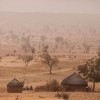
Battle of the Desert (I): To Fight or to Flee?
To fight or to flee? These are the stark choices Maria, a single mother from the Bangalala midlands of Tanzania, faces repeatedly. “After the rains failed for a few years, some neighbours claimed our trees were drawing too much water from the ground. We cut them down. Our harvests fell. My mother closed her stall at the local market. That is when my father and I moved from the midlands to the Ruvu Mferejini river valley.”« Previous Page — Next Page »


 2026 High-level Political Forum on Sustainable Development. Credit: UN Photo/Eskinder Debebe
In 2015, the United Nations and its Member States adopted the Sustainable Development Goals (SDGs) in an effort to make the world a more sustainable and peaceful place for future generations. Progress on the 17 SDGs has been uneven, and inequality persists across the globe. 10 years after adoption, the 2025 UN SDGs Report revealed that only 35% of the SDG targets are on track, with more than half moving too slowly, and 18% moving backwards from the 2015 baseline. Poverty remains one of the world’s most pressing issues, with hunger, violence, and inequality impeding the opportunities for all people to achieve success. In September 2024, the United Nations Summit of the Future introduced a new goal: to eradicate global poverty by 2030, ensure universal rights to basic services, and increase the overall standard of living in terms of industrialization, economic well-being, citizen health, and literacy. Furthermore, recent shifts in United States foreign aid policy – notably, major budget cuts to USAID and the termination of thousands of development programmes– have severely threatened vital lifelines of financial aid to impoverished communities around the world. Additionally, the United States’ withdrawal from the Paris Climate Agreement has undercut international efforts at sustainable development. With the upcoming 2030 deadline, the UN Secretary-General has called for urgent multilateralism across six priority areas: food systems, energy, digital connectivity, education, jobs and social protection, and climate and biodiversity. IPS sheds light on marginalized communities that struggle on a daily basis to survive and have their stories heard and respected.
Updated by Yilan Batista and Shuli Wong August 2026

The Week with IPS

NEXT STOP - SDGs
Tracking global progress towards a sustainable world
Tracking global progress towards a sustainable world
