Languages
Sunday, November 22, 2026



News and Views from the Global South
Development & Aid

Latin America to Take the Temperature of Paris Agreement at Climate Summit
With the ratification and entry into effect of the Paris Agreement still fresh, the countries of Latin America are heading to the climate summit in Marrakesh in search of clear rules that will enable them to decarbonise their economies to help mitigate global warming.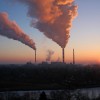
World to Cut Gas Emissions by 25 Percent More Than Paris Agreement
On the eve of the entry into force of the Paris Agreement today Nov. 4, the United Nations sounded new climate alarm, urging the world to ‘dramatically’ step up its efforts to cut greenhouse gas emissions by some 25 per cent more.
Data Innovation Powering Sustainable Development Goals
The world is awash with data. Today, more data than ever in human history is produced on a daily basis. Every time a person carries a cell phone from one place to another, tops up her mobile airtime or posts on social media, new data is created.
Privatization Cure Often Worse Than Malady
Privatization of SOEs has been a cornerstone of the neo-liberal counterrevolution that swept the world from the 1980s following the economic crisis brought about by US Fed’s sharp hike in interest rates. Developing countries, seeking aid from the International Monetary Fund (IMF) and the World Bank, often had to commit to privatization as a condition for credit support.
President of UNGA Disillusioned by Unsustainable Development
Development should be about more than building roads or buying air conditioners, the President of the UN General Assembly, Peter Thomson told IPS in a recent interview.
International Women’s Boat to Gaza
A few weeks ago, the US government agreed to give Israel $38 billion dollars, the largest military funding package the U.S. has given any nation. This $38 billion in military and other type of Aid will be used to imprison the Palestinians of Gaza, and continue Israel’s military occupation, and imposition of an apartheid state, upon the Palestinian people.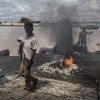
Toxic Air – The ‘Invisible Killer’ that Stifles 300 Million Children
About 300 million children in the world are living in areas with outdoor air so toxic – six or more times higher than international pollution guidelines – that it can cause serious health damage, including harming their brain development.
Rural Malawians About to Go Online
This month, many Malawians, especially those in rural areas, will be able to start accessing the internet as easily as opening a tap to get water.
Int’l Effort to Help Ethiopia Shoulder Its Refugee Burden
A concerned-looking group of refugees gather around a young woman grimacing and holding her stomach, squatting with her back against a tree. But this is no refugee camp, rather the Jesuit Refugee Service (JRS) compound just off a busy main road leading to Sidist Kilo roundabout in the Ethiopian capital.
Longer, But Less Meaningful Lives?
The last one hundred years life expectancy has increased by about 25 per cent-from near 80 to near 100-in some countries. But, instead of increasing playful childhood, education, work and retirement by 25 per cent, the age of retirement has moved much less than the age at death.
Q&A: Bangladesh’s ‘Higher Trajectory of Development’ Not Easy but Achievable
Bangladesh, a country of 160 million people, has made significant progress in its efforts to accelerate economic growth, reduce poverty and promote social development, but it now faces certain challenges in consolidating these achievements and marching forward on the higher trajectory of development, says one of its leading economists.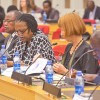
Africa and the Paris Agreement: Which Way Forward?
The Paris Agreement on climate change is set to enter into force on Nov. 4, after it passed the required threshold of at least 55 Parties, accounting for an estimated 55 per cent of the total global greenhouse gas emissions, ratifying the agreement.
Dying to Get to Europe
They are not just data or numbers for statistical calculations. They are desperate human beings fleeing wars, violence, abuse, slavery and death. They hear and believe the bombastic speeches about democracy and human rights and watch the many images of welfare and good life in Europe.
Cities Address a Key Challenge: Infrastructure Needs
“We as mayors have to govern midsize cities as if they were capital cities,” said Héctor Mantilla, city councilor of Floridablanca, the third-largest city in the northern Colombian department of Santander.
Are Public Enterprises Necessarily Inefficient?
From the 1980s, various studies purported to portray the public sector as a cesspool of abuse, inefficiency, incompetence and corruption. Books and articles with pejorative titles such as ‘vampire state’, ‘bureaucrats in business’ and so on thus provided the justification for privatization policies. Despite the caricature and exaggeration, there were always undoubted horror stories which could be cited as supposedly representative examples. But similarly, by way of contrast, other experiences show that SOEs can be run quite efficiently, even on commercial bases, confounding the dire predictions of the prophets of public sector doom.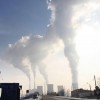
Climate Doomsday – Another Step Closer
Almost inadvertently, humankind is getting closer everyday to the point of no-return towards what could be called the ‘climate doomsday’. Now, globally averaged concentration of carbon dioxide (CO2) in the atmosphere has surged again to new records in 2016… and will not dip below pre-2015 levels for many generations.
Funding Lags to Combat Land Degradation
Land degradation already affects millions of people, bringing biodiversity loss, reduced availability of clean water, food insecurity and greater vulnerability to the harsh impacts of climate change.
Stronger Collaboration for Greater Energy Access in Asia Pacific
The emergence of new ideas, technological advancements and innovative market-driven financing solutions has lent confidence to the idea that universal access to energy services is attainable. This is particularly good news in the Asia and the Pacific region, where, despite making significant contributions to global growth and poverty reduction since 2000, nearly half a billion citizens still have no access to modern energy, principally in rural and far-flung areas. Three-quarters of these people live in South Asia alone. Some 70% of the Pacific island households are un-electrified, a level similar to sub-Saharan Africa. The lack of electricity and clean cooking options marginalizes predominantly remote and slum communities who are trapped in energy poverty, preventing them from stepping on the first rung of the ladder to prosperity.
Cuba’s Fish Farming Industry Seeks to Double Output by 2030
Protected from the sun by broad-brimmed hats and long- sleeved shirts, workers at the La Juventud fish farm throw fish feed into the tanks for the tilapias, a fish that is scarce and in high demand in the Cuban markets.
UN Must Fight Tax Evasion, Says UN Expert
A UN Human Rights Expert has called on the international community to fight tax evasion and abolish tax havens that siphon off essential resources from human rights protection and global development.
Kenya Greens Drylands to Combat Land Degradation
Faced with growing degradation that is swallowing large swathes of land in arid and semiarid areas, Kenya is heavily investing in rehabilitation efforts to stave off the threat of desertification.« Previous Page — Next Page »


 2026 High-level Political Forum on Sustainable Development. Credit: UN Photo/Eskinder Debebe
In 2015, the United Nations and its Member States adopted the Sustainable Development Goals (SDGs) in an effort to make the world a more sustainable and peaceful place for future generations. Progress on the 17 SDGs has been uneven, and inequality persists across the globe. 10 years after adoption, the 2025 UN SDGs Report revealed that only 35% of the SDG targets are on track, with more than half moving too slowly, and 18% moving backwards from the 2015 baseline. Poverty remains one of the world’s most pressing issues, with hunger, violence, and inequality impeding the opportunities for all people to achieve success. In September 2024, the United Nations Summit of the Future introduced a new goal: to eradicate global poverty by 2030, ensure universal rights to basic services, and increase the overall standard of living in terms of industrialization, economic well-being, citizen health, and literacy. Furthermore, recent shifts in United States foreign aid policy – notably, major budget cuts to USAID and the termination of thousands of development programmes– have severely threatened vital lifelines of financial aid to impoverished communities around the world. Additionally, the United States’ withdrawal from the Paris Climate Agreement has undercut international efforts at sustainable development. With the upcoming 2030 deadline, the UN Secretary-General has called for urgent multilateralism across six priority areas: food systems, energy, digital connectivity, education, jobs and social protection, and climate and biodiversity. IPS sheds light on marginalized communities that struggle on a daily basis to survive and have their stories heard and respected.
Updated by Yilan Batista and Shuli Wong August 2026

The Week with IPS

NEXT STOP - SDGs
Tracking global progress towards a sustainable world
Tracking global progress towards a sustainable world
