Languages
Saturday, November 28, 2026



News and Views from the Global South
Development & Aid

Cuba Knows Condom Use Not Enough
“But I always used a condom!” was the sentence that played over and over in Jaime Roche’s mind when the young Cuban man tested positive for HIV in October.New Rule for State-Paid Childbirth Stirs Discontent in Armenia
A government decree in Armenia that bars pregnant women who are not residents of Yerevan from receiving free childbirth services in the capital is causing discontent in outlying regions.
Toxic Waste on Par with Malaria as a Global Killer
Toxic waste sites in 31 countries are damaging the brains of nearly 800,000 children and impairing the health of millions of people in the developing world, two new studies have found.
Displaced by Gold Mining in Colombia
"I was displaced here by mining a month ago. Illegal miners forced me out of my municipality. No, don't write down where I'm from, let alone my name," said a 40-year-old black man frightened for his safety. IPS agreed to say only that he is from Colombia’s southern Pacific coast region.
The Challenge of Being a Maasai Woman
The Maasai tribe of Kenya and Tanzania has long been a beacon of traditional culture to many Africans - and for Westerners on safari through Maasai Mara, Samburu or Amboseli, a familiar face.
Culture Becomes Latest Front in Afghanistan’s War
Another kind of war, less explosive than bombs and more subtle than night raids, is taking place in the Central Asian country of Afghanistan: a war of cultural influence. Its means are financial sponsorships and other support for cultural and artistic events.
Developing Resilience to Financial Shocks
The global repercussions of the 2007-2008 financial crisis are a stark reminder of the economic interdependence in our globalising world. No country was spared from the shock waves that originated in the financial systems of developed economies.
What Pakistani Women Want
As Pakistan inches closer to the May 11 elections, and the accompanying heat and dust get even thicker, it is pertinent to stop for a moment and ask: what do women voters in Pakistan want?
Kenyan Women to Break Glass Ceiling in Cabinet
Kenya’s nominees for cabinet secretary positions, who include an unprecedented number of women - six out of 18 - will undergo a gruelling public vetting process by the Parliamentary Committee on Appointments Thursday.
Islamists Lay Siege to Dhaka
Adding to a long list of domestic woes, including a factory collapse that left hundreds dead last month, Bangladesh is now grappling with a wave of violence that threatens to deepen the gulf between secular sections of society and religious fundamentalists.
Mexico – Ground Zero in the Fight for the Future of Maize
In the 2011 action-thriller "Unknown", scientists are persecuted by the biotech industry because they plan the open release of a drought- and pest-resistant strain of maize that could help eradicate world hunger.
Scolding with One Hand and Bribing with the Other
When a Southeast Asian country was riddled with corruption in a bygone era, there were rumours that government officials routinely offered receipts every time they accepted a bribe.
Chile Looks to Volcanoes and Geysers for Energy
Chile is one of the countries with the greatest potential for geothermal energy development in Latin America, but a lack of incentives for investment in the sector has kept it from moving past the exploratory phase. A strategic partnership with New Zealand aims to change that situation.
Still Homeless, Two Decades Later
The camp should not have been difficult to find. We were told to drive straight on the road that leads north away from the town of Puttalam, 140 kilometres from Sri Lanka’s capital Colombo, and we would come upon the settlement of internally displaced people.
Skilled Midwives May be the Key to Healthy Babies
The story goes like this: a young mother lies quietly in a dimly lit room having just given birth to her baby. For the next seven days she watches over the child with caution, nursing and swaddling it patiently. Fearful that the infant will not survive past a few days, she refuses to give it a name.
Decade After Iraq, Right-Wing and Liberal Hawks Reunite Over Syria
Ten years after right-wing and liberal hawks came together to push the U.S. into invading Iraq, key members of the two groups appear to be reuniting behind stronger U.S. military intervention in Syria.
Climate Change Adaptation: A Race Against Time
Adaptation and mitigation. Identified by the United Nations Framework Convention on Climate Change and by scientists as the two major responses to address the problem, these were also the twin preoccupations of a climate change conference held recently in Dhaka.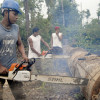
Critics Slam California “Forest Offset” Plan
More than two dozen environmental organisations are urging California Governor Jerry Brown to disregard recommendations from a United Nations task force to include so-called forest “offsets” in the state’s new emissions-trading scheme.
Climate Change Makes Life Tougher for Solomon Island Farmers
Life is difficult enough for communities on the remote southern Weather Coast of Guadalcanal in the Solomon Islands. Sustaining a livelihood from the land is a daily struggle on the steep coastal mountain slopes that plunge to the sea, made worse by the absence of adequate roads, transport and government services. And now, climate change is taking its toll on the already precarious food situation here.
Migrant Children Struggle to Learn
In the hustle and bustle of Thailand’s capital, Bangkok, a small learning centre located in the Bang Bon district is helping children hailing mostly from the war-torn provinces of Myanmar (Burma) gain access to a basic education.
Q&A: The Security of a Nation Is Its Women
Nyaradzayi Gumbonzvanda, a human rights lawyer and the general secretary of the global rights network World YWCA, knows what it is like to struggle against poverty and violence: she herself comes from a poor family in Magaya village in Murewa district, which lies northeast of Zimbabwe’s capital Harare.« Previous Page — Next Page »


 2026 High-level Political Forum on Sustainable Development. Credit: UN Photo/Eskinder Debebe
In 2015, the United Nations and its Member States adopted the Sustainable Development Goals (SDGs) in an effort to make the world a more sustainable and peaceful place for future generations. Progress on the 17 SDGs has been uneven, and inequality persists across the globe. 10 years after adoption, the 2025 UN SDGs Report revealed that only 35% of the SDG targets are on track, with more than half moving too slowly, and 18% moving backwards from the 2015 baseline. Poverty remains one of the world’s most pressing issues, with hunger, violence, and inequality impeding the opportunities for all people to achieve success. In September 2024, the United Nations Summit of the Future introduced a new goal: to eradicate global poverty by 2030, ensure universal rights to basic services, and increase the overall standard of living in terms of industrialization, economic well-being, citizen health, and literacy. Furthermore, recent shifts in United States foreign aid policy – notably, major budget cuts to USAID and the termination of thousands of development programmes– have severely threatened vital lifelines of financial aid to impoverished communities around the world. Additionally, the United States’ withdrawal from the Paris Climate Agreement has undercut international efforts at sustainable development. With the upcoming 2030 deadline, the UN Secretary-General has called for urgent multilateralism across six priority areas: food systems, energy, digital connectivity, education, jobs and social protection, and climate and biodiversity. IPS sheds light on marginalized communities that struggle on a daily basis to survive and have their stories heard and respected.
Updated by Yilan Batista and Shuli Wong August 2026

The Week with IPS

NEXT STOP - SDGs
Tracking global progress towards a sustainable world
