Languages
Saturday, November 28, 2026



News and Views from the Global South
Development & Aid

Treaty “Insufficient” to Reduce Global Mercury Levels
Even as government negotiators from around the world prepare to gather next week for a final round of talks on a new international treaty limiting the use of mercury, scientists and activists are warning that the draft treaty is both too weak and too limited in scope to have a major impact.
U.N. Aims at Sustainable Energy for All by 2024
When the General Assembly wound down its 67th session in late December, it underscored the key role for energy in the U.N.'s post-2015 economic agenda by declaring 2014-2024 the "Decade of Sustainable Energy for All".
Slum Dwellers Say “No” to Blood Money
With less than two months before Kenyans head to the polls for what is shaping up to be the most competitive and polarised general election in the country’s history, many fear that this East African country of over 40 million has not seen the last of electoral violence.
More Aging U.S. Coal Plants Hit the Chopping Block
Georgia Power, a subsidiary of Southern Company, one of the largest utilities in the U.S. south, plans to retire 15 coal and oil-fired energy generating units at four different plants, in the latest sign that a national campaign against coal is gaining traction.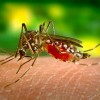
Brazil Measures Rain Against Dengue
Mosquitoes that transmit dengue fever need clean, still water and warm night temperatures to reproduce and thrive. That is common knowledge, but now scientists in Brazil have managed to measure the relation between increased rainfall and temperatures and the risk of dengue epidemics in this city.
Education Fights Militants and Military
Eight-year-old Muhammad Akram was forced to quit school when he was in the second grade, when the Taliban destroyed the small, government-run school that he and his brother had been attending.U.S. Health Worse Than Nearly All Other Industrialised Countries
U.S. citizens suffer from poorer health than nearly all other industrialised countries, according to the first comprehensive government analysis on the subject, released Wednesday.Uzbekistan Tries to Keep Culture from Going Pop
Mahfuza, a mother of three in a small town in the Ferghana Valley, has better things to do than spend her afternoons at crowded, smoke-filled Internet clubs. But as a high-school algebra teacher, she has an extracurricular assignment from her bosses: she must monitor the clubs’ clientele – many of them her students – while they play computer games, surf social networking websites, and watch music videos.Cuban Sugar Sector Aims for Recovery in 2013
The Cuban sugar industry seems to be experiencing a rebirth thanks to an economic modernisation programme that has allowed for an injection of foreign capital as part of a strategy to strengthen and diversify this key sector.
Unemployed Youth Turn to Drugs
The air is heavy with the smell of marijuana as Gibrilla (23) expertly rolls a large joint at the Members of Blood (M.O.B) gang base in a poor neighbourhood of Sierra Leone’s capital, Freetown.
Closing Europe’s Borders Becomes Big Business
The European Union is implementing a new border management system with tougher migration control the core aim. Major security and weapons companies are already reaping the benefits.
U.S. Immigration System’s Cost, Reach “Unprecedented”
The United States government is spending more on immigration enforcement each year than it is on all other federal law-enforcement agencies combined, according to the first comprehensive look at how the country’s sprawling immigration complex has grown over the past decade.
China’s Rising Soybean Consumption Reshaping Western Agriculture
Global demand for soybeans has soared in recent decades, with China leading the race. Nearly 60 percent of all soybeans entering international trade today go to China, making it far and away the world's largest importer.
New Push for U.S. to Ratify Major Women’s Treaty
The United States continues to be in the dubious company of six countries that have either refused or are reluctant to ratify the landmark U.N. Convention on the Elimination of All Forms of Discrimination Against Women (CEDAW).
A River Runs Dry in Tanzania
Avelina Elias Mkenda, a 52-year-old small-scale farmer in the Mbarali district of Tanzania’s southwestern Mbeya region, can sense a change in her environment.
Historic Mapuche Land Conflict Flares Up
A string of attacks in the southern Chilean region of Araucanía, where native Mapuche people are struggling for their land rights, puts the spotlight squarely on what analysts call the "supine ignorance" displayed by authorities about the country's history.
Pacific Island Wakes Up to Threat of Oil Spills
Coral reefs and marine ecosystems in the Milne Bay Province of the Pacific Island nation of Papua New Guinea are at serious risk of long-term environmental damage. The reason: an oil spill from a ship that ran aground on a reef on Kwaiawata Island on Christmas Eve, and authorities’ long delay in mobilising an appropriate response to the accident.
EU Trade Deal Offers Pakistan Some Respite
 Karachi, a sprawling city of 18 million, is the country’s economic hub. It accounts for 95 percent of Pakistan’s foreign trade and contributes 30 percent of national industrial production.

Villagers Wail Against Nuclear Power
Mahalakshmi, a housewife married to a farmer, is afraid for her family’s future. The fifty-two-year-old woman is also frustrated that Indian authorities have "betrayed" poor villagers.Cubans See Internet as Crucial to Future Development
The Cuban government’s economic reforms must consider the myriad opportunities offered by the Internet, a key platform of the dominant economic model on the planet, according to interviews with both experts and average people.
OP-ED: The Arab Spring at Two: What Lessons Should We Learn?
As the Arab Spring enters its third year, new Arab democracies and the international community should reflect on several critical lessons from the past two years.« Previous Page — Next Page »


 2026 High-level Political Forum on Sustainable Development. Credit: UN Photo/Eskinder Debebe
In 2015, the United Nations and its Member States adopted the Sustainable Development Goals (SDGs) in an effort to make the world a more sustainable and peaceful place for future generations. Progress on the 17 SDGs has been uneven, and inequality persists across the globe. 10 years after adoption, the 2025 UN SDGs Report revealed that only 35% of the SDG targets are on track, with more than half moving too slowly, and 18% moving backwards from the 2015 baseline. Poverty remains one of the world’s most pressing issues, with hunger, violence, and inequality impeding the opportunities for all people to achieve success. In September 2024, the United Nations Summit of the Future introduced a new goal: to eradicate global poverty by 2030, ensure universal rights to basic services, and increase the overall standard of living in terms of industrialization, economic well-being, citizen health, and literacy. Furthermore, recent shifts in United States foreign aid policy – notably, major budget cuts to USAID and the termination of thousands of development programmes– have severely threatened vital lifelines of financial aid to impoverished communities around the world. Additionally, the United States’ withdrawal from the Paris Climate Agreement has undercut international efforts at sustainable development. With the upcoming 2030 deadline, the UN Secretary-General has called for urgent multilateralism across six priority areas: food systems, energy, digital connectivity, education, jobs and social protection, and climate and biodiversity. IPS sheds light on marginalized communities that struggle on a daily basis to survive and have their stories heard and respected.
Updated by Yilan Batista and Shuli Wong August 2026

The Week with IPS

NEXT STOP - SDGs
Tracking global progress towards a sustainable world
