Languages
Friday, November 27, 2026



News and Views from the Global South
Economy & Trade
Rise of Middle Class Undermined in East Europe & Central Asia
The UN’s post-2015 development agenda, which was adopted by world leaders at a summit meeting last September, includes a highly ambitious goal: the eradication of extreme poverty by the year 2030. The decline in poverty, as reflected in the UN’s Millennium Development Goals (MDGs) which ended last December, had one positive fallout: the rise of a new middle class graduating largely from the ranks of the poor.
The New Normal in Fata
A military operation by Pakistan’s army has been proving fatal for Taliban militants who held sway over vast swathes of the Federally Administered Tribal Areas (Fata) for over a decade. They crossed over the border from Afghanistan and took refuge in Fata after their government was toppled by US-led forces towards the end of 2001. After a few years, when they got a toe-hold in the region, they extended their wings to all seven districts of Fata. Not any more.
Eight Cooperation Accords Strengthen Ties between Colombia and UAE
“I am honoured to be in Colombia at a time when important steps towards peace are being taken,” the foreign minister of the United Arab Emirates, Sheikh Abdullah bin Zayed Al Nahyan, said after meeting with Colombian President Juan Manuel Santos.
Kidneys Going Cheap in Poor Estate Community
One and half years ago, Johnson, a 20- something youth, hailing from Sri Lanka’s tea plantations, received an unusual request. The caller, someone Johnson knew casually, made an offer for his kidney. “It was for a half a million rupees (around US $3,500),” he said.
Rural Youth Can Be Tomorrow’s Entrepreneurs
Bolstering widespread prosperity in Africa is a key necessity if the world is to achieve its commitments to eradicate poverty and hunger by 2030.
Family Planning in India is Still Deeply Sexist
The tragic death of 12 women after a state-run mass sterilisation campaign in the central Indian state of Chhattisgarh went horribly wrong in 2014 made global headlines. The episode saw about 80 women "herded like cattle" into makeshift camps without being properly examined before the laparoscopic tubectomies that snuffed out their lives. In another incident in 2013, police in the eastern Indian state of Bihar arrested three men after they performed a botched sterilisation surgery without anaesthesia on 53 women over two hours in a field.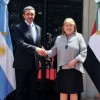
Argentina and United Arab Emirates Open New Stage in Bilateral Relations
With United Arab Emirates’ foreign minister Sheikh Abdullah bin Zayed Al Nahyan’s visit to Argentina, the two countries launched a new stage in bilateral relations, kicked off by high-level meetings and a package of accords.
Women of Haitian Descent Bear the Brunt of Dominican Migration Policy
A middle-aged woman arranges bouquets of yellow roses in a street market in Little Haiti, a slum neighbourhood in the capital of the Dominican Republic. “I don’t want to talk, don’t take photos,” she tells IPS, standing next to a little girl who appears to be her daughter.
“A Fair Day’s Wage for a Fair Day’s Work?”
“During the first months in Italy, I always prayed for rain. I spent hours checking the weather forecast” said Roni, a 26 year old graduate from a middle-income family in Bangladesh. His father, a public servant and his mother a home maker, Roni had to sell umbrellas on the streets of Rome for more than a year before finding a summer job by the sea at a coffee shop, popularly known as a ‘bar’ in Italy.
Europe is disintegrating while its citizens watch indifferent
We are witnessing the slow agony of the dream of European integration, disintegrating without a single demonstration occuring anywhere, among its 500 millions of citizens. It is clear that European institutions are in an existential crisis but the debate is only at intergovernmental level.
Small-scale Fishing Is About Much More than Just Subsistence in Chile
“Fishing isn’t just for making a living, it’s also enjoyable,” said Pedro Pascual, a 70-year-old fisherman who has been taking his small boat out to sea off Chile’s Pacific coast in the early hours of the morning almost every day for the past 50 years, to support his family.
Women’s Empowerment Will Accelerate Kenya’s Economic Prosperity
When President Barack Obama made his first visit to Kenya as US President in July 2015, one of the poignant messages he left was an exhortation for communities to shun cultures that degrade women and girls.
TPP: Lessons from New Zealand
A new paper* on the implications of the Trans-Pacific Partnership (TPP) Agreement for New Zealand examines key economic issues likely to be impacted by this trade agreement. It is remarkable how little TPP brings to the table. NZ’s gross domestic product will grow by 47 per cent by 2030 without the TPP, or by 47.9 per cent with the TPP. Even that small benefit is an exaggeration, as the modelling makes dubious assumptions, and the real benefits will be even smaller. If the full costs are included, net economic benefits to the NZ economy are doubtful. The gains from tariff reductions are less than a quarter of the projected benefits according to official NZ government modelling. Although most of the projected benefits result from reducing non-tariff barriers (NTBs), the projections rely on inadequate and dubious information that does not even identify the NTBs that would be reduced by the TPP!
United Arab Emirates Strengthens Ties with Argentina’s New Government
The new government of Argentina and the United Arab Emirates (UAE) are strengthening the relationship established by the previous administration, at a time when this South American country is seeking to bring in foreign exchange, build up its international reserves and draw investment, in what the authorities describe as a new era of openness to the world.Core Principals of Climate Finance to Realize the Paris Agreement
The Paris climate change conference brought together 197 countries and over 150 Heads of State – the largest convening of world leaders in history – to agree on measures and work together to limit the global average temperature rise.
The UAE’s Journey Towards Clean Energy
The discovery of hydrocarbon reserves brought tremendous prosperity for the UAE and made it a central player in the global energy market. With one of the highest gross domestic product per capita levels in the world, the UAE has generally used its wealth wisely to stimulate sustainable economic growth. However, volatility in oil markets, growing unrest across the region and the growing threat of climate change has concentrated minds on the need for immediate and decisive action.
Global Renewable Energy Investments a Win-Win Scenario
The Paris climate change agreement adopted at the end of 2015 has put renewable energy at the heart of global energy system with investments expected to grow further even amidst the decline in fossil fuels.
Energy from All Sources, a Game of Chance in Brazil
Brazil, which boasts that it has one of the cleanest energy mixes in the world, is now plagued by corruption, poor market conditions, and bad decisions – a near fatal combination.
The Lesson from Davos: No Connection to Reality
The rich and the powerful, who meet every year at the World Economic Forum (WEF), were in a gloomy mood this time. Not only because the day they met close to eight trillion dollars has been wiped off global equity markets by a "correction". But because no leader could be in a buoyant mood.
Bali holds Family Planning Conference Amidst Many Unmet Needs
Porter Ngengh Tike is in her late thirties, but looks well over 50. For 8 hours every day, she carries around a large bamboo basket on her head, delivering supplies to local traders in the biggest traditional market of Bali – Pasar Badung. At the end of the week, she earns about 18 dollars - a sum that Tike uses for food, household expenses and her 10- year old son’s education. So, when it comes to seeing a doctor, there is no money, says Tike who suffers from genital infections.
Hydropower at Front and Centre of Energy Debate in Chile, Once Again
The Chilean government’s approval of a hydroelectric dam in the Patagonia wilderness has rekindled the debate on the sustainability and efficiency of large-scale hydropower plants and whether they contribute to building a cleaner energy mix.« Previous Page — Next Page »


 UN Commission on International Trade Law Holds Colloquium on Harmonizing Law in Age of Digital Trade and Finance. Credit: UN Photo/Manuel Elías
Trade has historically been a geopolitical tool that can both be used to propel development as well as entrench inequalities. In various nations in East Asia and Latin America, increased trade, as often seen in export booms, has allowed them to achieve influential standings within the global economy. On the other hand, many low-income countries in Sub-Saharan Africa, Asia, and Latin America struggle to maintain a robust trade performance, and oftentimes are subjugated to exploitative trade dynamics through intense extraction of their natural resources. In recent decades, international trade has reached a new era as emerging economies across the world are rising in economic preeminence. Stable international trade is crucial to world peace as global interconnectedness facilitates reliable diplomacy. Nevertheless, significant challenges are on the rise. Notably, a major wave of United States tariff escalations in January 2025 lifted US import taxes to their highest level since the 1930s, changing market dynamics and forcing renegotiations with global trading partners.These articles are aimed at informing readers about the complexities of trade and its varying effects on development, with a special focus on the consequences of the global economic crisis, the potential of fair trade and the gender implications of trade policies.
Updated by Yilan Batista and Shuli Wong August 2026

The Week with IPS

NEXT STOP - SDGs
Tracking global progress towards a sustainable world
