Languages
Friday, November 27, 2026



News and Views from the Global South
Economy & Trade

Leading Powers to Double Renewable Energy Supply by 2030
Eight of the world’s leading economies will double their renewable energy supply by 2030 if they live up to their pledges to contribute to curbing global warming, which will be included in the new climate treaty.
Improved Post-Harvest Fish Handling Brings Hope to Western Zambia
Hadon Sichali has been in the fish trade for over 22 years. But he says only now does he feel a true businessman—but why?
From Bangladesh to Bihar
Times are a-changing for Bihar, a state popularly described as a state of mind. The recent elections have brought back Nitish Kumar as the chief minister for the fifth time. Since his first innings as a developmental CM from 2005, he has transformed Bihar from being an archetype of India’s backwardness to one of its fastest growing states. Besides improving governance, he has also politically empowered women in that benighted state. Not surprisingly, the women’s vote was decisive for his electoral success. He now has the historic opportunity to shift gears towards sustainable gender-based development.Refugee Crisis May Threaten Development Aid to World’s Poor
As the spreading refugee crisis threatens to destabilize national budgets of donor nations in Western Europe, Secretary-General Ban Ki-moon Wednesday appealed to the international community not to forsake its longstanding commitment for development assistance to the world’s poorer nations.
Opinion: Economic Slowdown Threatening Progress
Slower economic growth since 2008, and especially with the commodity price collapse since the end of last year, threatens to reverse the exceptional half-decade before the financial crash when growth in the South stayed ahead of the North. From 2002, many developing countries – including some of the poorest– had been growing much faster after a quarter century of stagnation in Africa, for example.
School Meals Bolster Family Farming in Brazil
“That law should have existed since the end of slavery, which threw slaves into the street without offering them adequate conditions for working and producing, turning them into semi-slaves,” said Brazilian farmer Idevan Correa.
Africa Demands for More Input to Save the Climate
African civil society organisations championing for climate justice have criticised the Intended Nationally Determined Commitments (INDC’s) presented to the United Nations Framework Convention on Climate Change, calling them “weak, inadequate and not ambitious enough.”
Parliamentary Forum to Set New Goals Against Hunger
Undertaking the challenge of pushing for new legislation to guarantee food security in their countries, legislators from Latin America and the Caribbean, together with guest lawmakers from Africa and Asia, will hold the Sixth Forum of the Parliamentary Front Against Hunger Nov. 15-17.
Kenya’s Market-Based Youth Project Changing Lives
Though the Kenyan government has demonstrated a commitment to lift its youth out of poverty, particularly those in the informal settlements, projects designed for youth continue to be crippled by rampant corruption.
Caribbean Agriculture Looks to Cope with Climate Change
Climate change represents a clear and growing threat to food security in the Caribbean with differing rainfall patterns, water scarcity, heat stress and increased climatic variability making it difficult for farmers to meet demand for crops and livestock.UN Targets “Hidden Source” for Development Funding
The United Nations has estimated a hefty funding requirement of over 3.5 trillion to 5.0 trillion dollars per year for the implementation of its ambitious post-2015 development agenda, including 17 Sustainable Development Goals (SDGs), approved by world leaders in September.
Urgently Needed: Studies Linking Land Degradation, Migration, Conflict and Political Instability
Some 135 million people could be displaced by 2045 as a result of land desertification, according to a recent UK ministry of defence report. This figure could rise to 200 million who are displaced by other climate change impacts like natural disasters by 2050, said British environment refugee specialist Norman Myers.
Climate Change Threatens Flavour of Argentine Wine
Purple garlic that is losing its color? More translucent wine? Climate change will also affect the flavours of our food in the absence of measures to mitigate the impacts of global warming, which are already being felt in crops that are basic to local economies, such as in the Argentine province of Mendoza.
World Trade Organization Rules Help to Support Better Public Health
Trade and the multilateral trading system can help in creating a more favourable global environment for public health policies and the implementation of a balanced and effective intellectual property system.
Open Data – Still Closed to Latin American Communities
Open data policies in Latin America have not yet enabled communities to exercise their right to access to information, consultation and participation with regard to mining or infrastructure projects that affect their surroundings and way of life.
Decent Work Crucial To Eliminating Poverty and Hunger
Over the eight years since the onset of the global financial crisis in 2008, the ranks of the unemployed have swollen to over 200 million worldwide. That number captures only a fraction of those who remain vulnerable and insecure, since more than four-fifths of the global workforce is outside the formal sector, with poor access to unemployment or other traditional social security benefits.
Zimbabwe’s Mega Dam Project Could Flounder in the Face of Climate Change
Zimbabwe's planned Batoka Gorge power project on the Zambezi River is expected to generate 2,400 megawatts (MW) of electricity, upward from an initial 1,600 MW, but the worsening power cuts that are being blamed on low water levels have renewed concerns about the effects of climate change on mega dams.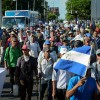
Nicaragua’s Interoceanic Canal, a Nightmare for Environmentalists
The international scientific community’s fears about the damage that will be caused by Nicaragua’s future interoceanic canal have been reinforced by the environmental impact assessment, which warns of serious environmental threats posed by the megaproject.
Central America Seeks Recognition of Its Vulnerability to Climate Change
For decades, the countries of Central America have borne the heavy impact of extreme climate phenomena like hurricanes and severe drought. Now, six of them are demanding that the entire planet recognise their climate vulnerability.
Nepal Appeals to U.N. to Help Lift Economic Blockade
A coalition of independent Nepali citizens – including diplomats, journalists, women’s rights leaders, medical doctors and former U.N. officials – is calling on the international community and the United Nations to take “effective steps” to help remove an “economic blockade” imposed on Nepal.
Opinion: The Broken Promises of the Peruvian Development Model
Lima was the host, in October 2015, of the International Monetary Fund (IMF) and the World Bank annual meetings. The two Bretton Woods institutions, criticized for their record of lowering social and environmental conditions, seek to showcase Peru as a success of their neoliberal policies and reforms to the rest of the world.« Previous Page — Next Page »


 UN Commission on International Trade Law Holds Colloquium on Harmonizing Law in Age of Digital Trade and Finance. Credit: UN Photo/Manuel Elías
Trade has historically been a geopolitical tool that can both be used to propel development as well as entrench inequalities. In various nations in East Asia and Latin America, increased trade, as often seen in export booms, has allowed them to achieve influential standings within the global economy. On the other hand, many low-income countries in Sub-Saharan Africa, Asia, and Latin America struggle to maintain a robust trade performance, and oftentimes are subjugated to exploitative trade dynamics through intense extraction of their natural resources. In recent decades, international trade has reached a new era as emerging economies across the world are rising in economic preeminence. Stable international trade is crucial to world peace as global interconnectedness facilitates reliable diplomacy. Nevertheless, significant challenges are on the rise. Notably, a major wave of United States tariff escalations in January 2025 lifted US import taxes to their highest level since the 1930s, changing market dynamics and forcing renegotiations with global trading partners.These articles are aimed at informing readers about the complexities of trade and its varying effects on development, with a special focus on the consequences of the global economic crisis, the potential of fair trade and the gender implications of trade policies.
Updated by Yilan Batista and Shuli Wong August 2026

The Week with IPS

NEXT STOP - SDGs
Tracking global progress towards a sustainable world
