
Sunday, November 22, 2026



News and Views from the Global South
Environment
Caribbean to Take Strong Stance at Rio+20 Summit
The mandate will be very clear. Caribbean Community (CARICOM) delegates are going to Brazil in June for the Rio+20 United Nations Conference on Sustainable Development determined to show that it will not be business as usual.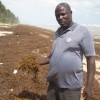
Western Ghana’s Fisherfolk Starve Amid Algae Infestation
Sam Kojo stands in a thigh-high pile of brown seaweed that blankets a beach in western Ghana. Behind him, a decomposing mound of Sargassum stretches down the shore past the fishing village of Beyin.Challenges for Future Nationalised Oil Co. in Argentina
One of the big challenges facing the Argentine government in its plans to regain state control of the country's biggest oil firm, YPF, is to make up for the time lost under private management, when production and exploration fell.
Guyana Strives to Protect Forests and Coast from Climate Change
Its accolades include being labelled the breadbasket of the Caribbean as well as the Amazon adventure. But the natural environment for which the South American country of Guyana is famous is also reeling from the effects of climate change.
Crocodiles Edged Out of Habitats in Sri Lanka
Reacting to a series of deadly crocodile attacks, the Sri Lankan government has drawn up plans to capture the free-ranging beasts and confine them to parks. Conservationists oppose this move.
Mexican Seeds, the New Spoils for Food Corporations
Biodiversity and small and medium farms are threatened in Mexico by the looming approval of a reform of the law on plant varieties that will extend patent rights over seeds, activists and experts warn.
Steady Water Supply for Zimbabwean City Still a Pipe Dream
Residents of Zimbabwe's water-scarce city, Bulawayo, are concerned about the government’s slow response to finding a permanent source of water to cover their needs.
Buenos Aires Unprepared for More Intense Storms**
The 18 deaths caused by a storm that hit Buenos Aires earlier this month tragically demonstrate the lack of preparedness for the ever more frequent and powerful weather events faced by the Argentine capital and its suburbs.Sea Level Rise Threatens Mekong Rice
With Vietnam’s fertile Mekong delta threatened by rising sea levels and salt water ingress, the country’s future as a major rice exporter depends critically on research underway in the Philippines.Green Nobel Highlights Water Crises
A Catholic priest from the Philippines, a mother of three from Argentina, and the founder of the NGO Friends of Lake Turkana in Kenya all have one thing in common: they have helped to motivate their respective local communities to protect the natural environment around them and to stand up for their rights.
Reaffirmation of Women’s Rights Key to Rio+20 Success
The Rio Declaration on Environment and Development, unanimously adopted by 178 governments at the June 1992 Earth Summit in Brazil, specifically recognised that "women have a vital role in environmental management and development."
Indonesian Farmers Burned in Biofuel Drive
Dreams of sending his children to quality schools have vanished for 40-year-old farmer Muslikin, as the father of three now struggles to repay the bank loan he took out to finance his jatropha plantation in 2006.Gas Extraction Fuels Abuse in Papua New Guinea
Papua New Guinea’s infamous track record on gender-based violence – with an estimated 75 percent of women and children experiencing some form of violence, primarily domestic abuse – is poised to worsen.World Bank Supports Harmful Water Corporations, Report Finds
Water privatisation has been proven not to help the poor, yet a quarter of all World Bank funding goes directly to corporations and the private sector, bypassing both governments and its own standards and transparency requirements in order to do so, says a new report released Monday.
Buenos Aires Unprepared for Normally Extraordinary Storms
In Buenos Aires, damage to real estate from flooding is projected to total 80 million dollars per year by 2030 and 300 million dollars per year by 2050.
Project to Regularize Rural Land Tenure in Northeast Brazilian State of Piauí
The Brazilian state of Piauí will receive a major injection of funds to regularize land titles for family farmers and promote sustainable agricultural growth.Ecobreves – CUBA: “Greener” Cement Developed
Cuban scientists have developed a type of cement that is cheaper to produce and less polluting than conventional cement, with the support of the Federal Polytechnic School of Lausanne, Switzerland.Ecobreves – BRAZIL: Studying Manatee Reproduction Through Feces
The analysis of feces could be the key to better understanding the reproductive cycle of the Amazonian manatee in its natural habitat, according to the Conservation of Amazonian Aquatic Vertebrates Project at the Mamirauá Institute in Brazil.Ecobreves – HONDURAS: Public Officials Charged for Violating Environmental Law
Over the past year, the Environmental Prosecutor’s Office of Honduras has issued 19 injunctions against an equal number of individuals, including a number of public officials, for violations of the General Law on the Environment.
“Water Schools” Foster More Sustainable Habits in Mexico
So-called water schools, which educate communities on the resource and its links with the environment, gender and climate change, are helping to raise awareness on proper water management in Mexico, at a time of severe drought.
In Antigua, Climate Change Amplifies Human Destruction
Evi Johnson points to the spot where, as a young boy, he and his friends would go swimming at Crabb Hill Beach.« Previous Page — Next Page »


Through our global network of local writers, we are continuing our award-winning coverage of global and local environmental challenges, with a focus on the people for whom the ecosphere matters in a direct way: rural dwellers who have little means to protect themselves against adverse conditions; communities that need to switch to sustainable development in order to survive; poor women and children, who are the most vulnerable in natural disasters. Sponsored by the United Nations Environment Program (UNEP), the United Nations Development Program (UNDP) and The World Bank (WB), IPS also maintains the award-winning Tierramérica, a specialised information service on environment and development.

The Week with IPS

Tracking global progress towards a sustainable world


