
Wednesday, September 30, 2026



News and Views from the Global South
Farming Crisis: Filling An Empty Plate
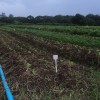
Agroecology Proves Cheap and Efficient on Brazilian Farm*
An agroecological farm outside of Rio de Janeiro is a testing ground for scientists and agronomists in Brazil, who have worked there for two decades to show that it is possible to produce a wide range of natural agricultural products in a cheap, efficient way that harms neither the environment nor human health.
Disasters Hold Climate Change Lessons for Thais
The Kiriwong community in southern Thailand is confident of handling climate change, thanks to lessons learned from a natural disaster that hit its village 25 years ago.
Q&A: Planting the Seeds for Sustainable Development
By now, the dilemma is well recognised but hardly solved: as the global population grows, resources become increasingly scarce. Indeed, food production will have to increase by a whopping 60 percent by 2050 in order to meet the future demand for food and agricultural products.
Youth Farmers Have Great Needs and Low Expectations from Rio+20
Ulvia Abdullayeva, from Ganja in western Azerbaijan, has come to Rio to deliver a simple but critical message to world leaders and her national authorities: small farmers need protection and financing.Tension over Deadly Clash Between Peasants and Police in Paraguay
The death of 16 landless peasants and police officers in a clash in northeastern Paraguay drew attention once again to the long-standing problem of land ownership in the country, where 85 percent of all farmland is owned by just two percent of the population.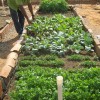
Cilantro Spices Up Coexistence with Drought in Brazil
Many grow lettuce, tomatoes, carrots, beets and other vegetables. But cilantro is ever-present in the gardens that are helping rural families weather the lengthy drought that is once again wracking Brazil’s impoverished Northeast.
Back to the Future With Local Rice Seeds
By coaxing a bumper 3.2 tonnes of rice out of each acre on his organic farm in this district famed for its ancient Buddhist monasteries, Charitha Wijeratne has convincingly proved that using indigenous seeds does not affect productivity.
Nepal’s Female Farmers Fear Climate Change
When Arati Chaudhary’s husband left for India to find work as a migrant labourer, the job of managing farm and family fell on her slender shoulders.
Crisis Sows Community Gardens in Spain
The economic crisis is fuelling the search for less individualistic ways of life in Spain, and a growing interest in urban agriculture has given rise to flourishing community gardens on vacant lots in cities and towns.
Agriculture Key to Liberia’s Youth Unemployment Challenge
With his gold chain, baseball cap, and baggy denim shorts, Junior Toe wears the uniform of Liberia’s urban youth. Spend just a few minutes with the young man and it is evident that he possesses the street smarts to match the look.
“Land Is Our Ally, But Its Patience Is Not Eternal”
Land degradation poses a threat to all life on Earth including humanity. To stop the enormous loss of life-giving land, the United Nations Convention to Combat Desertification (UNCCD) is pushing for a sustainable development goal of Zero Net Land Degradation (ZNLD) to be adopted at the upcoming Conference on Sustainable Development, known as Rio+20, in Brazil.
Time for a More Sustainable Global Food System
It is vitally important that governments and civil society organisations start transitioning to a more sustainable global food system in order to achieve lasting development.
Q&A: The World Must Learn From Smallholder Farmers
As Africa's Sahel region faces a new food crisis, smallholder famers hold the key to making future development policies sustainable.
Paprika – Spicing Up Malawi’s Economy
As she sits down to watch the 8pm news on TV, Mercy Kamphoni from Chamtulo Village in Malawi’s Mangochi lake district looks elated. She still cannot believe that she is the new proud owner of a television set, refrigerator and radio.
Nothing to Show for Hard Work but Burnt Fields of Maize
Gertrude Mkoloi earns a living harvesting maize on a small piece of land in rural Zimbabwe. Or at least she used to.
G8 Turns to Private Sector for Food Crisis Solutions
On the eve of the Group of Eight (G8) summit near Washington, President Barack Obama on Friday unveiled a major new initiative aimed at shoring up food security and combating global hunger.
Despite Economic Growth, Food Insecurity Lingers in Africa
Everlyne Wanjiku, a single mother of five, has earned a living selling vegetables in the sprawling Kibera slum in Nairobi, Kenya, for over three decades. And even though her earnings were meagre, she was able to provide all her children with a tertiary education.
KENYA: Microloans, Greenhouses Help Women Cope with Climate Change
At Gakoromone Market in Meru, in Kenya’s Eastern Province, Ruth Muriuki arrives in a pickup full of tomatoes and cabbages despite the scarcity of rainfall in the area, thanks to the greenhouse technology she uses on her farm – and microcredit.
ZIMBABWE: Farmers Tackle Water Problems Fuelled by Climate Change
Beauty Moyo’s desire for access to water has finally been met. The rains that fell in the past week after a long dry patch have awakened this small-holder farmer deep in rural Plumtree, Zimbabwe on the border with Botswana to the reality of sparse rainfall, climate change and how she and her fellow villagers can respond.
DR CONGO: Farmers’ Organisations Slam New Agriculture Law
Farmers' organisations in the Democratic Republic of Congo say the country's new Agriculture Law – enacted last December – could lead to many smallholder farmers losing their land.
Rural Women in Latin America Face Myriad Hurdles
"Sometimes I think of giving it all up,” Aura Canache, a small farmer in Venezuela, told IPS. “My neighbours get loans and aid, but I never have. The farm assistance plans are for men, although there are many women living off the countryside too.”« Previous Page — Next Page »


Today, one in six people on the planet go hungry, according to United Nations statistics. The food crisis and now the global economic crisis, together, have increased the number of undernourished people in the world to more that one billion for the first time since the 1970’s. Much of southern Africa continues to face severe food shortages, largely the result of one of the worst droughts in a decade followed by erratic rains. While the Latin American and Caribbean region as a whole is a net food exporter, food price inflation is still having a detrimental impact on the income, nutrition, and health of poor consumers. Solutions must be carefully crafted in each region, country and community taking into account local priorities. The complex web of issues surrounding food security and rural development include farmers access to markets, the adoption of international trade rules, technology transfer, the sustainable use of limited resources, and the application of traditional knowledge, among others. Establishing a prosperous, sustainable economic future for the world means placing a spotlight on agriculture - and giving a voice to farmers. IPS News is covering the food crisis, its causes and its effects, from both a local and a global perspective.

This website is funded through the support of the International Fund for Agricultural Development (IFAD).
