Languages
Tuesday, November 10, 2026



News and Views from the Global South
Featured
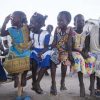
What Future for a World of 8 Billion?
What does a young girl from Juba, in South Sudan, an 8-year-old boy living in the slums of Mumbai, in India, a young mother from the south of Lima, in Peru, and an 83-year-old man enjoying retirement in the suburbs of Stockholm, in Sweden, have in common?
India & China Continue to Lead –as World Population Projected to Reach 8.0 Billion
India and China, two Asian nuclear powers who are also longstanding rivals embroiled in the geo-politics of the Indian Ocean region, have remained two of the world’s most populous nations accounting for over a billion people each. But as the world’s population reaches the 8.0 billion mark, come November, India is projected to surpass China.
Wild Species Central to Human Survival, New IPBES Report Offers Options for their Sustainable Use
Fifty thousand wild species meet the needs of billions of people worldwide, providing food, cosmetics, shelter, clothing, medicine and inspiration. But now, a million species of plants and animals face extinction with far-reaching consequences, including endangering economies, food security and livelihoods.
Migrant Workers from Mexico, Caught Up in Trafficking, Forced Labor and Exploitation
Eduardo Reyes, originally from Puebla in central Mexico, was offered a 40-hour workweek contract by his recruiter and his employer in the United States, but ended up performing hundreds of hours of unpaid work that was not authorized because his visa had expired, unbeknownst to him.
Intersecting Crises are Impeding the UN’s Sustainable Development Goals, Threatening Peace & Security
This week marks the mid-way point to the 2030 Agenda on Sustainable Development and with it the release of the UN’s Sustainable Development Goals Report 2022.
Myths Fuel Xenophobic Sentiment in South Africa
Around the world, from Syria to Libya, from Bangladesh to Ukraine, millions have become refugees in foreign lands due to war, famine, or political and economic instability in their countries.
UN Predicts 68 Percent of World’s Population will be Living in Urban Areas by 2050
When we think of urbanization we often end up referring to the increasing number of megalopolises that are sprawling around the world. Yet less thoughts are given on the fact that the future patterns of urbanization will be centered on secondary cities or semi urban spaces, now becoming extensions of these gigantic cities.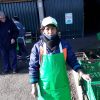
Recovering Edible Food from Waste Provides Environmental and Social Solutions in Argentina
For 30 years, Tomasa Chávez visited the Central Market of Buenos Aires and rummaged through the tons of fruits and vegetables that the stallholders discarded, in search of food. Today she continues to do so, but there is a difference: since 2021 she has been one of the workers hired to recover food as part of a formal program launched by the Central Market.
Sri Lankan Beggar’s Opera
When Ceylon- now Sri Lanka- gained independence from Britain in 1948 after almost 450 years of colonial rule under three western powers, it was one Asia’s most stable and prosperous democracies.
The Camel, the Needle– and the UN’s first Woman Secretary-General
A 2.0 version of an ancient Biblical saying reads: It is easier for a camel to pass through the eye of a needle than for a woman to become the Secretary-General of the United Nations. The male/female ratio for the Secretary-General stands at 9 vs zero. And the Presidency of the General Assembly (PGA), the highest policy-making body at the UN, is not far behind either.
The Rape of the Indian Ocean
The Story of the Yellow Fin Tuna
Over the last past several decades marine fish stocks worldwide have been under intense threat. There have been many high sounding declarations and agreements to reduce catch effort, to use more environmentally friendly fishing gear, to prevent illegal fishing and to impose “closed seasons” to allow stocks to recover.

Rights Groups Question ‘Pregnancy Register’ for Polish Women
Women’s rights groups fear a new legal provision in Poland requiring doctors to collect records on all pregnancies could create what they have described as a ‘pregnancy register’ to monitor whether women are having abortions.
Mobilizing Against Hunger in Brazil, Where It Affects 33.1 Million People
A campaign against hunger, a problem that affects 15.5 percent of the Brazilian population, seeks to mobilize society once again in search of urgent solutions, inspired by a mass movement that took off in the country in 1993.
Animals are Core to Pandemic Prevention – We Must Strengthen Their Defences
The ongoing discussions at the World Health Organization (WHO) around a new, landmark ‘pandemic prevention treaty’ shows that the world is starting to act on the lessons it learned from the COVID-19 pandemic.
Weaponizing Free Trade Agreements
Long seen as means to seek advantage on the pretext of providing mutual benefit, free trade agreements (FTAs) may increasingly be used as economic weapons in the emerging new Cold War. Pivot to Asia, containing China In November 2009, President Obama observed, “in an inter-connected world, power does not need to be a zero-sum game… the United States does not seek to contain China”.
Nature-Positive Ventures Crucial for Africa’s future, say experts at Africa Green Economy Conference
Africa’s unique natural capital assets were the center of conversation at the 2022 Africa Green Economy Conference. Held in a hybrid format from June 27 to 30, participants gathered to discuss the value of nature in Africa’s economy and call for more nature-positive ventures in development.
Smelter Finally Closes Due to Extreme Pollution in Chilean Bay
A health crisis that in 20 days left 500 children poisoned in the adjacent municipalities of Quintero and Puchuncaví triggered the decision to close the Ventanas Smelter, in a first concrete step towards putting an end to a so-called "sacrifice zone" in Chile.
EU’s Exclusionary Migration Policies Place People on the Move toward Europe at Greater Risk
A mass attempt on June 24, 2022, of about 2000 African migrants to scale the border fence between Morocco and the Spanish enclave of Melilla left at least 37 people dead.
IPBES to Release New Assessments on the Values of Biodiversity and Sustainable Use of Wild Species
Speaking to IPS about the importance of biodiversity and nature's contributions to people, Dr Anne Larigauderie, Executive Secretary of the Intergovernmental Platform on Biodiversity and Ecosystem Services (IPBES), stressed the importance of moving from knowledge and policy silos to a more integrated approach to achieving the Sustainable Development Goals (SDGs), especially those related to food, water, health, climate change, and energy, which can only be achieved together with the two goals related to biodiversity.
The Digital Divide, a Pending Issue in Chile’s Educational System
A Chilean government plan seeks to ensure connectivity in remote areas, in a first step to address a deep digital divide among the country's inhabitants that includes a lack of access to technology and digital education deficits, exposed by the COVID-19 pandemic.
IPBES Shoring up Private Sector Support for Biodiversity Science
In the twin crises of climate change and biodiversity loss, the changing climate often eclipses the loss of ecosystems and species in funding and awareness.« Previous Page — Next Page »





The Week with IPS

NEXT STOP - SDGs
Tracking global progress towards a sustainable world
Tracking global progress towards a sustainable world
