Languages
Thursday, November 12, 2026



News and Views from the Global South
Featured

Facing their Failure to meet 2020 Biodiversity Targets, World Leaders Pledge Action & Funds
French President Emmanuel Macron convened the 4th edition of the One Planet Summit for Biodiversity with a concession – that after a decade, the world has failed to take the action needed to stem global biodiversity loss. The Jan. 10 event, hosted virtually by France, the United Nations and the World Bank, focused on four areas for urgent action; protecting land and maritime species, promoting agroecology, mobilising finance for biodiversity and protecting tropical forests, species and human health.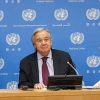
Will a Second Term for Guterres Undermine Campaign for First Female UN Chief in 76 Years?
The United Nations has been one of the most vociferous advocates of gender empowerment and a persistent critic of gender discrimination worldwide.
TNCs Reviving TPP Frankenstein
The incoming Biden administration is under tremendous pressure to demonstrate better US economic management. Trade negotiations normally take years to conclude, if at all. Unsurprisingly, lobbyists are already urging the next US administration to quickly embrace and deliver a new version of the Trans-Pacific Partnership (TPP).
COVID-19 Pandemic Shapes the Future World People Want
The peoples of the world are unanimous - access to basic services such as universal healthcare must become a priority going forward. So too should global solidarity, helping those hardest hit by the COVID-19 pandemic and addressing the climate change emergency.
Culture of Misogyny and Toxic Masculinity Driving Sexual Violence in Bangladesh
In October 2020, Bangladeshi citizens took to the streets, outraged by the reports of gruesome gang rapes and sexual violence that were taking place in the country. According to Ain O Salish Kendra, a Bangladeshi human rights organization, 975 women were raped in the first nine months of 2020, 43 women were killed after being raped and 204 women were attempted to be raped by men in Bangladesh.
Italy and the Dubious Honor of Chairing the G20
For 2021, Italy has been given chairmanship of the Group of 20, which brings together the world’s 20 most important countries. On paper, they represent 60% of the world’s population and 80% of its Gross Domestic Product (GDP). While the shaky Italian government will somehow perform this task (in the general indifference of the political system), the fact remains that this apparently prestigious position is in fact very deceiving: the G20 is now a very weak institution that brings no kudos to the rotating chairman. Besides, it is actually the institution which bears the greatest part of responsibility for the decline of the UN as the body responsible for global governance, a task that the G20 has very seldom been able to face up to.
Unhinged with 5,800 Nuclear Warheads at his Fingertips
Between now and January 20,2021, the President of the United States has almost run out of arenas in which to impose his will. His reelection has soured in infamy. His concern for the COVID-19 pandemic faded long ago. There is only one last pursuit available to him to demonstrate that he is the most powerful man on earth, i.e. using the nuclear weapons at his disposal.
Tales of the 21st Century: Rohingyas Without home
 Mohammad Rakibul Hasan is a Bangladeshi documentary photographer, photojournalist, filmmaker and visual artist who has been visiting the camps in Cox’s Bazaar to document the Rohingya refugee crisis.
Storming of Capitol Hill Reminiscent of a Banana Republic
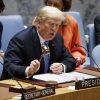
The storming of Capitol Hill in Washington DC by an unruly mob is reminiscent of an insurrection in a “banana republic” --as hilariously portrayed in the 1971 Woody Allen comedy “Bananas” spoofing a revolt in a fictional Latin American country.
If Covid-19 is Primarily a ‘First World’ Virus, Why is the Global South in Lockdown?
The currently available Covid-19 vaccines have been authorized for ‘emergency use ‘in Europe and North America. This is due to an apparent spike in Covid-19 flu cases in the northern hemisphere as winter advances. Highly advertised vaccines are being produced and rolled out at ‘warped speed’ by powerful pharmaceutical and bio-technology companies headquartered in Euro-America although their efficacy including how long their immunity lasts is not clear.
Is the COVID-19 Vaccine a Potential Biological Weapon in Reverse?
If the coronavirus is not deemed a biological weapon, is the heavily-publicized Covid-19 vaccine in danger of being weaponized when over 159,000 Palestinians who have tested positive in Occupied Palestinian Territories (OPT) are being denied treatment during a deadly pandemic?
Is High Tech a Danger to Humanity?
My friends all drive Porsches, I must make amends.
Worked hard all my lifetime, no help from my friends.
So, oh Lord, won't you buy me a Mercedes Benz.
Janis Joplin, 1970
Making African Continental Free Trade Area Work for Women in a Post-COVID-19 World
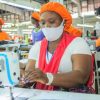
On 1st January 2021, trading under the African Continental Free Trade Area (AfCFTA) Agreement commenced after months of delays caused by the COVID-19 pandemic.
ANTICOV Treatment Clinical Trial Crucial for Africa
The ANTICOV COVID-19 clinical trial, aimed at identifying treatments that prevent mild cases from progressing to severe forms of the disease, is crucial to Africa, researchers say. The trial will investigate home-based treatments to help prevent local health systems from being overwhelmed.
Stand Tall, UN Humanitarians
Most people around the world were glad to see the back of 2020: From the devastating bushfires in Australia to the plagues of locusts through East Africa stretching across Arabia to Pakistan, extreme weather, melting ice sheets at the poles, and Covid-19 that still engulfs the globe.
Sir Brian Urquhart: Embodiment of the UN
Sir Brian Urquhart, who died on January 2 at the age of 101, served the United Nations in high posts for four decades, beginning in the organization’s earliest days.
Mining giant Rio Tinto Face Environmental, Human Rights Complaint in Papua New Guinea
Local communities in the vicinity of the abandoned Panguna copper mine, have taken decisive action to hold the global mining multinational, Rio Tinto, accountable for alleged environmental and human rights violations during the mine’s operations between 1972 and 1989.
Wanted: Affirmative Legislation in the Job Market in Nepal
In Nepal, a dominating culture traditionally representing the elites, the so-called higher castes of the society according to the Hindu culture, still endures and prevails.
Belo Monte Dam: Electricity or Life in Brazil’s Amazon Rainforest
"We are no longer familiar with the Xingú River," whose waters govern "our way of life, our income, our food and our navigation," lamented Bel Juruna, a young indigenous leader from Brazil´s Amazon rainforest.
2020: A Yet More Devastating Year Closes With At Least Some Signs Of Hope
Despite its grim record of multiple natural disasters and a deepening climate crisis, one could be forgiven for looking back on 2019 with a degree of nostalgia. There is no disguising the extent of the calamity wrought this year by COVID-19, yet as we approach the end of 2020 we may also draw strength from positive developments emerging.
‘We Might Have a Covid-21 or Covid-22 Coming Our Way’
Cristián Samper is working for the Wildlife Conservation Society, an organization that concerns itself with the health of wildlife all over the globe. And he warned --even before the Covid-19 pandemic – about the dangers of a viral pandemic.« Previous Page — Next Page »





The Week with IPS

NEXT STOP - SDGs
Tracking global progress towards a sustainable world
Tracking global progress towards a sustainable world
