Languages
Saturday, November 28, 2026



News and Views from the Global South
Food and Agriculture
ENVIRONMENT-NIGER: French State-Owned Company “Poisoning” Poor
Recent research by Greenpeace suggests that French state-owned company Areva’s public claims of decontamination of populated areas near uranium mines in Niger are false. High radio-activity persists in towns and rural areas near the mines, affecting some 80,000 people.MALI: Shea Production Vital to Women’s Incomes
Across the semi-arid Sahel region of West Africa, the shea tree prized by women, who produce a butter from its nuts that is a key ingredient in food and cosmetics. However, drought and diseases threaten this source of income.Q&A: Why Poorest African Countries Should Not Sign the EPAs
It is a "million dollar question" why African least developed countries (LDCs) would enter into economic partnership agreements (EPAs) with the EU as what remains of especially their agricultural markets will be overrun with subsidised European produce.Q&A: “EPAs Will Undermine Democracy in Africa”
The current course of the talks on economic partnership agreements (EPAs) is particularly destructive for low income African countries and may contract democratic space in such countries even further.
URUGUAY: Fighting Climate Change from the Countryside
"We would get up and go to bed every day looking up at the sky, hoping for something to fall, but nothing happened, not even a drop fell," says María Inés Queiros, who makes artisanal cheese in the southern Uruguayan province of San José.
WATER : Swazi Village Gets a Self-Sustaining Water Supply
No one loves the bill collector, and Sifiso Shongwe gets a chilly welcome as he goes from household to household collecting money for Maphilingo's community water scheme.
UGANDA: Information Technology Helps Farmers
Mayuge district has 31,000 farming families served by just nine agricultural extension workers. In Wainha village, an internet centre run by the Busoga Rural Open Source and Development Initiative is more than filling the gap in assisting farmers.LATIN AMERICA: Poor, Overweight and Malnourished
Fruit? Maybe a banana now and then. Vegetables? Onions, if they are chopped up in a stew. Meat? No, because they choke on it, and will only eat wieners. Carina Ramírez thinks her children are "strange": they eat nothing but bread, pasta and sweets, "and that’s why they’re chunky," she says.
Q&A: Eco-Friendly Farming Practices to Fight Hunger in Bolivia
The gradual loss of traditional farming practices that preserve the land has pushed into extreme poverty small farmers in Bolivia who 20 years ago were producing surplus produce to sell at market and now are barely able to feed themselves.
ZIMBABWE: ‘Farming God’s Way’
Mbuya Erica Chirimanyemba is a marvel among women, and men! Watching her digging holes in dry ground earlier this year, her neighbours thought the old lady had gone berserk. But 60-year-old Chirimanyemba was putting an alternative farming technique into practice.TRADE: Something’s Rotten in European Supermarkets
The majority of European supermarkets failed to take adequate responsibility for labour conditions and fair-trade relationships in their food supply chains, a new report revealed.
AGRICULTURE-NAMIBIA: Turning to Wild Bean for Protein
Obed Kamburona has tried to grow many different crops on his large farm, but the dry sandy soil in Otjovanatje has thwarted him every time.EAST EUROPE: Organic Farming Blossoms
Eastern Europe's organic food industry is mushrooming as it brushes off the effects of the global recession, and more consumers in the region turn to healthier foods.UGANDA: NGOs Judging Oil Palm on Hearsay, Says U.N.
Non-governmental organisations (NGOs) are guilty of judging a palm oil project in Uganda on innuendo rather than its merits, the United Nations poverty agency supporting the controversial scheme said, as the project starts to bear fruit for smallholder farmers.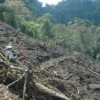
PERU: The Tangled Paths of New Forest Law
Indigenous protests prompted the introduction of a new legislative bill on forests and wildlife in Peru, the second most forested country in South America. Experts consulted by Tierramérica pointed to what the initiative gets right, but also to what's wrong with it.
NIGER: Livestock Herders Plan Ahead
The cows Djibo Hama looks after belong to someone else, but he is diligent. Anticipating a severe shortage of good grazing in 2010, he secured cattle feed for the 35 that remain.DEVELOPMENT: More Food, Except For That Billion Or So
While agricultural research has made massive strides over the years in helping the world produce more food from the same amount of land, around one in six people, the 1.02 billion hungry, have not noticed.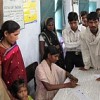
DEVELOPMENT-INDIA: Banking on Women
Rinki Kumari’s white laminate-topped desk at the Bank of India’s branch here in Sahdeokhap village in eastern Bihar state is easily the busiest, with men, women and even children crowding around her.
TRADE-SOUTHERN AFRICA: “Reclaim Control over EPA Talks”
Southern African governments must regain control over the negotiations on the trade deals known as economic partnership agreements (EPAs). Issues earmarked as deal-breakers should be resolved before talks to a full EPA are continued. These include limiting the EPA to a goods-only agreement and the EU dropping its demand for reciprocity.URUGUAY: Agro-Export Boom May Have Lethal Consequences
Behind the explosive growth of the agriculture and plantation forestry industries in Uruguay lies clear proof of the indiscriminate use of chemical products that pose serious threats to the environment and human health.
Q&A: EPAs Are Still Not Developmental, Despite EU Promises
The contentious trade deals known as the economic partnership agreements (EPAs) will in their current form not do African countries any good as they still do not take those countries’ development needs into consideration, despite such an undertaking by the European Union (EU).« Previous Page — Next Page »


 Farming on the Outskirts of Juba. Credit: UN Photo/JC McIlwaine
Promoting human and planetary health is a central focus of the United Nations, as laid out in the 2030 Sustainable Development Goals (SDGs). World hunger and unsustainable farming practices continue to be pressing concerns for the world. According to the 2025 State of Food Security and Nutrition in the World report by the Food and Agriculture Organization (FAO), 673 million people faced hunger in 2024. There are stark regional disparities, with the FAO projecting that 60% of the world population facing hunger will reside in Africa by 2030. Globally, the prevalence of food insecurity has remained consistently higher for women than men.
Sustainable and efficient national food systems are essential in preserving health, education, environmental well-being, peace, economy, and security. However, creating sustainable food systems can be a challenging endeavor, as food production takes a heavy toll on the environment. The agricultural sector accounts for a significant portion of greenhouse gases. Finding safe, sustainable, and ethical strategies to feed the world is crucial in ensuring planetary longevity. A recent initiative from 2023, the EU Regulation on Deforestation-free Products (EUDR), seeks to advocate for sustainable food systems. The main driver of deforestation is the expansion of agricultural land used to produce commodities like cattle, wood, cocoa, coffee, etc. The EUDR is part of the 2020 European Green New Deal and the EU Biodiversity Strategy for 2030 and aims to limit Europe’s consumption of products linked with deforestation by requiring that companies prove that their products are deforestation-free. Despite aiming to achieve major strides in sustainability, policies such as EUDR also raise socioeconomic concerns for targeted countries. Many emerging Latin American economies are impacted by the policy, and have raised the question of how developing countries can grapple with the tensions between economic development and advancing sustainability.
IPS has been at the forefront of providing compelling and insightful stories on communities facing hunger as well as the cost of food production. IPS uses statistics from FAO, the World Food Programme (WFP) and the International Fund for Agricultural Development (IFAD) to bring relevant and hard-hitting facts to readers. This gathering of information and data from such organizations helps bring the best stories from IPS journalists working in the different regions in consultation with experts on the ground.

The Week with IPS

NEXT STOP - SDGs
Tracking global progress towards a sustainable world

