Languages
Saturday, November 14, 2026



News and Views from the Global South
Gender

Digitizing Family Planning: The Way of the Future
Online shopping may have its pros and cons, but when it comes to buying products that have an invisible morality tag, it’s the safest possible option, believes Franklin Paul.
The Arab Youth Bulge and the Parliamentarians
More than ever before, the Arab region now registers an unprecedented youth population growth while facing huge challenges such as extremely high unemployment rates --more than half of all regional jobless population--, and inadequate education and health provision, in particular among young women.
2 Billion People Don’t Have Access To Clean Water, Opens up Fissures of Inequality
More than two billion people lack access to clean and safe drinking water, according to a new report released by the World Health Organisation (WHO).
For India’s Urban Marginalized, Reproductive Healthcare Still a Distant Dream
In a semi-lit room of a southern Chennai neighborhood, a group of women sit in a circle around a table surrounded by large cardboard boxes of "Nirodh" – India’s most popular condom.
Is Religion the New Colonial Frontier in International Development?
A decade ago, it was difficult to get Western policy makers in governments to be interested in the role of religious organizations in human development. The secular mind-set was such that religion was perceived, at best, as a private affair. At worst, religion was deemed the cause of harmful social practices, an obstacle to the “sacred” nature of universal human rights, and/or the root cause of terrorism. In short, religion belonged in the ‘basket of deplorables’.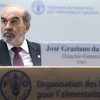
Progress on World Hunger Has Reversed
World hunger has increased, reversing years of progress, said a UN specialised agency. During its biennial conference held in Rome, Italy from 3-8 July, the Food and Agriculture Organisation (FAO) noted that the world is facing it’s worst food crisis since World War II.
Ending Child Marriage Could Add Trillions to World Economy
The benefits of ending child marriage are many—boosting a young girl’s morale and increasing her chances of education and work, and by that virtue, curbing high population rates in developing economies and boosting growth.
More Bang for Your Buck: Saving Lives by Investing in the Poorest
Investing in the health of the poorest communities saves almost twice as many lives, according to a UN agency’s analysis.
SLIDESHOW: When Women Have Land Rights, the Tide Begins to Turn
 In Meghalaya, India’s northeastern biodiversity hotspot, all three major tribes are matrilineal. Children take the mother’s family name, while daughters inherit the family lands.

Putting the Spotlight on Women Migrant Workers
Migrant workers, and their economic contribution to the development of both the country of origin and the host country, have caught the eye of governments and policymakers worldwide.
“Big Reflection” Needed on Opioid Crisis
Opioids are among the most devastating drugs and are creating a crisis of epidemic proportions, said the UN drug agency.
Sexual Violence Fuels Vicious Recruitment Cycle in Congolese Militia
In the Democratic Republic of Congo (DRC), the active recruitment of young girls by armed militias has produced disastrous effects—facing social stigma when they’re freed, many girls find their way back to these violent groups and rejoin them.
Achieving Universal Health Coverage (UHC) in Kenya through Innovative Financing
Every year, one million Kenyans are driven below the poverty line by healthcare-related expenditures. Poverty predisposes them to disease and slows all aspects of growth in the economy.
Men Who Commit Femicide Lose Rights Over Their Children in Argentina
In January 2008, Rosana Galliano was shot to death in Exaltación de la Cruz, a rural municipality 80 km from Argentina’s capital, Buenos Aires. Her ex-husband, José Arce, who was sentenced to life in prison, had hired hitmen to kill her.
Women, Still Major Victims of Sharp Disparities at Workplaces
Reducing gender disparities at workplaces by 25 per cent by 2025 could inject nearly 5.8 trillion dollars into the global economy and boost tax revenues, according to a United Nations report, ahead of the UN Labour Organization’s Summit on "A better future for women at work" on June 15.
Global Coalition Calls for Withdrawal of SDGs Progress Report
A report on the Sustainable Development Goals (SDGs) fails to capture the the true picture of water challenges and the UN must withdraw it, said a global civil society coalition.
When Women Have Land Rights, the Tide Begins to Turn
In Meghalaya, India’s northeastern biodiversity hotspot, all three major tribes are matrilineal. Children take the mother’s family name, while daughters inherit the family lands.The “Shocking” Reality of Child Marriage in the U.S.
While stories of child marriage are commonly associated with the Global South, lesser known are the cases closer to home: in the United States.
What Future for 700 Million Arab and Asian Youth?
With a combined population of around 400 million inhabitants, 22 Arab countries are home to nearly 300 million youth. Meantime, there are 400 million youth living in Asia and the Pacific. In both regions, these 700 million young people aged 15–24 years account for up to 60 per cent of world’s youth population. What future for them?.
Solar Tents Improve Nutrition in Highlands Villages in Bolivia
In this remote highlands valley community in central Bolivia, a group of Quechua indigenous women have learned how to combat the intense frosts and the shortage of water in solar tents, and to use what they grow to prepare nutritious new meals for their families.
Renewing Commitment to SDGs: Private Sector Gets Active
Just last month business representatives from around the world joined the United Nations Sustainable Development Goals Fund commemorate their work as part of the Private Sector Advisory Group (PSAG).« Previous Page — Next Page »


Women make up half the world's population, but don't nearly share half of the world's wealth, well-being and opportunity. Two-thirds of the world poor are women, disproportionally exposing women to precarious living conditions, disease and unmitigated natural disasters. The media, meanwhile, remains a male-dominated sector in much of the world, contributing to women's voices lacking a crucial amplifier to put their concerns on political agendas and unleash the development potential of their ingenuity. Rather than then stereotypical victims of local and global forces, women are also organizer, innovators, conservators and community builders. These are some of their stories.

The Week with IPS

NEXT STOP - SDGs
Tracking global progress towards a sustainable world
Tracking global progress towards a sustainable world
