Languages
Tuesday, November 17, 2026



News and Views from the Global South
Global Geopolitics
Netanyahu – Unlike Olmert – Refuses Explicit Iran Attack Threat
The perception that Israeli Prime Minister Benjamin Netanyahu is threatening to attack Iran’s nuclear facilities unless sanctions and diplomacy succeed in shutting them down has been the driving force in the Iran crisis.
Mexican Activists Defend Internet Freedom
Mexican advocates of internet freedom are mobilising to protest their government's decision to sign the Anti-Counterfeiting Trade Agreement (ACTA), a multilateral treaty whose stated aim is to protect intellectual property right through enhanced international cooperation and enforcement.Will Austerity Prompt Nuclear Disarmament?
The changing international political order and a dramatic budgetary situation at home are forcing France to consider giving up the extremely expensive nuclear arsenal the country has maintained since the late 1950s.U.S.: Republicans Sink Law of the Sea Ratification for Now
Defying the wishes of both the U.S. Chamber of Commerce and the U.S. Navy, Republican senators have effectively halted – for now - an effort by the administration of President Barack Obama to gain ratification of the 30-year-old Law of the Sea Treaty (LOST).
Negotiators Lack Focus at Arms Treaty Talks, Observers Warn
More than halfway through four-week negotiations for a binding treaty to regulate the global weapons trade, observers are warning that the talks are a week behind schedule.Rights Groups, U.S. Denounce Sentences of Ethiopian Journalists
Human rights groups, press watchdogs, and even the U.S. government have strongly denounced recent prison sentences meted out against journalists and opposition activists accused of violating Ethiopia's anti-terrorism laws.
Russia Says West Using “Blackmail” over Syria
Russia has said it would block moves at the U.N. Security Council to extend a U.N. monitoring mission in Syria if Western powers did not stop resorting to "blackmail" by threatening sanctions against Damascus.UNDP Predicts Rise of the Global South
When the U.N. Development Programme (UNDP) unveils its annual flagship Human Development Report (HDR) in mid-October, the primary focus will be on a growing new phenomenon on the economic horizon: the rise of the global South and the significant progress in South-South cooperation over the last decade.SOUTH KOREA: Stuck in the 20th Century?
South Korea is at the cutting edge of global technology. It is one of the most wired countries, and its biggest cities have the fastest Internet connections in the world.TURKMENISTAN: Ashgabat Quietly Builds Up Caspian Military Might
When it comes to the brewing arms race in the Caspian Sea region, no one can accuse Turkmen leader Gurbanguly Berdymukhamedov of navel-gazing. Ashgabat is now able to back its claims to some energy-rich patches of the sea with considerable firepower.Obama Piles New Sanctions Against Iran
In the latest ratcheting up of pressure on Iran, the administration of U.S. President Barack Obama Thursday imposed new financial sanctions against Iranian and other companies whose operations allegedly support the country's nuclear and ballistic-missile programmes.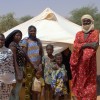
U.S. Commits 10 Million for Mali Refugees as Intervention Talk Builds
President Barack Obama on Thursday authorised the release of 10 million dollars in emergency funding to help with the refugee crisis stemming from continued violence in northern Mali, in response to warnings that international aid efforts were in danger of drying up in coming months.Widespread Muslim Scepticism of U.S. as Democracy Advocate
Despite continuous assurances that the United States favours democratic rule during the 18-month-old "Arab Spring", majorities or pluralities in six predominantly Muslim countries see Washington as an obstacle to their democratic aspirations, according to a new survey released here Tuesday.
Libya May Steer Clear of the Islamist Way
Libyans appear to be putting their hopes in Mahmoud Jibril’s liberal National Forces Alliance (NFA) to cement a coalition and build bridges between Libya’s fractious militias. Many believe the party can also unite other ideologically opposed political parties, and both opponents and supporters of former dictator Muammar Gaddafi.Amid Stormy Waters, Caribbean Tacks South
The Eurozone crisis and growing influence of countries like China and Brazil are leading the Caribbean to reassess its dependence on traditional trade and aid partners.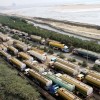
Truckers Celebrate NATO Resumption
“I’m happy that I will be resuming work soon,” says Zarbistan Khan, who owns and drives a tanker that takes oil from the southern port city Karachi to Afghanistan. But the joy comes under the shadow of a Taliban threat to attack supply convoys.
To Aid Afghans, Not Just Afghanistan
Afghanistan’s international donors will gather on Sunday in Tokyo for a conference at which they are expected to pledge economic aid, and ensure their assistance level will be maintained after withdrawal of ISAF-NATO troops, in 2014. But Afghan people and civil society groups working in the country say much of the aid is being directed the wrong way.Key Syrian Defection Heartens U.S.
The defection this week of a key general with longstanding ties to Syrian President Bashar Al-Assad was hailed Friday by officials in the administration of U.S. President Barack Obama as an important step towards ending the regime.New U.S.-Pakistani Supply Accord Seen as Tenuous
As NATO supply convoys began crossing from Pakistan into Afghanistan for the first time in more than seven months Thursday, analysts here warned that the reopening of the key route does not necessarily signal a new dawn in the fraught relations between Washington and Islamabad.
Americas Team Avoids Paraguayan Rights Groups
Paraguyan rights groups are disappointed at being denied access to a delegation of the Organisation of American States (OAS) sent in this week to discover the facts behind the impeachment and removal of President Fernando Lugo on Jun. 22.
Paraguay’s Isolation Grows
Paraguay’s isolation, following the impeachment and ouster of President Fernando Lugo 11 days ago, has grown thanks to slender recognition for the new government and souring diplomatic relations with the neighbours.« Previous Page — Next Page »


Is the world dominated by three great empires -- the U.S.A, China and the European Union? How much power do the great behemoths of the south -- India, Brazil, and South Africa -- wield? And where does Russia fit in that equation? Are we in the middle of a new Cold War? What are the implications of the armed conflict with Georgia? What about the new axis: Venezuela-Russia? And what role does Turkey play? What about issues like Climate Change and other global forces like the food crisis and the high energy prices? How is all this reshaping the world's forces? IPS looks for some answers.

The Week with IPS

NEXT STOP - SDGs
Tracking global progress towards a sustainable world
Tracking global progress towards a sustainable world
