Languages
Monday, September 21, 2026



News and Views from the Global South
Global Geopolitics

Opinion: The Empire’s New Clothes? Conjuring Growth from the TPP
While the main US motivation for the Trans Pacific Partnership (TPP) has been to counter China’s influence in the region, it has also been used to undermine the Doha ‘Development’ Round of trade negotiations to better advance politically influential US corporate interests. Hence, it has become all the more necessary to legitimize the TPP in terms of its ostensible benefits. Touted as a ‘gold standard’ 21st century trade deal, it is nonetheless necessary to ascertain what gains can really be expected and whether these exceed its costs.
No Easy Outcomes in Brazil’s Political Crisis
Brazilian President Dilma Rousseff would appear to be, as she herself recently said, “a card out of the deck” of those in power, after the crushing defeat she suffered Sunday Apr. 17 in the lower house of Congress, which voted to impeach her. But Brazil’s political crisis is so complex that the final outcome is not a given.
A World Drowning in Oil
Thanks to tensions between Saudi Arabia and Iran, major oil producers couldn’t come to an agreement in Doha to freeze their output to January levels to raise oil prices. The current low oil prices have a lot to do with the grim outlook for global economic growth while supply is growing. China, the second largest economy in the world, is slowing down. Not surprisingly, global oil demand is much lower at 94.8 million barrels a day vis-à-vis supply of 96.3 million barrels a day in the first quarter of 2016 according to the International Energy Agency.
Will the UN’s new leader stand for the powerful or the powerless?
After hundreds of questions were posed to nine candidates vying for the role of United Nations Secretary-General this week, a lasting question remains; will the UN’s new leader stand for the powerful or the powerless?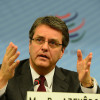
Opinion: Africa, the Need for Greater Integration
There is a misconception, by some, that the World Trade Organization (WTO) is a barrier to regional integration. It is one of a number of misconceptions that do not match up with the facts like the perception that the WTO is a rich man's club. Today the WTO has 162 members and rising at all stages of development. 43 of those members are African countries and rising. The organization now covers around 98% of world trade. It is a truly global organization, one where everybody has an equal say. And it is an organization which supports regional integration in Africa. Indeed, I would say that the need for better integration across the continent is indisputable.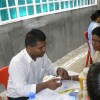
World Health Day: Rapidly Rising Diabetes Closely Linked to Poverty
Diabetes, which now affects more than 400 million people worldwide, is closely linked to poverty in most regions of the world, World Health Organization Medical Officer Alessandro Demaio told IPS Thursday.
OPINION: A Decalogue to Understand Terrorism and Its Consequences
The recent Brussels massacre has created a short term reaction, which ignores a long term projection. All the debate is now about security, police reinforcement, new military strategies, as if terrorism can be solved just as a matter of public order.
Need for an Urgent Revision to Bond Contracts and a Debt Workout Mechanism
Argentina signed an agreement in principle on 29 February 2016 with four “super holdout” hedge funds including NML Capital Ltd, Aurelius Capital, Davidson Kempner and Bracebridge Capital. Buenos Aires would pay them a total of about 4.65 billion dollars, amounting to 75 percent of the principal and interest of all their claims of Argentina’s bonds that were defaulted on during the 2001 debt crisis. This deal would allow the return of Argentina to the international capital market after more than 15 years of exclusion.
Argentina, the United States’ New South American Ally
After a decade of bilateral tension, the presidents of Argentina, Mauricio Macri, and the United States, Barack Obama, resumed the friendship between the two countries, which could lead to a free trade treaty and a “universal” alliance.
Peace in Colombia, Shielded by International Support
“It was not possible” to reach a final agreement with the Revolutionary Armed Forces of Colombia (FARC), the Colombian government’s lead negotiator, Humberto de la Calle, announced in Havana on Wednesday Mar. 23 – the deadline set for a peace deal.
OPINION: Terrorism: the Answer Is More Europe, Not Less
The enemy isn’t Brussels: it’s Europe. The so-called Islamic State clearly signaled this by attacking, even more than the airport, a metro station. Maelbeek is not just another subway stop in the Belgian capital. Although the symbolism could have been more dramatic if the terrorists had chosen the neighouring station named after Robert Schuman…but perhaps the tighter security there dissuaded them.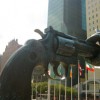
Western Powers Unlikely to Impose Arms Embargo on Saudi Arabia
As hundreds of civilians continue to be killed in the ongoing conflict in Yemen, one of the leading human rights organization is calling for an arms embargo – specifically against Saudi Arabia which is leading a coalition of eight countries battling Houthi rebels in the war-ravaged neighbouring country.UN Laboriously Strives for its First Female Secretary-General
When the only female candidate failed in her attempt to become UN Secretary-General back in late 2006, an Asian diplomat weighed in with an upgraded Biblical quote: “It is easier for a camel to pass through the eye of a needle”, he said, “than for a woman to become the Secretary-General of the United Nations.”
African Nations & Russia Protest UN Stamps on Gay, Lesbian Rights
When the UN Postal Administration recently unveiled a set of six new commemorative stamps -- as part of a global campaign promoting the rights of lesbian, gay, bisexual and transgender (LGBT) communities -- it did not expect a furious backlash as it did, mostly from the 54 members of the African Group and from Russia, a veto-wielding permanent member of the Security Council.
Turkey’s Crackdown on the Press
On the evening of March 4, heavily armed police forced their way into the headquarters of the Turkish daily Zaman. The hundreds of protesters that had gathered in front of the building in an Istanbul suburb in solidarity with their newspaper were violently dispersed.
Palestinian Refugees from Syria
In the safety of his sister's bare flat in Beit Hanoun, Gaza, 42 year-old Iyad Yusef still shakes his head in disbelief when he recounts the journey that from war-torn Syria, brought him and his family to the relative safety of the blockaded strip.
CTBTO to Install Two Nuclear Monitoring Stations in Ecuador
The Comprehensive Test Ban Treaty Organisation (CTBTO), based in Vienna, will soon install two new monitoring stations in Ecuador. CTBTOs Executive Secretary Dr Lassina Zerbo told IPS the two stations in Ecuador, RN 24 and IS 20, “will brings us an important step closer to the completion of the International Monitoring System – the network that monitors the globe 24/7 for signs of nuclear explosive testing.”
Anti-Mining Protests in Turkey Book Temporary Victory
Over the past weeks, thousands of people across Turkey have protested against the planned construction of a gold mine in Cerattepe, close to the town of Artvin in the northeast of the country. Protesters fear that the mine will cause irreparable damage to the unique natural environment of the region.
New Nuclear Hysteria in the Middle East
Three years ago when the tsunami of panic around Iran's potential capability to develop nuclear weapons reached its peak, a combined diplomatic, media campaign warning that a Gulf Arab state would think of purchasing atomic bombs was spread like an oil spot.
Obama and Raúl Castro to Launch New Era with Historic Visit
U.S. President Barack Obama and his Cuban counterpart Raúl Castro will go down in history as two statesmen who managed to overcome more than half a century of hostility to bring back together two neighbouring countries with too many shared interests to remain at loggerheads.Mideast Arms Supplies Continue Despite Falling Oil Prices
The continued decline in oil prices is threatening to have a direct and indirect impact on several fronts, including development aid, migrant workers and remittances, voluntary contributions to UN agencies, humanitarian assistance to refugees and infrastructure-building in the Gulf countries.« Previous Page — Next Page »


Is the world dominated by three great empires -- the U.S.A, China and the European Union? How much power do the great behemoths of the south -- India, Brazil, and South Africa -- wield? And where does Russia fit in that equation? Are we in the middle of a new Cold War? What are the implications of the armed conflict with Georgia? What about the new axis: Venezuela-Russia? And what role does Turkey play? What about issues like Climate Change and other global forces like the food crisis and the high energy prices? How is all this reshaping the world's forces? IPS looks for some answers.

The Week with IPS

NEXT STOP - SDGs
Tracking global progress towards a sustainable world
Tracking global progress towards a sustainable world
