Languages
Monday, November 23, 2026



News and Views from the Global South
Global

A Growing Illicit Trade Threatens Jamaica’s Wildlife
News of Vienna's Schoenbrunn Zoo's newest attraction shocked Jamaican authorities. The unlikely stars: a flock of 45 endangered Jamaican Amazon parrots, hatched from eggs smuggled out of the island in rum-cake boxes.
Oceans Will Not Survive ‘Business as Usual’
Our oceans face a grim outlook in the coming decades. Ocean acidification, loss of marine biodiversity, climate change, pollution and over-exploitation of resources all point to the urgent need for a new paradigm on caring for the earth’s oceans—"business as usual" is simply not an option anymore, experts say.Alleged Photos of “Clean-up” at Iran’s Parchin Site Lack Credibility
News stories about satellite photographs suggesting efforts by Iran to "sanitise" a military site that the International Atomic Energy Agency (IAEA) has said may have been used to test nuclear weapons have added yet another layer to widely held suspicion that Iran must indeed be hiding a covert nuclear weapons programme.Fresh Warning of Water Wars
As non-governmental organisations question the relevance of the World Water Forum being held here this week and slam its "corporate" nature, the United Nations says that a coordinated approach to managing and allocating water is critical.
Q&A: Prevention Is the Best Cure for Gender Violence
As many as seven in 10 women in the world report experiencing physical and/or sexual violence at some point in their lifetime, leaving a devastating aftermath for individuals, communities and nations.
U.N. Human Rights Council Exhorted to Defend Peasants’ Rights
Decades after peasants’ networks have advocated for a new legal instrument to protect the rights of small farmers to land, seeds, traditional agricultural knowledge and freedom to determine the prices of their production, the United Nations Human Rights Council (UNHRC) may decide to start drafting a declaration on peasants’ rights next week.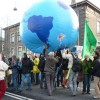
Rio+20 Summit: A Moment That Must Be Seized
The upcoming Rio+20 conference has to be the moment in human history when the nations of the world come together to find ways to ensure the very survival of humanity, many science and environmental experts believe.
U.N. Aims at Major Global Conference on Women in 2015
As the race towards gender equality moves at an exceedingly slow pace, the United Nations is calling for a major international conference on women in 2015 - 20 years after a landmark meeting in Beijing in 1995.
Q&A: How to Analyse a Budget’s Impact on Female Empowerment
Tools such as "gender markers", which screen budgets and resources dedicated to promoting gender equality, are proving critical to improving the effectiveness of monetary support that seeks to empower women and girls.
U.N. Special Envoy on Iran Details Pattern of Rights Abuses
A United Nations envoy has called on the Iranian government to release all political prisoners and prisoners of conscience, and to conduct an extensive, impartial and independent investigation into the violence that followed the 2009 presidential election.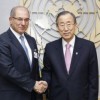
Syria’s Chemical Weapons Trigger New Threats in War Zone
As the besieged government of President Bashar al-Assad continues to violently suppress the warring political opposition in Syria, the United Nations has expressed "concern" over reports "on the possible existence of chemical weapons" in the embattled Middle Eastern country.
Festival Brings Human Drama from Headlines to the Screen
The often heroic struggles of some of the world's human rights victims and advocates are on full view at the Toronto Human Rights Watch Film Festival, which runs through Friday at the TIFF Bell Lightbox theatre.
Following the Money Trail in Gender Financing
Promising methods of tracking aid funding intended to improve women's and girls' livelihoods also offer the possibility of revealing whether donors and policymakers are walking the walk when it comes to gender financing.U.S. Lags in Legalising Women’s Rights Treaty
The United States has fallen behind. Many other countries have already implemented it, but the United States still has yet to ratify the Convention on the Elimination of All Forms of Discrimination Against Women (CEDAW), which promotes women's rights as human rights.
Green Economy Seeks to Maintain Growth Threatened by Disasters
There is every indication that major disasters could be the new midwives of history. Seeking to prevent them, the green economy aims to reduce "environmental risks" and "ecological scarcities" while improving human well-being and social equity.Green Credit Scarce in Latin America
In Latin America, where bank loans for environmentally sustainable activities are rare, the United Nations Environment Programme (UNEP) is seeking to foment green credit.
Groups Reject Holder’s Defence of Targeted Assassination
Two days after U.S. Attorney General Eric Holder outlined the statutory justifications for "targeted killings", civil liberties groups here continue to question the legality of the Obama administration's policy, particularly as it applies to the rights and very lives of both U.S. citizens and foreign nationals.
Abolitionists Target Funders of Nuclear Arms Industry
The world's nuclear weapons industry is being funded - and kept alive - by more than 300 banks, pension funds, insurance companies and asset managers in 30 countries, according to a new study.
Q&A: “Social Unrest Can Be a Creative Force”
Social unrest and demands for change are not a negative thing during times of crisis like today, says Rubens Ricupero, a prominent Brazilian diplomat and intellectual.
Green Economy Seeks to Maintain Growth Threatened by Disasters
There is every indication that major disasters could be the new midwives of history. Seeking to prevent them, the green economy aims to reduce "environmental risks" and "ecological scarcities" while improving human well-being and social equity.
Simple Steps to Improving Aid Effectiveness
As donors struggle to meet their aid commitments, and the number of people around the world in need of direct humanitarian and development assistance skyrockets, many experts and activists are asking the tough question: are donors being effective?« Previous Page — Next Page »


The Week with IPS

NEXT STOP - SDGs
Tracking global progress towards a sustainable world
