Languages
Saturday, November 21, 2026



News and Views from the Global South
Green Economy

Selling Ethanol Stoves in Mozambique to Generate Carbon Credits
Along a dirt road in Mozambique’s Sofala province, a long line of men on bicycles stretches into the distance, each carrying an impossibly big bag of charcoal strapped to his bike.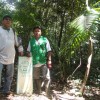
Peru – Megadiverse, and Biodiversity-Aware
One of every two Peruvians knows what "biodiversity" means, and most would stop buying products that are not socially or environmentally responsible, according to an international survey that for the first time included this megadiverse South American country.
Will Rio+20 Spark a Green Revolution?
Think of Rio+20 as the hothouse to grow the green ideas and values humanity needs to thrive in the 21st century.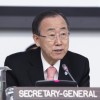
U.N. Chief Disappointed Over Deadlocked Rio+20 Negotiations
Secretary-General Ban Ki-moon, who has invested heavily in the success of the upcoming U.N. Conference on Sustainable Development (UNCSD), is publicly expressing his frustration at the lack of substantial progress on a final plan of action for a greener economy and a sustainable future worldwide.Rio+20: European Parliament Absent in Sustainability Summit
The decision by the European Parliament (EP) to renounce its participation in the Rio+20 United Nations Conference on Sustainable Development next month on the grounds that hotel costs are exorbitant has provoked sharp criticism from civil society organisations.
Q&A: The Future of Agriculture May Well Be in Cities
In the coming decades, the world's population is expected to grow by at least another two billion people, 80 percent of whom will live in cities by the year 2050.
Adding Rice Farmers to the Rio+20 Agenda
The year 2011 was one of extremes for the small Sri Lankan village of Verugal.
“We Are Living As If We Had One and a Half Planets”
The new WWF Living Planet Report warns of a significant decline in biodiversity, particularly in low-income countries, and a huge increase in the ecological footprint of high-income countries.
Brazilian Government Sets Guidelines for Success at Rio+20
As the host of Rio+20, the Brazilian government has defined guidelines for achieving success at the upcoming world summit, whose aim is to assess and strengthen what has been done since the 1992 Earth Summit, the first global meeting on sustainable development.Private Sector and Conservationists Meet on a Big Date
As schools of whales move to music undersea at image definitions of 6.54 million pixels on the giant ceiling mounted LED screen, 218 X 30 metres in length and width, expectations run high from the International Exposition Yeosu Korea 2012 at harbour town. The expo showcases 104 participating countries’ visions and achievements on the Expo theme: ‘The Living Ocean and Coast: Diversity of Resources and Sustainable Activities’.
Financial Middlemen Muddle Climate Commitments
The European Union has been using all means necessary to fill the multi- billion-euro fund for climate change, including the controversial mobilisation of public resources through private financial intermediaries.
Green Economy Seeks to Maintain Growth Threatened by Disasters
There is every indication that major disasters could be the new midwives of history. Seeking to prevent them, the green economy aims to reduce "environmental risks" and "ecological scarcities" while improving human well-being and social equity.Green Credit Scarce in Latin America
In Latin America, where bank loans for environmentally sustainable activities are rare, the United Nations Environment Programme (UNEP) is seeking to foment green credit.
KENYA: Microloans, Greenhouses Help Women Cope with Climate Change
At Gakoromone Market in Meru, in Kenya’s Eastern Province, Ruth Muriuki arrives in a pickup full of tomatoes and cabbages despite the scarcity of rainfall in the area, thanks to the greenhouse technology she uses on her farm – and microcredit.
ZIMBABWE: Farmers Tackle Water Problems Fuelled by Climate Change
Beauty Moyo’s desire for access to water has finally been met. The rains that fell in the past week after a long dry patch have awakened this small-holder farmer deep in rural Plumtree, Zimbabwe on the border with Botswana to the reality of sparse rainfall, climate change and how she and her fellow villagers can respond.Dwindling Resources Trigger Global Land Rush
A global scramble for land and mineral resources fuelled by billions of investment dollars is threatening the last remaining wilderness and critical ecosystems, destroying communities and contaminating huge volumes of fresh water, warned environmental groups in London Wednesday.Spanish Cities Far From Sustainable
Though Vitoria-Gasteiz, capital of the Basque Country, was elected the European Green Capital of 2012 – an award presented by the European Union to promote and reward efforts to mitigate climate change – Spain still has a long way to go to earn the label of ‘sustainable’ for others cities around the country.
Q&A: Climate Funding Needs Gender Equity
Gender considerations remain largely disregarded in existing climate funds, even though women are some of the hardest hit by the impacts of climate change on livelihoods and agriculture.
Eastern Caribbean Seeks Funds for Green Growth
As developing countries urgently seek new sources of financing to cope with problems linked to climate change, delegates from the nine-nation Organisation of Eastern Caribbean States (OECS) met here last week to evaluate potential funds and outline a more concrete vision of what is required for the subregion.
Green Tech Drives Search for Rare Earths in Argentina
Argentina could meet part of the rising world demand for "rare earth" metals, required for a variety of green technologies, advanced electronic devices and medical diagnostic equipment. The challenge lies in mining them in a sustainable fashion.« Previous Page


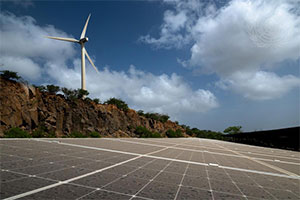 Renewable Energy in Cabo Verde. Credit: UN Photo/Mark Garten
A green economy is an economic model that aims to reduce environmental risks and build a sustainable future. Many of the UN SDGs seek to facilitate a green economy, such as ensuring access to affordable and reliable clean energy, building sustainable cities and communities, and implementing urgent action to combat climate change. Various key negotiations have strived to achieve a green economy, such as the Green New Deal and the Inflation Act of 2022. COP30, held in Belém, Brazil in 2025, agreed to mobilize $1.3 trillion annually for climate action and launched the Belém Mission to 1.5°C. However, the conference was not able to develop a fossil fuel reduction roadmap. Recent years have witnessed a sharp transformation in the geopolitical landscape of international sustainability cooperation. In March 2025, the United States stepped back from formal multilateral support for the SDGs, while China is on the rise as an international leader in renewable energy production. The actions of these global powers may shape shifting alliances on environmental governance. IPS is dedicated to sharing timely news on international developments in building a sustainable future.

The Week with IPS

NEXT STOP - SDGs
Tracking global progress towards a sustainable world
Tracking global progress towards a sustainable world
