Languages
Wednesday, November 18, 2026



News and Views from the Global South
Health

Social Protection Necessary to Quickly End Poverty, Hunger
Historically, most social security systems have developed in the formal sector of rich economies. However, most of the poor and hungry in the world live in rural areas, surviving in the informal economy.
Statistics and Stories – Time to Change the Refugee Narrative?
Statistics and stories. When aid agencies appeal for funding to tackle the latest refugee crisis and journalists do their reporting, then these are the two narratives most chosen -- one impersonal and the other upfront and individual. The sheer numbers can feel overwhelming. The UN refugee agency UNHCR says more than 70 million people are currently displaced by conflict, the most since the Second World War. Among them are nearly 26 million who have fled their countries (over half under the age of 18) and 3.5 million more are registered as asylum seekers.
Science & Policy Must Remain Partners in Mercury Challenge
It has been more than two years since the Minamata Convention on Mercury entered into force. The global treaty protects humans and the environment from the toxic metal, but countries are still stuck on how to measure the agreement’s effectiveness.
More Austerity for Developing Countries: It’s Bad News, and It’s Avoidable
After years of austerity, a number of Eurozone countries are now considering expansionary fiscal policies. And in the UK, government spending is set to return to levels last seen in the 1970s. But austerity abounds elsewhere in the world, including in some of the poorest countries.
80 Percent of Adolescents Do Less than 60 Minutes of Activity per Day, UN Health Agency Warns
An alarming lack of exercise among adolescents across the world risks seriously compromising their health into adulthood, the UN said on Thursday.
Evo Morales: Hero or Villain?
To be president in a country like Bolivia might be like a precarious act performed by a tightrope-dancer between “the Devil and the deep blue sea”. After 23 years as Bolivia’s President, Evo Morales finally lost his foothold and ended up as political refugee in Mexico, adding his name to a long list of previous revolutionary exiles, like Augusto Sandino, Fidel Castro, and most prominently – Leon Trotsky. The last one was murdered, though the others came back, something Evo Morales has promised to do:
Winning the ‘No Food Loss’ Battle: The Case of Japan
Humankind since almost the time that there is recorded history has grappled with the question of ‘how many is too many?’ The response is expectedly complex as it varies across time and space. The pace of population growth was slow till about approximately 250 years or so. It is only since the middle of the eighteenth century that there has been a palpable acceleration in population growth.
As Donors Ramp up Polio Funding, Worries of Comeback Persist
Efforts to wipe polio off the face of the planet took a step forward this week, with a multibillion-dollar fundraiser in the Middle East helping eradication schemes tackle a virus that disproportionately kills and cripples children in poor countries.
Climate Change and Loss of Species: Our Greatest Challenges
Mottled and reddish, the Lake Oku puddle frog has made its tragic debut on the Red List, a rapidly expanding roll call of threatened species. It was once abundant in the Kilum-Ijim rainforest of Cameroon but has not been seen since 2010 and is now listed as critically endangered and possibly extinct.
“Transformational Benefits” of Ending Outdoor Defecation
Ending the practice of defecating in the open, rather than in a toilet, will have “transformational benefits” for some of the world’s most vulnerable people, says the UN’s partner sanitation body, the WSSCC (Water Supply and Sanitation Collaborative Council).
Empower Young People to Sustain Our Planet, and Let Peace and Prosperity Thrive
Q: At ICPD25 we heard that women and girls are still waiting for the unmet promises to be met? DO you think this time around there is a commitment to ensure that these promises are met? The Nairobi Summit is about the Future of Humanity and Human Prosperity.
The Global Economy of Pulses: Impressive Gains and the Way Forward
Pulses are highly nutritious and their consumption is associated with many health benefits. They are rich in proteins and minerals, high in fibre and have a low fat content. Pulses are produced by plants of the Leguminosae family. These plants have root nodules that absorb inert nitrogen from soil air and convert it into biologically useful ammonia, a process referred to as biological nitrogen fixation. Consequently, the pulse crops do not need any additional nitrogen as fertilizer and help reduce the requirement of fossil fuel-based chemical nitrogen fertilization for other crops. Expansion of pulse production, therefore, can play a vital role in mitigating the effects of climate change.
Art Helping Women to Highlight Gender-based Violence at ICPD25
While women find it hard to talk about their painful experiences, some have found a way of expressing themselves through art. Women, trained as artists, from Nairobi’s informal settlements Kibera and Kangemi, have produced a beautiful quilt that tells stories about their daily challenges.
Young People at ICPD25: ‘ We Have the Right to Sexual and Reproductive Rights’
Every day in developing countries it is estimated that 20,000 girls under the age of 18 give birth. This amounts to 7.3 million births a year.
World Youth Call to Governments to Ban All Hindrances to LGBTQI Communities
Governments across the world must ban all state-implemented harmful practices against the Lesbian, Gay, Bisexual, Transgender, Queer and Intersex (LGBTQI) community delegates at the ICPD25 tells IPS.
ICPD25: Lessons From the East
The Japan Parliamentary Federation for Population represented by Mr Teruhiko Mashiko and its secretariat, the Asian Population and Development Association (APDA) has made a clear and concrete commitment to endorse the ICPD25 agenda. Mashiko tells IPS that Japan, as should every country driven by the well-being of its population, should create the best possible conditions to achieve the ICPD25 agenda.
Women with Disabilities Speak out Against Exclusion at ICPD25
One in five women globally lives with a disability even as they have same needs and interests as women without disabilities, their access to sexual and reproductive health services and rights remains severely limited.
Cairo Dream Requires $264 Billion to Deliver Women’s Call for Justice and Bold Leadership
For each of the 830 women dying each day from pregnancy complications and childbirth, an estimated 20 others suffer serious injuries, infections or disabilities. This is the reality that millions of women face, and informs the Nairobi Summit’s three critical commitments which are to bring preventable maternal deaths, gender-based violence and harmful practices, as well as unmet need for family planning, to zero. To achieve this objective money is needed.
Nairobi Summit to Redouble Efforts to Urgently Deal with Reproductive Rights for Women and Girls
More than 6 000 delegates in the population development sector are gathering in the Kenyan capital of Nairobi this week to renew the promise made to girls and women 25 years ago in Cairo.
When is Universal Health Coverage Good for Attaining Universal Sexual and Reproductive Health and Rights?
This is a special year for all rights-based health advocates, as we celebrate 25 years of the International Conference on Population and Development (ICPD).
Call to Action as Thousands Breathe New Life to the Cairo Promise at ICPD 25 Summit in Nairobi This Week
Every day 830 women die while giving life. At least 33,000 girls are forced into child marriage with 11,000 girls undergoing female genital mutilation. These are some of the cruel realities young women face every day. However, there is renewed hope that delegates expected to attend the International Conference on Population and Development (ICPD) in Nairobi this week will re-energise and breathe new life to the Cairo Promise.« Previous Page — Next Page »


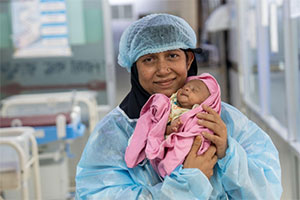 Bangladesh: Sarid, born one month early, receives specialized newborn care and grows stronger every day. Credit: UNICEF/UNI944397/Mojumder
Since the onset of the 2000s, global life expectancy has seen an overall rise, attributed to significant technological and scientific innovations in healthcare. Due to an increased understanding of different conditions as well as a rise in cooperation among healthcare experts around the world, there have been major strides made in ensuring that as few people die from chronic illnesses as possible. Despite the belief that healthcare is a fundamental human right, people from low- or middle-class backgrounds, marginalized groups, and underdeveloped countries have far more limited access to basic healthcare services.
The COVID-19 pandemic showed how marginalized communities are disproportionately affected by health crises, proving that we have much work to do in ensuring that no one dies of terminal conditions. While the global response to the coronavirus saw significant strides in immunization and vaccine development, the global outbreak of mpox in 2022 and its upsurge in parts of Africa in 2024 must remind us to remain vigilant.
Other major disease outbreaks in recent years have been linked to the destruction of infrastructure during warfare. Notably, in 2024, the Gaza Strip witnessed a return of the poliovirus since its eradication in the region 25 years ago. Israel’s blockade on Gaza has resulted in the collapse of the region’s sewage plants and desalination plants, and also destroyed healthcare capacities. The UN stated that this lack of clean water and sanitation would lead to an outbreak of cholera and other deadly infectious diseases. The 2026 OCHA Humanitarian Situation Report confirmed that the over two years of conflict in Gaza has produced a catastrophic health emergency, with millions remaining dependent on relief aid amid tight restrictions and no functioning public health system.
IPS is committed to providing full and comprehensive coverage on healthcare challenges around the world. IPS seeks to address the multifaceted causes of such challenges, including unprecedented pandemics, conflict-driven disease outbreaks, as well as socioeconomic barriers to equal healthcare access. IPS is also dedicated to reporting on innovations in the healthcare industry.

The Week with IPS

NEXT STOP - SDGs
Tracking global progress towards a sustainable world
Tracking global progress towards a sustainable world
