Languages
Sunday, November 15, 2026



News and Views from the Global South
Humanitarian Emergencies

Health Workers Are the Frontline Soldiers Against Covid-19. Let’s Protect Them
Many soldiers have seen first-hand the horrors of war and, terrifying though it often was, they knew who they were fighting, and could recognise their enemy.
Fighting Coronavirus: It’s Time to Invest in Universal Public Health
Austerity policies pushed by international financial institutions have weakened public health systems, despite current financial support packages, condemning many people to die.
Plagues and People – The Coronavirus in a Historical Perspective
The human factor is intimately involved in the origin, spread, and mitigation of the Coronavirus and we cannot afford to ignore that our future existence depends on compassion and cooperation. Response matters!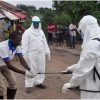
Why Nigeria Knows Better How to Fight Corona Than the US
The coronavirus disease, otherwise known as COVID-19, was first reported in Wuhan, China on the last day of December 2019. When it began to spread rapidly, the World Health Organisation (WHO) declared it a public health emergency of international concern on 30 January 2020.
Why Rich Countries must Protect Developing Nations from Coronavirus Pandemic
Governments in wealthy, first world countries must not ignore the plight of poorer nations battling the coronavirus or the disease will not be brought under control, global development experts have said.
Global Economic Consequences of COVID-19
The panic resulting from the events starting with the deaths in Wuhan keeps spreading globally faster than the spreading of the virus itself. Quite apart from the immediate health dangers, now a new economic danger looms large globally. We are facing the prospects of a deep and lasting global recession regardless of the health policy and economic policy measures taken by China, the US and other countries unless there is timely global cooperation and coordination. What will be the global economic impact of COVID-19 if swift and effective action is not taken globally? Is there a way to find out through some kind of rigorous model-based economic analysis?
Coronavirus Exposes Global Economic Vulnerability
As the outbreak of the novel coronavirus COVID-19 threatens a global pandemic, major stock markets around the world have suffered their worst performance since the 2008 financial crush.
What Future for the Rohingyas after the ICJ Ruling?
 In a groundbreaking ruling in January 2020, the International Court of Justice demanded that Myanmar halt all measures that contribute to the genocide of the Rohingya community.

Pulses for a Sustainable Future
Reducing poverty and inequalities, eliminating hunger and all forms of malnutrition and achieve food security for all – these are some of the most important objectives of the Sustainable Development Goals. Still, the rate of poverty and inequalities is increasing and over 820 million people are going hungry. In addition, 2 billion people in the world are food insecure with great risk of malnutrition and poor health. This alarming situation is further aggravated by current trends such as the rate of population growth, impacts of climate change, loss of biodiversity, soil degradation and many others. Transition to more sustainable food systems can provide adequate solutions to all these challenges. Pulses could play an important role in this transition, having nutritional and health benefits, low environmental footprint, and positive socio-economic impacts as well. What is required to promote and support the production and consumption of more pulses? This question is particularly relevant now, since 10 February is the World Pulses Day.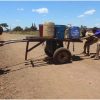
A Humanitarian Response to the Crisis in Zimbabwe
In November 2019, the UN’s Special Rapporteur on the Right to Food described Zimbabwe – a country once hailed as the bread basket of Africa – as a state on the brink of man-made starvation.
Women & Girls Up Front — the Humanitarian Response in Democratic Republic of Congo
Eleven-year-old “Anne” went to a health facility with her mother in the conflict-affected province of Ituri, in northeastern Democratic Republic of the Congo. At first, she could barely tell her story.
A Bigger Impact in a Smaller World: The China Situation
We are now living in a hyper communicative world where news does travel faster than lightning. Boundaries, borders, geographical and time differences have become next to obsolete in today’s speed driven world. At any point in time people, news and local occurrences can influence internationally without much local isolation. Along with the advantages of technology, communications and connections world is also facing new challenges that are proportionally evolving with advancement. One region affected today is affecting the global economy and population in frenzy of minutes, hours and days.
**UPDATE** African Nations Caught in Conflict Re-commit to Inclusive Education
Djibouti’s President Ismail Omar Guelleh knows that his country is in need of an education system that is, “innovative, based on universal principles and values and adaptive of the local realities”.
Experts laud International Court of Justice Order on Myanmar to Halt all Genocidal Conduct
In a groundbreaking and much anticipated ruling delivered on Thursday, the International Court of Justice demanded that Myanmar halt all measures that contribute to the genocide of the Rohingya community.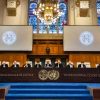
Top UN Court Orders Myanmar to Protect Rohingya from Genocide
Myanmar must take steps to protect its minority Rohingya population, the top UN court unanimously ruled on Thursday.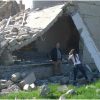
Mosul, an Epicentre of the ISIS Conflict, is a Devastated Iraqi City
As Iraq this month faces the threat of new conflicts – including a proxy war between the US and Iran – the shadow of the last conflict runs long.
UN Special Rapporteur Offers Assistance to Indian Supreme Court in Case of Rohingya Deportation
University of California professor E. Tendayi Achiume, who is a United Nations Special Rapporteur, has recently offered her assistance to the Indian Supreme Court in a long hearing about India deporting Rohingya refugees to Myanmar.
Climate Change: A Tale of Weather Extremes with Mixed Fortunes for Zambia
It is early Saturday morning and Planeta Hatuleke, a small scale farmer of Pemba District in Southern Zambia, awakens to the comforting sound of rainfall. As the locals say, the “heavens have opened” and it is raining heavily after a prolonged dry spell.
How Gender-based Violence Should be Reported in the Media
Sexual and gender-based violence terrorizes women and girls around the world, affecting as many as one in three women. Reporters play an essential role in bringing these cases to light so that authorities can take action and prevent further abuses. Yet reporting on gender-based violence comes with serious risks to survivors.
UN Chief Warns of Rising Misogyny, Xenophobia, Discrimination, Racism & Hate Speech
As we prepare to bid farewell to 2019, we must take a clearsighted look at the global situation and the new challenges we face. Our world is undergoing a shift. It is no longer bipolar or unipolar. But it is not yet truly multipolar. Balances of power are changing, creating new and dangerous risks.
Madrid Talks End Without Agreement on How to Finance Recovery from Climate-Related Atrocities
Millions of people, particularly in Africa, who lose their property, homes, and even die due to climate-related disasters will have to wait at least another year for the international community to agree on a means of supporting them.« Previous Page — Next Page »


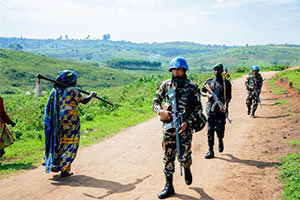 MONUSCO Peacekeepers and FARDC Soldiers Patrol Fataki Area. Credit: UN Photo/Jorkim Jotham Pituwa
Conflict, human rights violations, natural disasters, and famine have been at the forefront of concerns for humanitarian organizations. The escalation of humanitarian crises has led to over 239 million people in need of humanitarian assistance at the start of 2026, as estimated by OCHA’s Global Humanitarian Overview. The 2025 humanitarian appeal received only $12 billion, the lowest funding in over a decade, which has left 24 million fewer people reached in comparison to 2024. Conflict has remained the primary driver of crisis.
Humanitarian emergencies massively impact progress towards the Sustainable Development Goals (SDGs), adversely affecting economic development, inequality, education, planetary well-being, and poverty. Millions of people are faced with reduced access to essential services, including shelter, food, healthcare, and access to clean drinking water. UN Organizations such as UNHCR and the United Nations Children’s Fund (UNICEF) are committed to providing direct relief to affected communities when state governments cannot.
The United Nations 2024 Summit of the Future discussed measures that will be taken to reduce global inequality and promote peacekeeping efforts around the world. The recent UN Climate Change Conference (COP30) in Belém, Brazil, agreed to mobilize $1.3 trillion annually for climate action by 2035, operationalize the loss and damage fund, and triple adaptation finance. However, a fossil fuel transition commitment was not secured, despite climate change and the greenhouse effect being major contributors to humanitarian crises worldwide.
Countries across the world have also rallied to end humanitarian crises, as witnessed in conflicts such as Palestine and Ukraine. IPS is committed to providing relevant and in-depth reports of humanitarian emergencies around the world and their implications.

The Week with IPS

NEXT STOP - SDGs
Tracking global progress towards a sustainable world
Tracking global progress towards a sustainable world