Languages
Saturday, November 28, 2026



News and Views from the Global South
Latin America & the Caribbean

Justice for Berta Caceres Incomplete Without Land Rights: UN Rapporteur
The murder of Honduran Indigenous woman Berta Caceres is only too familiar to Victoria Tauli-Corpuz, the UN’s Special Rapporteur on the Rights of Indigenous Peoples.
Economic Failings Lead to Impeachment of Another Economist in Brazil
Ironically, the only two economists who have served as president of Brazil are also the only ones impeached for economic failures.
Why Set Up a Shell Company in Panama?
A previously little-known law firm called Mossack Fonseca, based in Panama, has recently been exposed as one of the world’s major creators of ‘shell companies’, that is, corporate structures that can be used to hide the ownership of assets. This can be done legally but shell companies of this nature are widely used for illegal purposes such as tax evasion and money laundering of proceeds from criminal activity.
Deadly Algal Bloom Triggers Social Uprising in Southern Chile
A ban on harvesting shellfish in Chiloé due to a severe red tide outbreak sparked a social uprising that has partially isolated thousands of local residents of the southern Chilean archipelago and revived criticism of an export model that condemns small-scale fishing communities to poverty and marginalisation.
The Waves of the Pacific Are on Chile’s Energy Horizon
Chile, a country with 6,435 km of Pacific Ocean coast line, could find in wave and tidal power a solution to its need to diversify its energy mix.
The Family Garden Going Out of Style in Cuban Countryside
In the past, all rural homes in Cuba had gardens for putting fresh vegetables on the dinner table. The local term for these gardens is “conuco”, a word with indigenous roots that is still used in several Caribbean nations.
Black Colombian Activists Continue Our Struggle For Rights
While Colombia’s peace talks continue in Havana, Cuba, back home in the region of North Cauca, Black Colombians have found their cries for access to their ancestral lands met with tear-gas and rubber bullets.
“Together, Civil Society Has Power”
When Tamara Adrián, a Venezuelan transgender opposition legislator, spoke at a panel on inclusion during the last session of the International Civil Society Week held in Bogotá, 12 Latin American women stood up and stormed out of the room.
Times of Violence and Resistance for Latin American Journalists
Mexico is the most dangerous country in Latin America for journalists. In 2015 it accounted for one-third of all murders of reporters in the region, and four more journalists have been added to the list so far this year.
Choose Humanity: Make the Impossible Choice Possible!
We have arrived at the point of no return. At this very moment the world is witnessing the highest level of humanitarian needs since World War Two. We are experiencing a human catastrophe on a titanic scale: 125 million in dire need of assistance, over 60 million people forcibly displaced, and 218 million people affected by disasters each year for the past two decades.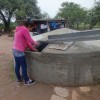
Harvesting Rainwater to Weather Drought in Northeast Argentina
In a semiarid region in the northeast Argentine province of Chaco, small farmers have adopted a simple technique to ensure a steady water supply during times of drought: they harvest the rain and store it in tanks, as part of a climate change adaptation project.
Latin America to Redouble Its Climate Efforts in New York
The countries of Latin America will flock to sign the Paris Agreement, in what will be a simple act of protocol with huge political implications: it is the spark that will ignite actions to curb global warming.
No Easy Outcomes in Brazil’s Political Crisis
Brazilian President Dilma Rousseff would appear to be, as she herself recently said, “a card out of the deck” of those in power, after the crushing defeat she suffered Sunday Apr. 17 in the lower house of Congress, which voted to impeach her. But Brazil’s political crisis is so complex that the final outcome is not a given.
Maquilas Help Drive Industrialisation in Paraguay
“There were cases of people who stopped coming to work after receiving their first wages and then came back a few days later to ask if there was more work,” because they were used to casual work in the informal economy, said Ivonne Ginard.
Land Tenure Still a Challenge for Women in Latin America
Rural women in Latin America continue to face serious obstacles to land tenure, which leave them vulnerable, despite their growing importance in food production and food security.
Interoceanic Canal Bogged Down in Nicaragua
Nearly three years after Nicaragua granted a 50-year concession to the Chinese consortium HKND to build and operate an interoceanic canal, the megaproject has stalled, partly due to a severe drought that threatens the rivers and lake that will form part of the canal.
Global Guidelines on Land Tenure Making Headway in Latin America
Voluntary guidelines on land tenure adopted by the international community to combat the growing concentration of land ownership and improve secure access to land have begun to make headway in Latin America, a region that is a leader in the fight against hunger and that is taking firm steps towards achieving food security.
Climate Change Dries Up Nicaragua
A three-year drought, added to massive deforestation in the past few decades, has dried up most of Nicaragua’s water sources and has led to an increasingly severe water supply crisis.
Heavy Rains Once Again Scatter the Poor in Asunción
Néstor Colman, 69, remembers the river overflowing its banks nine times in Bañado Sur, the poor neighourhood in the Paraguayan capital where he was born and has lived all his life. “A record,” he jokes.
Thaw with United States Will Put Cuba’s Agroecology to the Test
The United States has indicated a clear interest in buying organic produce from Cuba as soon as that is made possible by the ongoing normalisation of ties between the two countries. But farmers and others involved in the agroecological sector warn that when the day arrives, they might not be ready.
Need for an Urgent Revision to Bond Contracts and a Debt Workout Mechanism
Argentina signed an agreement in principle on 29 February 2016 with four “super holdout” hedge funds including NML Capital Ltd, Aurelius Capital, Davidson Kempner and Bracebridge Capital. Buenos Aires would pay them a total of about 4.65 billion dollars, amounting to 75 percent of the principal and interest of all their claims of Argentina’s bonds that were defaulted on during the 2001 debt crisis. This deal would allow the return of Argentina to the international capital market after more than 15 years of exclusion.« Previous Page — Next Page » *#*

The Week with IPS

NEXT STOP - SDGs
Tracking global progress towards a sustainable world

