Languages
Monday, November 16, 2026



News and Views from the Global South
Natural Resources

Cambodia’s Hydro Plans Carry Steep Costs
The Cambodian government has committed to the construction of two dams along the Mekong River in order to meet a huge demand for electricity, but environmental groups warn that severe repercussions loom for this strategy.
Q&A: Water and Food Security Are Inseparable
With the U.N. ominously warning of an impending food crisis following severe droughts in farmlands in the United States, Brazil, Russia and at least two rain-deprived states in India, the world will once again turn its attention to a finite natural resource: water.
Livelihoods Drying Up on Malawi’s Lake Chilwa
Fisherfolk and farmers living near Malawi’s second-largest water body, Lake Chilwa, are relocating en masse and scrambling for space around its shores as the lake has dried to dangerously low levels.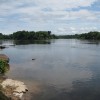
Belo Monte Dam Can No Longer Ignore Native Communities
A judicial order to halt construction of the Belo Monte dam in Brazil’s Amazon rainforest may be just one more battle in a long-drawn-out war in the courts over the controversial hydroelectric project.
Biopolymers and the Dream of a Green Petrochemical Industry
Brazil leads global production of biopolymers, an industry that generates fewer greenhouse gas emissions than fossil fuel-based plastic manufacture. But "green plastics" made from sugarcane have a sour aftertaste.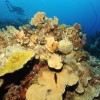
U.N. Launches New Oceans Compact Following Expo 2012
As the three-month-long international exhibition Expo 2012 came to a close in the South Korean coastal town of Yeosu last week, the United Nations announced the launch of an "Oceans Compact" aimed at the preservation of marine resources worldwide.
It’s Either Orangutans Or Cheap Palm Oil
When four men were sentenced to eight months in jail in March for the ‘murder’ of orangutans, it was the first time that people associated with Indonesia’s booming palm oil industry were convicted for killing man’s close relations in the primate family.
Mauritian Fishers Want EU Vessels Out of Their Seas
“Look out there, the blue one…. that is a European Union fishing vessel that is threatening our livelihood,” says Lallmamode Mohamedally, a Mauritian fisherman, as he points to a boat offloading its catch at the Les Salines port, close to the country’s capital Port Louis.
Activists Score in Fight Against Nuclear Power
A new wave of anti-nuclear protests in Japan this summer, sparked by the disastrous meltdown at a power plant last year, suggests that civil society is no longer willing to allow the government to take the lead in deciding the nation’s energy policy.
Fishing Communities in Brazil Fight for Survival
His father and other fishermen fought back with sickles, hoes and other work tools against the armed men sent by the purported owner of the land where they lived in order to evict them. But then the military police came and knocked down eight of their houses.OP-ED: U.S. Adrift on Law of the Sea
A little overshadowed by the Olympics, the Yeosu 2012 Expo is, in its own way, doing more than the London Games to promote global harmony - and without stirring up the waters the way the British did when they posted the ROK flag for the DPRK women’s soccer team.
Mexican Communities Fight Mini-Dams
Small-scale hydroelectric dams with a capacity of under 30 MW are seen by the authorities in Mexico as an important alternative for generating energy. But local communities reject them on the argument that they would cause social, economic and environmental damages.
Q&A: U.N. Spotlights Pirates in the Malacca Strait at Expo 2012
At the Yeosu World Expo 2012, the U.N. commemorated the thirtieth anniversary of the U.N. Convention of the Law of the Sea (UNCLOS), highlighting efforts to quell the global scourge of piracy.
Small-scale Fisherfolk in Rio de Janeiro – a Vanishing Species
"My sons will be anything, but never fishermen,” said 32-year-old Maicon Alexandre, the youngest of the leaders of Ahomar, a union of small-scale fisherpeople on the outskirts of Rio de Janeiro.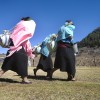
Human Right to Water and Sanitation Remains a Political Mirage
When the 193-member General Assembly, the U.N.'s highest policy-making body, declared water and sanitation a basic human right back in July 2010, the adoption of that divisive resolution was hailed by many as a "historic" achievement.Mainstream Rhetoric on Nuclear Power Far From Reality
The catastrophe following the meltdown of the Fukushima Daiichi nuclear power reactor in March 2011 has turned the old debate on nuclear power into a war of words between international agencies and independent experts with diametrically opposed views.
UNESCO Protection Crucial – and Controversial
It took six years for a dedicated team of scientists from the Wildlife Institute of India, wildlife officials from six Indian states and officials from the federal ministry to secure international protection for one of India’s most precious biological reserves.
Peru Working to Reform Environmental Impact Assessment System
A random review by the Peruvian government of 205 environmental impact assessments approved between 2001 and 2010 revealed that 86 percent lacked complete information on how they had received the green light from the authorities.
Native Canadians Fear Mining Boom in “Ring of Fire”
With accusations that Canadian resource companies and government officials are disregarding the need for indigenous consent in development projects, First Nations leaders have lashed out by approving a resolution calling for a moratorium on mining development in the so-called Ring of Fire until proper consultation begins.
Profiting from Sustainable Forests on Communal Land in Mexico
Mario Guzmán plans to start cutting down trees again in August and September, the last months of the rainy season. “Now the roads are impassable, and the trucks can’t get in to haul out the timber,” the Mexican farmer, whose community is sustainably managing its forests, told IPS.
Africa Must Earn Its Climate Change Adaptation Finance
With the United Nations Climate Change Conference less than four months away, African countries need to present convincing arguments and successful adaptation projects to attract competitive funding for adjusting to changes in global weather patterns, climate finance experts say.« Previous Page — Next Page »


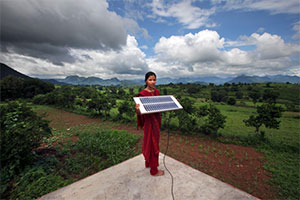 Bringing clean energy to rural India. Credit: Abbie Trayler-Smith / Panos Pictures / Department for International Development
Large reserves of oil, gas and minerals in developing countries generate opulent revenues. They could be used to stimulate economic growth and reduce poverty, but often result in environmental destruction and conflict, benefiting large companies and corrupt governments. Furthermore, competition over natural resources often manifests through geopolitical conflict. For example, before the US-Iraq war, Iraq’s domestic oil industry was nationalized. With US aggression came weakened Iraqi institutions and foreign intervention, thus eventually leading to the privatization of Iraqi oil, leaving the industry now largely dominated by Western companies. As another example, China’s rising investments within the lithium sector in South America are increasing the US-China rivalry across the Western Hemisphere. Notably, Bolivia has the largest reserves of lithium in the world, and the nation’s state-owned lithium extraction firm recently signed a contract with China’s CBC Consortium, while rejecting the entry of Western firms into the nation. In Bolivia’s case, rising Chinese investment in the nation’s lithium sector also raises concerns about environmental sustainability and the sociopolitical rights of Indigenous communities. More broadly, Sub-Saharan Africa holds nearly 30% of global reserves of critical minerals required for low-carbon technologies. Despite this, the region attracts less than 10% of global exploration investment, depicting a critical barrier to both the clean energy transitions and Sub-Saharan Africa’s economic development. Furthermore, resource wealth continues to fuel conflict like Sudan’s civil war, which has led to 9.1 million internally displaced people and is intensely connected to competition over gold, water, and agricultural land. IPS covers news about major oil, gas, and mining projects, their effects on the environment and local communities, and the ideas and actions of the interest groups involved.

The Week with IPS

NEXT STOP - SDGs
Tracking global progress towards a sustainable world
Tracking global progress towards a sustainable world
