Languages
Monday, November 9, 2026



News and Views from the Global South
Human Rights

European Court of Justice Ruling on Beneficial Ownership, a Major Blow to the Fight Against Environmental Crimes
The European Court of Justice on November 22, 2022, made a ruling that reversed much of the progress we have made in a decade in the fight against corruption, economic and natural resource crimes, tax abuses and other forms of illicit financial flows across the world. In the ruling, the court declared invalid the part of the European Union’s Anti Money Laundering Directive that allowed public access to registries about companies’ beneficial owners (that is, the real people who own or actually control them).
Dignity, Freedom and Justice
As we commemorate Human Rights Day, let us recall the opening preamble of the Universal Declaration of Human Rights of 1948: “Whereas recognition of the inherent dignity and of the equal and inalienable rights of all members of the human family is the foundation of freedom, justice and peace in the world… “
Climate Change Meets Conflict Pushing Millions of Children in Ethiopia Out of School
A silent catastrophe is unfolding in Ethiopia on the backdrop of years of inter-communal conflict and the most prolonged and severe drought in recent years. High inflation and food insecurity in the drought-ravaged country is among the worst in the world.
We Indigenous Peoples are Rights-Holders, not Stakeholders
After four failed rainy seasons, the land of the Maasai has withered. The worst drought in 40 years is a slow-motion storm of devastation in the Greater Horn of Africa, ruining the livestock, the communities, the Maasai way of life. Their cattle have been their greatest source of wealth and nutrition, but with grazing lands shriveled from the dry heat and their livestock emaciated, the entire region is in peril.
Europe and the Refugee Crisis: It’s all About Tackling Racism & Discrimination
 In 2019, when the President-elect of the European Union (EU) Ursula von der Leyen had presented a list for her soon-to-be European Commission, and on that list was a portfolio called “Protecting the European way of life”, a lot of noise was made questioning what that meant. “Protection” was later changed to the “Promotion” of the European Way of Life. It’s been over three years since this very controversial, much debated and widely criticised portfolio as many continue to question what uniquely is the ‘European way of life’?

The Paradox of Powerless Superpowers Versus the Plight & Power of the Ukrainian People
The one thing that has become clear is that there is no point in negotiating with Putin. Ukraine is considered as the gates of Europe, or a borderland with a brutal past.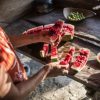
To Achieve Human Rights, Start with Food
This year’s Human Rights Day marks the 74th year since the United Nations adopted the Universal Declaration of Human Rights, an international document that enshrines the rights and freedoms of all people. The right to food became a legal obligation for countries to promote and protect as part of the economic, social and cultural rights in 1966.
Corruption: Europe Doing Nothing – Part II
"Western Europe and the European Union remains the highest scoring region in the world’s corruption index, progress has halted and worrying signs of backsliding have emerged.”
A Little Land Helps Indigenous Venezuelans Integrate in Brazil
A group of Warao families are, through their own efforts, paving the way for the integration of indigenous Venezuelans in Brazil, five years after the start of the wave of their migration to the border state of Roraima.
Corruption: The Most Perpetrated –and Least Prosecuted– Crime – Part I
In these times when all sorts of human rights violations have been ‘normalised,’ a crime which continues to be perpetrated everywhere but punished nowhere: corruption is also seen as a business as usual. A business, by the way, that relies on the wide complicity of official authorities.
Volunteerism: Path to Achieve UN’s Agenda 2030
The International Volunteer Day, a worldwide event commemorated every year on the 5th of December, comes at the end of a long line of special commemorations, each of them relevant and paramount to achieve the UN’s Agenda 2030.
The Decline and Fall of Democracy Worldwide
A head of state who presided over an authoritarian regime in Southeast Asia, was once asked about rigged elections in his country. “I promised I will give you the right to vote” he said, “but I didn’t say anything about counting those votes.”
Excessive & Unfair Criticism of Human Rights Violations in Qatar
Peter Zimmermann owns a bar located in the German city of Cologne, which for thirty years has been a favorite for those who want to watch a soccer game.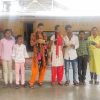
India’s Extensive Railways Often Conduit for Child Trafficking
Deeepti Rani (13) lives with her mother in a dilapidated dwelling near a railway track in India’s southern state of Karnataka. The mother-daughter duo sells paperbacks on trains for a living.
Working Together for an Inclusive World
ECW works together with governments, UN agencies, civil society and the private sector for an inclusive world where all children with disabilities are able to go to school in safe and accessible learning environments. We work together for an inclusive world where the complex challenges of today offer up the transformative solutions of tomorrow.
Illegal Immigration: A Mounting Global Crisis
Illegal immigration has evolved into a mounting crisis for a growing number of countries worldwide and governments appear to be at a loss on how to deal with the crisis.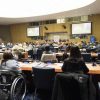
Legal Recognition of East African Sign Languages Key Towards Inclusion
Since the onset of the Covid19 pandemic, at least two deaf people were shot and killed in Uganda by state law enforcement officers. Their ‘crime’ was being deaf and uneducated. Their inability to hear or comprehend Covid19 containment measures communicated in English led to their death.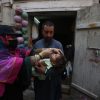
Vaccine Refusal, Floods Impact Polio Drive in Pakistan
Vaccine refusal is impacting the eradication of polio in Pakistan. Pakistan has vaccinated about 35 million children during its door-to-door campaign, but about 500,000 remained unvaccinated due to refusal by their parents, Jawad Khan Polio officer in Khyber Pakhtunkhwa, recorded in 2022 so far.
UN Assessed Contributions Needed to Generate Core Funding for Climate Loss & Damage
For decades, there have been non-conclusive deliberations regarding how the international community could support poor and vulnerable countries in their efforts to cope with and recover from the havoc wreaked on their territory by the ill-effects of global warming such as severe droughts, floods, storms, or rising sea levels.
Digital Human Rights Need to be Enshrined in Law
The upcoming consultation on the Global Digital Compact presents a unique opportunity to ensure that human rights in the digital world are protected in international common standards.
UN Deploys Unarmed Weapon in Humanitarian & Peacekeeping Operations
A sign outside the United Nations reads, perhaps half-seriously, that it is a “No Drone Zone”—and “launching, landing or operating Unmanned or Remote-Controlled aircraft in this area is prohibited”. The “warning” comes even as Unmanned Aerial Vehicles (UAVs) – or drones – are some of the new weapons of war deployed mostly by the US, and more recently, by Iran, Ukraine and Russia in ongoing military conflicts.« Previous Page — Next Page »





One world, one humanity, now one court to defend its rights. Another step towards universal human rights, but not remotely a step far enough. The United Nations adopted the Universal Declaration of Human Rights more than half a century ago, but that has done little to stop violations the world over, just as the Geneva Convention has not protected prisoners of war enough. Democracy itself and the freedom it presupposes has not been protective enough. This is the century to move from politicisation of human rights towards humanising political ways. IPS keeps an eye on that difficult path.

The Week with IPS

NEXT STOP - SDGs
Tracking global progress towards a sustainable world
Tracking global progress towards a sustainable world
