
Friday, November 13, 2026



News and Views from the Global South
Human Rights

Q&A: Women in Mali Play Critical Role in Preventing and Resolving Conflicts
The coronavirus pandemic has affected the safety and sense of community for many women in Mali given the travel restrictions and lockdowns in place, Bassirou Gaye, an assistant researcher for a 2019 report on the role of Mali women in peacekeeping, told IPS this weekend.

COVID’s Impact in Real Time: Finding Balance Amid the Crisis
One enduring lesson from the COVID-19 pandemic is that any lasting economic recovery will depend on resolving the health crisis.
Scaling Up SDG4 in Crises
Out of global crises spring opportunities for change. In crisis, change is not an option. It is a necessity. And, as Plato famously noted: “Necessity is the mother of invention.” Education Cannot Wait (ECW) is an invention that sprang out of crisis and was borne of necessity.
Time to End the Lethal Limbo of the U.S.-Mexican Drug Wars
Sporadic but spectacular acts of violence remind the global public of how deeply parts of Mexico have slid into lethal conflict over recent years.
Why We’re Uniting in Support of African Girl Leaders to beat AIDS & Shift Power
The International Day of the Girl Child on 11th October is a call for us to reflect on our responsibilities. Twenty-five years ago, governments adopted the historic Beijing Declaration and the Platform for Action.
Peer Support Vital to Help Young Returnees Rebuild Their Lives in West Africa
Ismaila Badji could not bring himself to leave his house for weeks after returning to Senegal. “I failed twice; at school and on the road,” he said. “What's wrong with me? I'm still looking for the answer." After spending time in a Libyan detention centre, Badji returned to where he came from. He did not feel like himself, he lacked motivation and he suffered from stigma from the local community.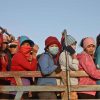
Social Audit Reforms and the Labor Rights Ruse
The recent refusal by five international auditing firms to inspect for labor abuses in Xinjiang was the right response to the severe human rights violations there. But this is a moment for the auditing and certifications industry, which assesses the compliance of work sites with human rights and labor rights standards, to rethink its approach to “social audits”—periodic workplace inspections—everywhere.
Can Colonialism be Reversed? The UN’s Declaration on the Rights of Indigenous Peoples Provides Some Answers
Can a state built upon the “taking of another people’s lands, lives and power” ever really be just? Colonialism can’t be reversed, so at a simple level the answer is no.
The Lebanese Disaster
The 26th of September, the Lebanese prime minister Mustapha Adib stepped down after less than a month on his post. The president, Michael Auon, stated: ”Lebanon will be going to Hell if a new government is not formed soon.” The question is if his nation is not there already. A horrifying image of the state of the nation was provided on the 4th of August when 2,750 tons of ammonium nitrate, stored in a dockside hangar, blew up in an explosion killing more than 190 people, injuring 6,500 and damaging thousands of buildings.
Poverty, Official Complicity Hampers Human Trafficking Fight in Malawi
In August, police intercepted the trafficking of 31 people to Mozambique. The victims, all Malawians, included 17 children and 6 women. Their two traffickers, also Malawians, had coerced them from their rural village in Lilongwe district with a promise of jobs in estates in neighbouring Mozambique. But they were saved in large part thanks to their own community.
Empowering India’s Poor so They Don’t Return to Bonded Labour – Part 2
One day, while the rest of his family were out at work, Kamlesh Pravasi from Jigarsandih village in Azamgarh district of Uttar Pradesh was “abducted when I returned home one day from school, by a contractor’s goons,” he told IPS. The then 12-year-old Pravasi, who was in the sixth grade, was forced to work in bonded labour in a brick kiln because his father could not repay a Rs 5,000 ($68) loan he had taken out from the contractor in order to pay for medical treatment for Pravasi’s sick brother.
Teachers Shoulder the Burden: Improving Support in Crisis Contexts
Teachers are at the heart of children and young peoples’ educational experiences. Teachers play multiple roles in their students’ lives by supporting their learning, providing them with inclusive and safe environments to grow and develop, and helping them become more confident as they make their way in the world. As we commemorate World Teachers’ Day on Monday, 5 October and its theme--Teachers: Leading in Crisis, Reimagining the Future--we must recognize the inspiring and transformative role that teachers working in armed conflicts, forced displacement, climate change induced disasters and protracted crises play in their students’ lives.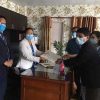
Nepal Moves Against Acid Attacks on Women
After a prolonged lobbying campaign, the Government of Nepal recently took some important actions against perpetrators of acid attacks while offering better provisions to support the process of rehabilitation of their victims.
A Feminist Perspective from Middle East & North Africa on the COVID-19 Pandemic
Since before the COVID-19 pandemic, feminists across the Middle East and North Africa (MENA) have been increasingly shedding light on the global shifts that will shape the Future of Work. From their perspective, those shifts would mainly be driven by the Fourth Industrial Revolution, the impact of climate change and the looming global care crisis.
If I Didn’t Believe, I Wouldn’t Know How to Breathe
Here’s a story that encapsulates the terrible situation of our world: Associated Press reporters were on a Turkish coast guard vessel which picked up 37 migrants, including 18 children, from two orange life-rafts in the Aegean Sea on 12 September. The refugees were from Afghanistan, a country that shudders from an endless war. One of the refugees, Omid Hussain Nabizada told the reporters that the Greek authorities held them in Lesbos, put them onto life rafts, and then sent them into the turbulent seas. They were left there to die.
Papua New Guinea: Bougainville Elects Former Revolutionary Leader as President ahead of Tough Talks on Independence
Ishmael Toroama, a former revolutionary leader and fighter during the decade long civil war which engulfed the remote islands of Bougainville in Papua New Guinea (PNG) in the 1990s, has been elected the autonomous region’s new President ahead of high-level talks about its political future.
Staff to UN Management: Please Drop Your Plans for Uber-Style Contracts
As the United Nations prepares to celebrate its 75th anniversary we have been made aware of an extremely worrying development concerning the future of UN staff contracts.
Q&A: How Fast Fashion Sits at the Crucial Intersection of Environmental & Gender Justice
Racism “keeps the global north oblivious to the effect of fast fashion addiction on the global south” say environmental and gender justice experts.
Peace in the Middle East
After the fall of the Ottoman Empire at the end of WWI, The League of Nations mandated that Britain administer Palestine. The London administration was quite ineffective, in part, due to the contradictory promises which were made to the Arabs, to the Zionists and to France, the other colonial power which divided the territory with Britain.
Why Is Women’s Leadership Not in the Headlines?
The question has never been whether women can lead as capably as men. Women have always led, and women will always lead, especially when the times are hard, and their communities are in need. The question that we need to ask is, why is women’s leadership invisible? Why is their potential and their power stifled?
Fighting India’s Bonded Labour During the COVID-19 Pandemic – Part 1
One of the worst fallouts of the COVID-19 pandemic has been the closure of industries in India, which caused thousands of migrant labourers to return home to villages in Uttar Pradesh, Bihar and Bengal. In a region where the poorest have always been subjected to bonded labour, child labour and slave trafficking, it has meant revisiting the past.« Previous Page — Next Page »


One world, one humanity, now one court to defend its rights. Another step towards universal human rights, but not remotely a step far enough. The United Nations adopted the Universal Declaration of Human Rights more than half a century ago, but that has done little to stop violations the world over, just as the Geneva Convention has not protected prisoners of war enough. Democracy itself and the freedom it presupposes has not been protective enough. This is the century to move from politicisation of human rights towards humanising political ways. IPS keeps an eye on that difficult path.

The Week with IPS

Tracking global progress towards a sustainable world
