Languages
Wednesday, November 18, 2026



News and Views from the Global South
Human Rights

Libya Tragedy: Why Lock up Migrants in the First Place?
A military strike on a detention centre for migrants in Libya that claimed dozens of lives on Wednesday Jul. 3 has reignited a debate over the poor treatment of the mainly African people who transit through the turbulent country.
Indigenous Communities Head Towards Energy Self-Sufficiency in Guatemala
 Because the government has never provided them with electricity, indigenous communities in the mountains of northwest Guatemala had no choice but to generate their own energy.

Sri Lanka on Security Alert Long After Easter Bombings
Sri Lanka continues to be on a security alert long after the devastation caused by a string of bombings on Easter Sunday this year. Raisa Wickrematunge, Editor of Groundviews, told IPS: “There has been a tightening of security. There are now security checks being carried out outside hotels and shopping malls - either through scanners or bag and body searches”.
Are We Fighting a Losing Battle in the War Against Drugs?
How effective is the global war on drugs? The latest statistics released by the UN Office on Drugs and Crime (UNODC) are staggering: 35 million people across the globe currently have a substance use disorder, and as of 2017, 585,000 people have died worldwide as a result of drug use.
U.S.-backed Kurds to Halt Child Soldier use in Syria
The United States-backed Syrian Democratic Forces (SDF) have struck a deal with the United Nations to stop using child soldiers across swathes of eastern Syria under their control and to release all youngsters from their ranks, the U.N. announced Monday.
Unseen and Unsafe: Violence Against Women within Migrant Families
Refugee and migrant women often face inescapable violence in the home. And the potential for intimate forms of violence is exacerbated by humanitarian crises and job insecurity.
US & Iranian Actions Put Nuclear Deal in Jeopardy
Iran’s announcement that it may soon breach the 300-kilogram limit on low-enriched uranium set by the 2015 nuclear deal is an expected but troubling response to the Trump administration’s reckless and ill-conceived pressure campaign to kill the 2015 nuclear agreement, known as the Joint Comprehensive Plan of Action (JCPOA).
We Are What We Watch
Consistent exposure to TV series with strong characters has the power to influence mental models in society and shift social norms.
Kenya’s March Towards Demographic Dividend with Investments in Health Sector Partnering with The Netherlands
Demographic dividend is a term which is increasingly preoccupying discussions among development economists and the donor community in general in Kenya. The term refers to countries with the greatest demographic opportunity for development and those that are ushering in a period in which the working-age population has good health, quality education, decent employment and a lower proportion of young dependents. Smaller numbers of children per household generally lead to larger investments per child, more freedom for women to enter the formal workforce and more household savings for old age. When this happens, the national economic payoff can be substantial, and this is the demographic dividend.
Indigenous Rights Approach a Solution to Climate Change Crisis
The Global Landscapes Forum (GLF) was held in Bonn, Germany to rally behind a new approach to achieving a future that is more inclusive and sustainable than the present – through the establishment of secure and proper rights for all.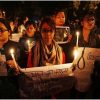
India’s Criminal Justice System is Failing Victims of Sexual Violence
Early in 2018, India was shaken by the horrific details surrounding the abduction, gang rape, and murder of an 8-year-old girl in Kathua, a district in the north Indian state of Jammu and Kashmir.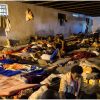
“Unimaginable Horrors” in Libya’s Migrant Detention Centers
For over 10,000 migrants fleeing to Libya from war and violence, their fate often comes down to the mercy of human traffickers or the dark unknown awaiting in detention centers.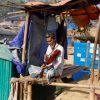
Myanmar must give Rohingya ‘pathway to citizenship’: UN investigator
Myanmar must grant citizenship to stateless Rohingya with roots in the country, a senior UN investigator said yesterday, as she urged the country's leader Aung San Suu Kyi to "be the democrat she once told us she was".
Will “UN@75” Revive Multilateralism?
Despite the polarization and stasis that characterizes so much of the present politics at the United Nations, Secretary-General António Guterres is betting that the 75th anniversary of the organization, in 2020, will provide an opportunity for the international community to begin to address the “crisis in multilateralism,” and to shape a more robust and effective organization.
We Cannot Save the World from Climate Catastrophe if Largest Emitters of CO2 Don’t Step up Now
SUVA, Fiji, 27 June 2019 (IPS) -- Are the most climate-vulnerable nations of the world right to demand that developed and major economies commit to carbon neutrality by 2050? Should the poorest nations of the world insist that the “haves” put their significant economic and political resources behind aggressive efforts to combat climate change?
Beyond Saudi Arabia: The World Is Failing Journalists
Saudi journalist Jamal Khashoggi was deliberately killed at the hands of state actors and journalists around the world are increasingly seeing the same fate, said a United Nations expert.
A Roadmap for Children as Victims, not Terrorists
The feeling in the air at a recent meeting of the United Nations Office on Drugs and Crime (UNODC) was one of compassion and benevolence. The focus was on children as Foreign Terrorist Fighters (FTFs), a subject that everyone at the panel discussion argued is delicate and politically sensitive.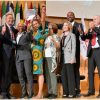
How Effective is a Non-Binding Treaty Aimed at Ending Harassment at Work Places?
Against the back drop of widespread charges of sexual abuse and harassment at workplaces-- including the United Nations-- the International Labour Conference (ILC) last week adopted a “Convention” and a set of “Recommendations” to protect workers and employees worldwide.
Are Hotels Dangerous? Putting in Context Dominican Republic Tourist Deaths
Being a frequent visitor to the Dominican Republic, where I occasionally have enjoyed the high standard, security and excellent service of its resorts, I became puzzled by recent, quiet excessive media reactions to statistically insignificant cases of deaths in these resorts. The number of demises in Dominican resorts have been more or less the same over the years and do not at all differ from those of most other tourist destinations. People die in hotels all over the world. There may even be specific reasons for this and they are far from being unique to the Dominican Republic.
From Tony Blair to Mette Frederiksen
Social Democrats, who had been steadily disappearing following the crisis of 2008, have been making a small comeback in the last year. Now they are in power in Spain, Portugal, Sweden, Finland and, most recently, in Denmark.
International conference in Vienna: Successful societies are those that manage diversity and stimulate empathy towards the Other
Societies must work together to build more tolerance, solidarity and peace within and between nations, said the Executive Director of the Geneva Centre for Human Rights Advancement and Global Dialogue, Ambassador Idriss Jazairy, during the 19 June international conference on "From Interfaith, Inter-Civilizational Cooperation to Human Solidarity.” He emphasized that all such societies are built on shared aspirations and not shared ethnicity.« Previous Page — Next Page »


One world, one humanity, now one court to defend its rights. Another step towards universal human rights, but not remotely a step far enough. The United Nations adopted the Universal Declaration of Human Rights more than half a century ago, but that has done little to stop violations the world over, just as the Geneva Convention has not protected prisoners of war enough. Democracy itself and the freedom it presupposes has not been protective enough. This is the century to move from politicisation of human rights towards humanising political ways. IPS keeps an eye on that difficult path.

The Week with IPS

NEXT STOP - SDGs
Tracking global progress towards a sustainable world
Tracking global progress towards a sustainable world
