Languages
Wednesday, November 18, 2026



News and Views from the Global South
Human Rights

International conference in Vienna: Executive Director of the Geneva Centre meets with officials of Azerbaijan and the United Arab Emirates, religious leaders and civil society representatives
Following the 19 June international conference on “From the Interfaith and Inter-Civilizational Cooperation to Human Security” held in Vienna, the Executive Director of the Geneva Centre for Human Rights Advancement and Global Dialogue Ambassador Idriss Jazairy concluded his visit to Austria with a series of meetings with government officials and decision makers.
Patriotism versus Hope: Eritreans Wrestle with Leaving Home or Remaining
Most media narratives about Eritrea suggest an endless stream of young people fleeing the country, who couldn’t wait to escape. But the reality is far different and more nuanced—both when it comes to those who have left, and those who chose to remain.
Sudan’s Fragile Hope for Democracy
Sudanese civilians risk their lives everyday protesting and campaigning for democracy but they face several obstacles, including street closures and no Internet access.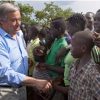
Sharing the Burden of Refugees; the World Can Do Better
As the world marks World Refugee Day on June 20th to celebrate the strength, courage and perseverance of refugees, a glaring concern remains just how inadequate the global response to the refugee crisis has been.
‘Born A Refugee, I Dream of a Place Called Home’
I am a refugee, born to a refugee family. I was granted that status on the day I came into this world. I was not aware of what had happened before then. I did not fight any battle, I did not threaten anyone. I did not even choose my own race or ethnicity. I just came to this world to find myself a displaced person.
Executive Director of the Geneva Centre: World society must not turn a blind eye to refugees in the Arab region
Ambassador Idriss Jazairy, Executive Director of the Geneva Centre for Human Rights Advancement and Global Dialogue, has appealed to international decision-makers to express greater solidarity to destitute refugees from the Arab region.
An Economic No-Brainer: Empower Women, Empower Economies
As the first woman to lead the International Monetary Fund (IMF), and a leader in advocating for increased investment and action toward gender equality, Christine Lagarde helps Deliver for Good explore the steps needed to build sustainable financing & economic opportunities for girls and women.
The Immense Cost 200 Million Migrant Workers Pay to Rescue their Families
Straight to the point: while right and far-right politicians keep marketing their image with intensive campaigns of hatred, discrimination and stigmatisation against migrants, 200 million migrant workers worldwide will sacrifice over half a trillion dollars from their hard-earned money, to rescue 800 million members of their impoverished families. And that’s only this year 2019.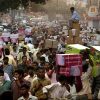
Rising Population Trends Threaten UN’s Development Goals in Asia & Africa
The world’s developing nations, currently fighting an uphill battle in their attempts to implement the UN’s Sustainable Development Goals (SDGs), are facing another stark demographic reality: a rise in world population by 2.0 billion people in the next 30 years: from 7.7 billion to 9.7 billion in 2050.
Conference in Vienna: Executive Director of the Geneva Centre received by the Chairman of the Caucasus Muslims’ Board and the Director of the Diplomatic Academy in Vienna
In relation to the organization by the Geneva Centre for Human Rights Advancement and Global Dialogue together with its partners in Vienna on the theme of “From the Interfaith and Inter-Civilizational Cooperation to Human Security”, the Executive Director of the Geneva Centre Ambassador Idriss Jazairy participated in several high-level meetings in Vienna.
Colombia – Trade Unionism Under Threat of Death
Miguel Morantes was almost murdered. Ever since, three bodyguards are part of his everyday life in one of the most dangerous countries for trade union members.Myanmar/Bangladesh: Older people denied dignity in camps after facing military atrocities
Tens of thousands of older women and men from ethnic minorities across Myanmar who faced military atrocities and were forced to flee their homes are being let down by a humanitarian system that often fails to adequately address their rights and needs, Amnesty International said in a report published today.
As Sudan Struggles, AU Should Press for Justice and Accountability
On June 6, the African Union (AU) suspended Sudan from the 55-member group with “immediate effect.” The move came in response to a deadly crackdown on peaceful protesters in Khartoum, in which government forces, led by the paramilitary Rapid Support Forces (RSF), tore through a sit-in in the capital killing at least 108 people, and wounding hundreds. The AU’s decisive action has been widely applauded, but suspending Sudan is not enough.
The Importance of the Upcoming FAO Election
With each passing day, the world gets just a little smaller as the internet and cell phones bring our communities together, reveal our shared challenges, and lay bare our failures. As global citizens, we are all concerned about the growing number of hungry people around the world and the threats to food security. The simple fact is that more than 800 million people go hungry every day, and if that number shocks you, know that experts predict the number to grow significantly over the next ten years.
The Art of the Deal: What Trump May Teach Us
A friend of mine who became wealthy as an art dealer but eventually lost his fortune told me: "Money isn´t everything, but it helps." This made me think of Donald Trump, who likes to describe himself as an entrepreneur, i.e. ”owner of a business enterprise who, by risk and initiative, attempts to make profits."1 The keyword is profits. According to Trump, success is measured through wealth. Like chess and poker, entrepreneurship is about winning and losing. Trump characterizes people he dislikes as losers, while he considers himself to be a winner.
Cities of Light are Providing Safe Havens to Refugees
While cities around the world have been providing safe havens to refugees, a few US cities in the Upstate New York region have been integrating refugees and asylum-seekers into their communities.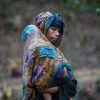
Burmese Muslims: Still looking for a permanent home!
They are thought to be the world's most persecuted refugees. It is also argued that they are one of the most forgotten too. Some five year ago I saw and met hundreds of inmates from Burma in a Jeddah prison. Thousands of Burmese Muslims from Arakan – often called Rohingyas – were offered a safe haven in Saudi Arabia by King Faisal but with the change in rulers in Saudi Arabia the rules underwent a change too. A permanent abode of peace that was offered to these uprooted Arakanese is now nothing less than a chamber of horrors.
The Forgotten Migrants of Central America
Rural and indigenous populations in countries like Guatemala and Honduras are increasingly on the move – either migrating internally or to neighbouring countries.
An Uncertain Future for Palestinian Refugees
The United Nations Relief and Works Agency for Palestine Refugees in the Near East (UNRWA) has been forced to justify its existence at the United Nations ahead of a pledging conference later this month.
Displaced in South Sudan – A journey of 1,000 kilometers
(UNOCHA) - Conflict, hunger and disease forced nearly 700,000 people to flee South Sudan to become refugees in neighbouring countries in 2017. More than 70 percent of those fled in the first half of 2017, when multiple military offensives occurred in Upper Nile, Unity, Jonglei, and the Greater Equatoria region.
Wealth and Power: Andrej Babiš and Donald J. Trump
When I recently visited the Czech Republic I noticed an increasing Czech opposition against their wealthy Prime Minister. Andrej Babiš has been endowed with the nickname Babisconi since he, like the former Italian Prime Minister Silvio Berlusconi, is accused of purchasing and using various means of communication for his own propaganda purposes. Apparently, this endeavour has so far been quite successful, since according to my Czech friends Babiš is still popular among a majority of their compatriots.« Previous Page — Next Page »


One world, one humanity, now one court to defend its rights. Another step towards universal human rights, but not remotely a step far enough. The United Nations adopted the Universal Declaration of Human Rights more than half a century ago, but that has done little to stop violations the world over, just as the Geneva Convention has not protected prisoners of war enough. Democracy itself and the freedom it presupposes has not been protective enough. This is the century to move from politicisation of human rights towards humanising political ways. IPS keeps an eye on that difficult path.

The Week with IPS

NEXT STOP - SDGs
Tracking global progress towards a sustainable world
Tracking global progress towards a sustainable world
