Languages
Thursday, November 19, 2026



News and Views from the Global South
Human Rights

Protecting the Health & Rights of People on the Move
A staggering 258 million people migrated internationally in 2017. While many of these migrants chose to leave their home countries in search of jobs, education, or to reunite with family, many others had no choice but to leave--to escape poverty, violence or a dearth of opportunities for a better life.
FAO Releases Alarming Report on Soil Pollution
Soil pollution is posing a serious threat to our environment, to our sources of food and ultimately to our health. The Food and Agriculture Organization of the United Nations (FAO) warns that there is still a lack of awareness about the scale and severity of this threat.
In South Sudan, Denial of Humanitarian Aid is a War Tactic
When I visited South Sudan last year, I heard story after story about health professionals and humanitarian workers being prevented from doing critical work. Government officials regularly increased fees for nonprofits trying to alleviate the effects of conflict, stopped humanitarian convoys from delivering life-saving supplies, and erected bureaucratic obstacles designed to impede access to civilians in need.Chairman of the Geneva Centre: “A free press is indispensable for facilitating good governance and transparent societies”
(Geneva Centre) - On the occasion of the 2018 World Press Freedom Day commemorated on 3 May 2018, the Chairman of the Geneva Centre for Human Rights Advancement and Global Dialogue - H. E. Dr. Hanif Hassan Ali Al Qassim - highlighted the importance of promoting freedom of the press to facilitate “good governance and transparent societies.”The Geneva Centre participates in the first round of informal consultations on the long-term efficiency of the work of the UN Human Rights Council
(Geneva Centre) - The Geneva Centre for Human Rights Advancement and Global Dialogue (“the Geneva Centre”) was cordially invited by the Secretariat of the Human Rights Council to participate in the first round of informal consultation session on the long-term efficiency of the Human Rights Council (HRC).
Steady Old Hand of Repression Seeks to Strangle New Media in East Africa
In African countries where journalists are targeted with killings and beatings while traditional news outlets have been muzzled by governments and other actors unhappy with criticism, bloggers and social media users have become the new independent media by providing much-needed coverage, commentary and analysis.
A Free Press Is Indispensable for Good Governance and Transparent Societies Chair of the Geneva Centre for Human Rights
On the occasion of the 2018 World Press Freedom Day commemorated on 3 May 2018, the Chairman of the Geneva Centre for Human Rights Advancement and Global Dialogue, Dr. Hanif Hassan Ali Al Qassim, highlighted the importance of promoting freedom of the press to facilitate “good governance and transparent societies.”
African Governments Mark World Press Freedom Day with Crackdown Against Online Journalism
When Uganda in April ordered Internet service providers to shut down all news sites that had not been authorized by the communications regulator (pdf), it was the latest attempt by President Yoweri Museveni’s government to constrict the space for independent media.
Free Media Under Threat Globally
Buoyed on by the likes of United States’ President Donald Trump, a growing number of political leaders are encouraging hostility towards news media and journalists across the globe are finding it harder than ever to do their jobs. This is among the main findings in Reporters Without Borders’ (RSF) annual World Press Freedom Index which examines 180 countries and their relationship with the media.
Mothers & Children: Addressing Disappearances through a Gender Perspective
At the beginning of the Nuremberg Trials, Justice Robert Jackson, the Chief Prosecutor, charged the world that submitting the enemy to the judgment of the law is “one of the most significant tributes that Power has ever paid to Reason.”
Wider Views for More Equal Societies
Inequalities are on the rise. Since 1980, 1% of the richest people have received double income than the 50% of the poorest. After several years of decline, hunger is also on the rise. The report on the State of Food Security and Nutrition in the World estimates that the number of chronically undernourished people in the world increased from 777 million in 2015 to 815 million in 2016. If we go deeper into the analysis we observe that three-quarters of the world’s extremely poor and food-insecure people live in rural areas.
People on the move and the politics of human solidarity: The 21st century’s most protracted crisis could end up as the forgotten chapter of human solidarity
The world is heading into troubled waters in the figurative and in the real sense of this expression, as we are witnessing an unprecedented movement of people – refugees, migrants and internally displaced persons (IDPs) alike – fleeing from insecurity, climate change, natural disasters, calamities and social instability. The migrant and refugee crisis has swept across the Middle East and across the Mediterranean Sea to Europe. It is becoming the 21st century’s most protracted crisis with no immediate solution in sight. Thousands of human beings undertake perilous and treacherous journeys in hope for a better and a safer future. Many of them perish during these hazardous journeys over the Mediterranean Sea which has become a liquid graveyard.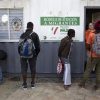
Mexico’s Solidarity Towards Haitians Only Goes So Far
In the airport of this Mexican city, on the border with the United States, customs agents warn that they will carry out a "random" inspection. But it's not so random. The only people who are stopped and checked have dark skin and kinky hair, and virtually do not speak a word of Spanish.
Human Trafficking for Organs: Ending abuse of the Poorest
Organ transplantation is one of the most incredible medical achievements of the past century. Since the first successful transplants, which took place in the 1950s, organ transplantation has saved the lives of hundreds of thousands of people worldwide.
Press Freedom & Enforced Disappearances: Two Sides of the Same Coin in Sri Lanka
When Sri Lankan journalist Richard de Zoysa was abducted from his home in Colombo on the night of February 18th, 1990, his family knew there would be dark days ahead. The population was still reeling from one of the bloodiest episodes in the island nation’s history – a government counterinsurgency campaign to crush a Marxist rebellion in southern Sri Lanka, which left between 30,000 and 60,000 people dead at the hands of government death squads.
In Beacon of Press Freedom, Dark Spots Persist
Ghana is a living contradiction, at least in the arena of freedom of expression, free speech and press freedom.
Occupational Safety Improves in Latin America, Except Among Young People
Despite progress achieved in occupational safety in Latin America, the rates of work-related accidents and diseases are still worrying, especially among young people, more vulnerable in a context of labour flexibility and unemployment.
Bangladesh’s Rohingya Refugee Camps Face ‘Life Threatening’ Funding Crisis: Aid Agencies
Work by aid agencies in Bangladesh’s Rohingya refugee camps to create life-saving access routes and prepare people for floods, landslides and other disasters ahead of the upcoming monsoon and cyclone season is under imminent threat unless urgent funding is secured in the next six weeks, according to IOM, the UN Migration Agency.
Kenya- Overcoming Rivalry & Conflict Through Cultural Diplomacy
Cultural diplomacy is a soft power that promotes the exchange of ideas, information, art, and culture to strengthen friendship and cooperation among nations and communities.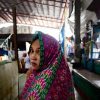
Holding on to Hope
Almost a year after the historic city of Marawi in Mindanao was attacked by extremists, tens of thousands of displaced Filipinos remain homeless, unlikely to return to their devastated homes anytime soon.
Displaced Pashtuns Return to Find Homes “Teeming” with Landmines
"If I'm assured that my home and my village has been de-mined, I'd be the first to return with my family," says 54-year old Mohammad Mumtaz Khan.« Previous Page — Next Page »


One world, one humanity, now one court to defend its rights. Another step towards universal human rights, but not remotely a step far enough. The United Nations adopted the Universal Declaration of Human Rights more than half a century ago, but that has done little to stop violations the world over, just as the Geneva Convention has not protected prisoners of war enough. Democracy itself and the freedom it presupposes has not been protective enough. This is the century to move from politicisation of human rights towards humanising political ways. IPS keeps an eye on that difficult path.

The Week with IPS

NEXT STOP - SDGs
Tracking global progress towards a sustainable world
Tracking global progress towards a sustainable world
