Languages
Monday, October 12, 2026



News and Views from the Global South
Regional Alliances
Local Producers Worried about Venezuela’s Admission to Mercosur
After a six-year delay, Venezuela finally became the fifth full member of South America’s main trade bloc, Mercosur, on Tuesday, bringing with it huge oil and natural gas reserves and a market hungry for the abundant agricultural production of its new partners to the south.Amid Stormy Waters, Caribbean Tacks South
The Eurozone crisis and growing influence of countries like China and Brazil are leading the Caribbean to reassess its dependence on traditional trade and aid partners.New U.S.-Pakistani Supply Accord Seen as Tenuous
As NATO supply convoys began crossing from Pakistan into Afghanistan for the first time in more than seven months Thursday, analysts here warned that the reopening of the key route does not necessarily signal a new dawn in the fraught relations between Washington and Islamabad.
Americas Team Avoids Paraguayan Rights Groups
Paraguyan rights groups are disappointed at being denied access to a delegation of the Organisation of American States (OAS) sent in this week to discover the facts behind the impeachment and removal of President Fernando Lugo on Jun. 22.
Paraguay’s Isolation Grows
Paraguay’s isolation, following the impeachment and ouster of President Fernando Lugo 11 days ago, has grown thanks to slender recognition for the new government and souring diplomatic relations with the neighbours.Caribbean Weighs Allegiance to Taiwan vs. China
As Caribbean leaders meet in St. Lucia this week, they are focusing on a series of routine issues affecting the region, including problems with the smooth operation of the single trading market.
Venezuela’s Mercosur Entry Sparks Dissension
By simultaneously admitting Venezuela into its fold and suspending Paraguay’s membership, Mercosur has sparked dissension within the trading bloc that threatens the future legal architecture of the Southern Common Market.Asia Sees Red Over ‘Green Economy’
The just-ended United Nations sustainable development summit in Rio de Janeiro has exposed the discomfort that many developing Asian countries have over buzz words like ‘green economy’ and ‘green growth’ in development diplomacy.
RIO+20: The Two Faces of BRICS Development Aid
The BRICS countries (Brazil, Russia, India, China and South Africa) face a key choice: to opt for "good" development aid, based on sustainable development, or for the "bad" old traditional model, which they criticised when they were its recipients.
Europe and Former Colonies Urge Action at Rio+20
Europe and 79 of its former colonies have sent a strong message to the U.N. Conference on Sustainable Development in Brazil next week that it should use the opportunity to both fulfill past promises and deal with "new and emerging challenges".
Trade Pact with Europe Still a Tough Sell to Africa, Pacific Bloc
Caught between a proverbial rock and a hard place, African and Pacific countries are still unsure whether they should follow the lead of their Caribbean counterparts and sign a wide-ranging Economic Partnership Agreement (EPA) with Europe.Colombia and Venezuela – Joining Forces
When 12 Colombian soldiers were killed by FARC insurgents a stone's throw away from the northern border with Venezuela, the consequences included military cooperation that reinforces the political, diplomatic and trade-related links that have developed over the past two years between Colombian President Juan Manuel Santos and Venezuelan President Hugo Chávez.“Big Five” Crushes “Small Five” Over Veto Powers
At the height of the Cold War, a Peruvian diplomat, Dr. Victor Andres Belaunde, publicly expressed scepticism about the ability of small countries to survive the diplomatic might of the big powers in the world body.Efforts to Build Caregiving Industry ‘Inadequate’
To meet the demands of a rapidly ageing population, Japan has loosened its notoriously strict immigration and nursing regulations to accept foreign caregivers. But new evidence indicates deep cracks in those piecemeal gestures.Caribbean Courts Mexico as Ally in the G20
The Caribbean Community bloc (Caricom) is lobbying Mexico to use its influence as chair of the G20, which controls 90 percent of world trade, to promote the interests of the Caribbean and other small island developing states when it meets in June.
Nothing to Show for Hard Work but Burnt Fields of Maize
Gertrude Mkoloi earns a living harvesting maize on a small piece of land in rural Zimbabwe. Or at least she used to.
Q&A: No Single Country Can Forecast Climate Change Alone
Cuban climate change scientists have been sharing their research findings and experience over the past few years with the rest of the Caribbean islands, using PRECIS, a regional climate modelling system, to help design adaptation policies.
Brazil Drives Energy Integration in South America
Energy integration in South America will be a reality "in the medium to long term," driven by hydropower and drawing on Brazil’s experience, predicts Altino Ventura Filho, secretary of planning in this country’s Ministry of Mines and Energy.
Haiti Ratifies Business-Oriented Prime Minister
Almost three months after the seat was left vacant when the former prime minister resigned due to disagreements and political wrangling with the president, as of Monday, Haiti finally has a new prime minister.
Q&A: Needed: Common Caribbean Strategies Against Climate Change
Subject to the double impact of the global economic crisis and climate change, the Caribbean island nations are in need of adaptation strategies in which international cooperation and citizen participation play key roles, says Cuban expert Ramón Pichs.Tunisia Summit Highlights Glaring Absence of Unity on the ‘Syria Question’
In the Friends of Syria meeting held in Tunis last week, Gulf Arab monarchies offered nearly unqualified support for the Syrian opposition, while the democratic states were more cautious.« Previous Page — Next Page »





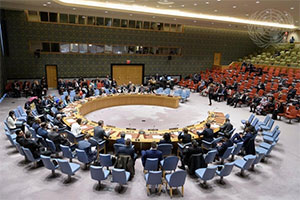 Security Council Considers Cooperation between UN and ASEAN. Credit: UN Photo/Manuel Elías
Regional alliances within the Global South have emerged as key international players in recent years, reshaping multilateral diplomacy and development governance. In 2023, the Group of 20 incorporated the African Union as a new parliamentary member, making the African Union the second regional bloc to become a member after the European Union. This action symbolized the ascent of the Global South’s international position. In 2025, the Association of Southeast Asian Nations also led a new collaborative climate effort with the creation of ASEAN Sparks, a program seeking to accelerate the growth of climate technology enterprises. Additionally, the African Continental Free Trade Area strengthened its intra-regional economic resilience. However, despite these advances, regional alliances and organizations continue to face mounting challenges. In 2025, the African Union, the Economic Community of West African States, and the Organization for Security and Co-operation in Europe all struggled with geopolitical deadlock and underfunding when it came to peace operations. This highlights how regional alliances are not yet capable of replacing UN-led multilateral frameworks. IPS gives timely reports on new developments within regional alliances in the Global South.

The Week with IPS

NEXT STOP - SDGs
Tracking global progress towards a sustainable world
Tracking global progress towards a sustainable world
