Languages
Wednesday, May 13, 2026



News and Views from the Global South
Women & Economy
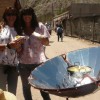
Carnival Food Carts Go Solar in Northern Argentina
It’s carnival time in sunny northwest Argentina, and as usual, food vending carts are everywhere. But some of the carts are different this year: they offer food cooked on the spot – by the sun.
Obama Pushes Universal Preschool Coverage for U.S.
Following on a surprise announcement supporting a universal preschool guarantee during his annual State of the Union address earlier this week, President Barack Obama spent much of Thursday pushing a suite of new policy initiatives aimed at vastly increasing access to high-quality education and development programmes for a child’s first few years of life.
Female Journalists Walk on Eggshells in Sri Lanka
The year was 1998 and porters at the wholesale vegetable market in the Sri Lankan capital Colombo had gone on strike, virtually suspending vegetable distribution in the city and its suburbs.
Spain’s Crisis Pits Fair Trade Against Empty Wallets
The Spanish public is well aware of the widespread exploitation of workers in the globalised garment industry. But low prices, shrinking buying power and the lure of brand names act as strong disincentives to responsible clothes shopping.
Japan Values Women Less – As It Needs Them More
Despite anti-discrimination laws and a steadily growing number of employed women, Japan is falling behind the rest of the world on gender equality. Widespread discrimination persists, and has only grown more subtle over the past years.
Rural Water Projects Depend on Women
During the dry season, when dirt roads are cracked from the relentless heat, the sight of women walking miles, balancing pots of water on their heads, is common in rural Sri Lanka.
New Push for U.S. to Ratify Major Women’s Treaty
The United States continues to be in the dubious company of six countries that have either refused or are reluctant to ratify the landmark U.N. Convention on the Elimination of All Forms of Discrimination Against Women (CEDAW).
The Rise of Ethiopia’s Sole Rebels
Innovative Ethiopian footwear manufacturer Sole Rebels will open its second retail outlet in Taiwan this year. With ambitions to open 30 more franchise stores across the world in countries like the United States, Australia, Italy and Japan, Sole Rebels, the largest African footwear brand, is now fast becoming a global competitive brand.
Women Demand Equality in Papua New Guinea
 Papua New Guinea, the most populous nation in the Pacific Islands, is ranked 153 out of 187 countries worldwide for gender equality, which is evident in education, employment, health and political representation.
War Widows Struggle in a ‘Man’s World’
Sita Tamang’s husband went missing sometime in 2004, two years before Nepal’s civil war came to an end. A native of Dharan, a town about 600 kilometres southeast of Kathmandu, Tamang waited seven years after his disappearance before she tried to claim compensation offered by the government after a 2006 peace deal ended this country’s bloodshed.
Q&A: The Challenges of Women’s Empowerment and Equality
Today, approximately 125 countries have laws that penalise domestic violence - a great advance from a decade ago. Yet 603 million women around the world still live in countries where domestic violence is not a crime, and up to seven in ten women are targeted for physical or sexual violence, or both.
Longer Lives, Lower Incomes for Japanese Women
When Hiroko Taguchi retired this past April, at the age of 64, from her job as an insurance sales agent, she joined the rapidly growing ranks of Japan’s aging women who now outnumber their male counterparts.Immigrant Caregivers in Spain Hit Hard by Crisis
“It’s really painful to work and not get paid. And I can’t report them, because I don’t have documents, or a contract,” Rossana, one of the many immigrant women working as domestic employees and caregivers in Spain, told IPS.
Q&A: Education Is Where HIV Care Begins
When Shorai Chitongo founded Ray of Hope, a support group for female survivors of domestic violence in 2005, she discovered that three-quarters of the survivors in the group were HIV-positive. [caption id="attachment_114724" align="alignright" width="250"]
Young Women Face Double Whammy in Pacific Islands
With youth populations growing faster than jobs in the Pacific Islands, young women, who are also confronting social pressures to conform to traditional gender roles, account for the highest rates of unemployment in most countries.
Q&A: Honouring the Silent Courage of Afghan Women
Violence against women is internationally recognised as a threat to democracy, a burden on national economies, and a serious human rights violation.
Latin American Middle Class Booming but Fragile
New data from the World Bank shows that the middle class in Latin America has expanded substantially, growing by 50 percent over the past 10 years despite decades of sluggish poverty reduction.Women Poised to Vote for Stronger Economy
A few weeks ago, President Barack Obama was seen as certain to collect the majority of women's votes in the Nov. 6 presidential election. Four days before the election, however, the women's vote is thought to be divided equally between Obama and his Republican challenger, Mitt Romney.
Regional Trade Key to African Food Security, World Bank Says
The World Bank is urging African countries to strengthen regional food trade, suggesting that food security could be greatly enhanced simply by allowing farmers to trade more easily across the continent.
Entrepreneurs and Women: Keys to Growth in Africa
The international financial crash of the late 2000s created more than a global economic recession: it accentuated popular doubts about the paradigms on which our economies are built and prompted a closer look at two crucial drivers of economic growth: women and entrepreneurship.
Migrant Women Trapped in Sex Trade
When French police broke up a Nigerian human trafficking ring that allegedly forced young migrant women into prostitution, the arrests cast a sharp light on the plight of what the authorities called “modern-day slaves”, here and throughout Europe.« Previous Page — Next Page »


Around the world, women make great contributions to different economies. From the field of business, to carrying the bulk of unpaid care, women are essential to economic growth. However, due to gender inequality, women face economic discrimination. Taking many forms, including disproportionate wages, greater exposure to vulnerable employment, and reduced economic opportunity, this inequality continues to curtail economic development. Yet women continue to work past these obstacles and reduce this disparity, furthering economic empowerment. These stories help to identify women’s economic struggles, and those that are working towards empowerment.

The Week with IPS

NEXT STOP - SDGs
Tracking global progress towards a sustainable world
Tracking global progress towards a sustainable world
