Languages
Sunday, November 8, 2026



News and Views from the Global South
Projects

Latin America Slow to Pledge Emissions Cuts
Latin America is making heavy weather of setting targets for greenhouse gas emissions reduction, which all countries must present ahead of the United Nations Framework Convention on Climate Change (UNFCCC) conference later this year.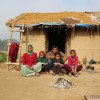
Clean Cookstoves Could Change the Lives of Millions in Nepal
 When 26-year-old Laxmi married into the Archaya household in Chhaimale village, Pharping, south of Nepal’s capital Kathmandu, she didn’t think she would be spending half the day in the kitchen inhaling smoke from the stove.

Women Farmers Rewrite Their History in Chile’s Patagonia Region
More than 100 women small farmers from Chile’s southern Patagonia region have joined together in a new association aimed at achieving economic autonomy and empowerment, in an area where machismo and gender inequality are the norm.
Q&A: Iranian Balochistan is a “Hunting Ground” – Nasser Boladai
Nasser Boladai is the spokesperson of the Congress of Nationalities for a Federal Iran (CNFI), an umbrella movement aimed at expanding support for a secular, democratic and federal Iran. IPS spoke with him in Geneva, where he was invited to speak at a recent conference on Human Rights and Global Perspectives in his native Balochistan region.
Rural Women in Latin America Define Their Own Kind of Feminism
Rural organisations in Latin America are working on defining their own concept of feminism, one that takes into account alternative economic models as well as their own concerns and viewpoints, which are not always in line with those of women in urban areas.
Clean Cookstoves Could Change the Lives of Millions in Nepal
When 26-year-old Laxmi married into the Archaya household in Chhaimale village, Pharping, south of Nepal’s capital Kathmandu, she didn’t think she would be spending half the day in the kitchen inhaling smoke from the stove.
Antigua Draws a Line in the Vanishing Sand
Jabberwock beach, located on the northeastern coast of Antigua, features a mile-long white sand beach and is a favourite with locals and visitors alike.
Acid Attacks Still a Burning Issue in India
Vinita Panikker, 26, considers herself "the world's most unfortunate woman".
Cyclone Pam Worsens Hardship in Port Vila’s Urban Settlements
Severe Tropical Cyclone Pam, which swept through the South Pacific Island state of Vanuatu in mid-March, has deepened hardships faced by people living in the informal settlements of the capital, Port Vila. Winds of up to 340 kph and torrential rain shattered precarious homes, cut off fragile public services and flooded communities with unsealed roads, poor drainage and sanitation.Spiritual Leaders Urge Action On Nuclear Disarmament
Religious leaders addressed the United Nations in New York last week, pleading on moral grounds for global nuclear disarmament.
U.N. Warns of Growing Divide Between Nuclear Haves and Have-Nots
As she prepared to leave office after more than three years, High Representative for Disarmament Affairs Angela Kane painted a dismal picture of a conflicted world: it is “not the best of times for disarmament.”
Economic Slowdown Threatens Progress Towards Equality in Latin America
Predictions of a sharp slowdown in Latin America’s economic growth this year make it even more necessary for the region’s leaders to make commitments to boost prosperity with equality during the Seventh Summit of the Americas, currently taking place in the Panamanian capital.
Nepal: A Trailblazer in Biodiversity Conservation
At dusk, when the early evening sun casts its rays over the lush landscape, the Chitwan National Park, a UNESCO World Heritage Site about 200 km south of Nepal’s capital, Kathmandu, is a place of the utmost tranquility.
Plunging Oil Prices Won’t Kill Vaca Muerta
Despite the precipitous fall in global oil prices, Argentina has continued to follow its strategy of producing unconventional shale oil, although in the short term there could be problems attracting the foreign investment needed to exploit the Vaca Muerta shale deposit.
Opinion: Moment of Truth for the Nobel Peace Prize
The Nobel Peace Prize is about to bow out to critics. As of Jan. 1, the Oslo-based Norwegian Nobel Committee that selects the winners has a new secretary, Olav Njølstad, who announced that “changes loom” in a recent interview.
781 Million People Can’t Read this Story
If you are reading this article, consider yourself one of the lucky ones; lucky enough to have received an education, or to be secure in the knowledge that your child will receive one. Lucky enough to be literate in a world where – more often than not – the ability to read and write can mean the difference between a decent life and abject poverty.
Opinion: Shared Action for a Nuclear Weapon Free World
From the end of April, the Nuclear Non-Proliferation Treaty (NPT) Review Conference will be held in New York. In this year that marks the seventieth anniversary of the atomic bombings of Hiroshima and Nagasaki, I add my voice to those urging substantial commitments and real progress toward the realisation of a world without nuclear weapons.
In Belize, Climate Change Drives Coastal Management
A five-year project launched here in Belize City in March seeks to cement a shift in view of climate change and its impact on Belize’s national development.
State of Palestine in Overtime
The large majority of countries, and most of the people in the world, already recognise Palestine as an independent state.
In Bangladesh, Gender Equality Comes on the Airwaves
Judging by how often they make headlines, one might be tempted to believe that women in Bangladesh don’t play a major role in this country’s affairs.
‘Cli-fi’ to Heat Up Literature Course in India
University lecture halls in North America are no strangers to the ''cli-fi" genre of climate-themed novels and movies, but now India is getting into the act as well, thanks to the pioneering work of Professor T. Ravichandran of the Indian Institute of Technology Kanpur (IITK) in Uttar Pradesh.« Previous Page — Next Page »





The Week with IPS

NEXT STOP - SDGs
Tracking global progress towards a sustainable world
Tracking global progress towards a sustainable world
