Languages
Wednesday, September 30, 2026



News and Views from the Global South
Projects

You Are More Powerful than You Think!
Are you overwhelmed by the depressing news coming at you daily? Conflict, forced migrants, famine, floods, hurricanes, extinction of species, climate change, threats of war … a seemingly endless list. It might surprise you, but you can really make a difference on many of these issues.
Farmers from Central America and Brazil Join Forces to Live with Drought
Having a seven-litre container with a filter on the dining room table that purifies the collected rainwater, and opening a small valve to fill a cup and quench thirst, is almost revolutionry for Salvadoran peasant farmer Víctor de León.
When a Grass Towers over the Trees
As governments scramble for corrective options to the worsening land degradation set to cost the global economy a whopping 23 trillion dollars within the next 30 years, a humble grass species, the bamboo, is emerging as the unlikely hero.
Great Green Wall Brings Hope, Greener Pastures to Africa’s Sahel
Hope, smiles and new vitality seem to be returning slowly but surely in various parts of the Sahel region, where the mighty Sahara Desert has all but ‘eaten’ and degraded huge parts of landscapes, destroying livelihoods and subjecting many communities to extreme poverty.
Beyond Hurricanes: How Do We Finance Resilience in the Caribbean?
As a new hurricane season approaches in the Caribbean, I attended last week’s dialogue focused on “Financing Resilience in SIDS” held in Antigua and Barbuda and sponsored by the host government and Belgium.
Greece: SDGs a Way to End Economic Crisis?
Seven years after being on the verge of a financial collapse, Greece is now seeing better times. Its economic accounts have clearly improved but what is not under the spotlight is how the Greek people are still paying for the effects of the crisis.
China Generates Energy and Controversy in Argentina
As in other Latin American countries, in recent years China has been a strong investor in Argentina. The environmental impact and economic benefits of this phenomenon, however, are a subject of discussion among local stakeholders.
Human Rights Must Be on the Table During U.S.-North Korea Talks
Human rights issues must be included in next week’s United States-North Korea summit in order to create a “sustainable agreement”, said a UN expert.
Q&A: Greening Colombia’s Energy Mix
Colombia is a global power in biodiversity and water resources, but at the same time it depends on exports of fossil fuels, coal and oil, to the world. But don't panic: in the green economy there are also incomes and jobs - says a world expert on the subject, Juhern Kim.
Nuclear Nonproliferation Malpractice
The global nuclear nonproliferation system has always relied on responsible leadership from the United States and other global powers. The effort to create, extend, and strengthen the nuclear Nonproliferation Treaty (NPT), which was opened for signature 50 years ago on July 1, 1968, has succeeded, albeit imperfectly, because most U.S. presidents have made good faith efforts to back up U.S. legal and political commitments on nuclear arms control, nonproliferation, and disarmament.
Latin America Begins to Discover Electric Mobility
With 80 percent of the population living in urban areas and a vehicle fleet that is growing at the fastest rate in the world, Latin America has the conditions to begin the transition to electric mobility - but public policies are not, at least for now, up to the task.
GGGI signs an Implementation Agreement with the Independent State of Papua New Guinea to provide support in accessing climate finance
The Global Green Growth Institute (GGGI) signed an agreement to implement a Green Climate Fund (“GCF”) project as a delivery partner for the Independent State of Papua New Guinea’s Climate Change and Development Authority (CCDA).
Food Security and Growth in Asia
A disquieting finding of The State of Food Security and Nutrition in the World 2017, Building resilience for peace and food security, or (SFSN2017), Rome, is that, in 2016, the number of chronically undernourished people in the world increased to 815 million, up from777 million in 2015 although still lower than about 900 million in 2000. Similarly, while the prevalence of undernourishment rose to 11 percent in 2016, this is still well below thelevel attaineda decade ago. Whether this recent rise inhunger and food-insecurity levels signals thebeginning of an upward trend, or whether itreflects an acute transient situation calls for a close scrutiny.
Chile Debates Whether Citizens Should Profit from Generating Energy
Chile has become a model country for its advances in non-conventional energy, and is now debating whether citizens who individually or as a group generate electricity can profit from the sale of the surplus from their self-consumption - a factor that will be decisive when it comes to encouraging their contribution to the energy supply.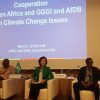
Public-Private Pacts Open Doors to Climate Finance in Rwanda and Ethiopia
The Global Green Growth Institute (GGGI) presented the African model of a National Financing Vehicle in which the governments of Rwanda and Ethiopia have successfully promoted green growth and climate resilience, at an event May 25 on the sidelines of the annual meetings of the Board of Governors of the African Development Bank (AfDB) in Busan, South Korea.
Pompeo’s Iran Speech a Prelude to War?
The United States Secretary of State Mike Pompeo’s speech this past Monday targeting Iran may have created a new benchmark for hypocritical, arrogant, and entitled demands by the United States on foreign governments.
Ethiopia’s Green Growth Goals: A Launchpad for Wider Climate Action in Africa
The vision for a sustainable future in Africa is being realized at a time of great possibilities and this vision is underpinned by a shift in continental focus towards sustainable and inclusive economic growth and development. This focus highlights strategic efforts towards poverty alleviation, resilience building, promoting sustainable infrastructure and, efficient management of natural resources.
Energy Cooperatives, Fogged Mirrors for Latin America
“It made me angry that a company from outside the region was making money from renewable energy and I wondered why people weren't getting involved," says Petra Gruner-Bauer, president of the German co-operative SolixEnergie.
Unlocking Private Finance for Developing Countries’ Green Growth
Climate finance has never been more urgently needed, with massive investments in climate action required to meet the goals of the Paris Agreement and avoid the devastating effects of a warmer planet.
When Two Becomes One: Blending Public and Private Climate Finance
With the landmark Paris Agreement now almost two years old, funding for climate-related activities continues to be a challenge. However, efforts have been underway to bring two seemingly very different sectors together to address climate change.
A Natural Climate Change Adaptation Laboratory in Brazil
The small pulp mill that uses native fruits that were previously discarded is a synthesis of the multiple objectives of the Adapta Sertão project, a programme created to build resilience to climate change in Brazil's most vulnerable region.« Previous Page — Next Page »


The Week with IPS

NEXT STOP - SDGs
Tracking global progress towards a sustainable world
Tracking global progress towards a sustainable world
