
Saturday, September 26, 2026



News and Views from the Global South
Reframing Rio

The Sun Shines Less on Solar Power in Germany
Germany is capable of producing as much solar energy as the rest of the world together. But now the German government is proposing dramatic cuts in subsidies for solar panels. They say consumer demand is so high it can no longer support the technology.
Rio+20 Summit: A Moment That Must Be Seized
The upcoming Rio+20 conference has to be the moment in human history when the nations of the world come together to find ways to ensure the very survival of humanity, many science and environmental experts believe.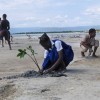
Eastern Caribbean Seeks Funds for Green Growth
As developing countries urgently seek new sources of financing to cope with problems linked to climate change, delegates from the nine-nation Organisation of Eastern Caribbean States (OECS) met here last week to evaluate potential funds and outline a more concrete vision of what is required for the subregion.
Wanted: Climate-Smart Agriculture
As the links between food security and climate change become increasingly inextricable, the necessity for sustainable agriculture is now a universal concern.
Scientists Urge Reform for a Broken Global System
Unless governments work actively to build a brighter future for humanity, climate change, poverty and loss of biodiversity will worsen and continue to exacerbate existing global problems, top scientists warned ministers attending the United Nations Environment Programme's (UNEP) governing council meeting in Nairobi, Kenya, on Monday.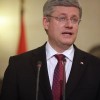
Scientists Denounce Climate Change Denial, Censorship
Amid revelations of a well-funded U.S. organisation's plans to deliberately distort climate science, scientists and journalists at a major scientific conference called on the Canadian government to stop its muzzling of scientists.Building Sustainable Future Needs More Than Science, Experts Say
Contrary to popular belief, humans have failed to address the earth's worsening emergencies of climate change, species' extinction and resource overconsumption not because of a lack of information, but because of a lack of imagination, social scientists and artists say.TRINIDAD: Training the Leaders of “Generation Climate”
With climate change advancing to the forefront of the most urgent issues facing the islands of the Caribbean, young people – who arguably have the most to gain and lose in future scenarios – are becoming increasingly engaged in charting a path to environmental sustainability.Sierra Leone Drafts a Development Plan for the Next 50 Years
Fifty years ago when Sierra Leone gained independence after 150 years of colonial rule, with it came a feeling of optimism that along with a newfound control of its governance, the country would profit from its ample endowment of natural resources, like timber, fish, minerals and oil. Instead, in the last 50 years, the country has had 13 military coups and an 11-year civil war that left the economy in ruins and the country heavily reliant on foreign donor funding.EU Pledges Strong Support for Earth Summit
European leaders have mapped out a bold agenda ahead of the Rio summit, vowing to transform development aid, help provide renewable electricity to the world’s neediest people, and bulk up the United Nations environment body.Q&A: “The Environmental Crisis Is in Fact a Crisis in Democracy”
To meet the challenges of the 21st century, including climate change, feeding the world and eliminating poverty, we need to free ourselves from the "thought traps" that prevent us from seeing the world as it truly is and narrow our vision of how to respond.EUROPE-DEVELOPMENT: The “Indignados” Still Have Wind in Their Sails
Months of protest across the European Union, sparked by ‘indignant’ youth demanding an end to the brand of free market capitalism that has blighted the continent with an unemployment epidemic, finally bore fruit on Jan. 30 when Jose Manuel Barroso, president of the European Commission, proposed an ambitious jobs scheme.“Occupy” is the Watchword at Thematic Social Forum
Traditional social movements of homeless and landless people have for years been organising occupations as a pressure tactic. Now "occupying" is a key element for fighting the capitalist system in its hour of crisis, and also in the realm of virtual reality.THEMATIC SOCIAL FORUM: Working Towards a Never-Ending Democracy
For five centuries, Europe has taken it upon itself to enlighten the world, teaching it ways to address and overcome crises, from ideas and wars to missionary work and genocides.Only Civil Society Can Save Rio+20, Say Activists
Large-scale social mobilisation, including street protests and parallel activities, is the only thing can save the United Nations Conference on Sustainable Development (Rio+20) from ending in nothing but frustration, according to activists and analysts.Money Is All That’s Green in Biodiesel
The only green in biodiesel fuel is the money producers make from it, new research has revealed.DEVELOPMENT: Little Tobin, Less Robin
Europe’s apparent failure to forge broad agreement on introducing a financial transactions tax marks the latest setback for organisations counting on a similar worldwide fee to fund development aid in austere times.KENYA: Key Lakes Succumb to Human Activities
Several years ago, Lakes Kamnarok and Ol Bollosat in Kenya were vibrant water bodies that supported and shaped the ecosystems around them. But today they are shells of their former selves, due to heavy siltation caused by human activities.INDIA: Indigenous Rights Versus Wildlife Rights? – Part 2
As the amount of protected forest dwindles rapidly in India, indigenous groups and wildlife find themselves living cheek to jowl in an increasingly contested space.DEVELOPMENT: France Steps Forward With Robin Hood Tax
The decision by French President Nicolas Sarkozy to push ahead with a financial transactions tax (FTT) may be a political ploy ahead of elections, but it has the approval of many non-governmental organisations, even as support lags elsewhere.INDIA: Indigenous Rights Versus Wildlife Rights? – Part 1
Tucked away in a dense and ecologically diverse tiger reserve in Southern India, tribes-people and wildlife defenders are locked in a battle of indigenous peoples’ rights versus wildlife rights.« Previous Page — Next Page »


The Rio Plus 20 United Nations conference on sustainable development in June 2012 raised hopes over ushering in an new development paradigm through scaled-up international commitment to equitable, climate-conscious growth. Its outcome was less sweeping, leaving the development, NGO and private sector to search for alternatives to address current and impeding crises caused by resource depletion, pollution and climate change, exacerbating endemic global inequality. This special section of our site covers the full spectrum of the Earth Summit, from the lead up to the height of the conference, while continuing to track post-Rio implementation and emerging initiatives for sustainable development.

Donors & Partners


International Institute for Environment and Development

This content has been produced with the financial assistance of the European Union. The content is the sole responsibility of IPS, and can under no circumstances be regarded as reflecting the position of the European Union.

Connect for Climate

Alliance of Communicators for Sustainable Development

This website is funded through the support of the International Fund for Agricultural Development (IFAD).
