
Saturday, September 26, 2026



News and Views from the Global South
Reframing Rio
Rio+20: The Moment When Everything Changed?
Humanity is driving Earth's climate and ecosystems towards dangerous tipping points, requiring radical new forms of international cooperation and governance, experts say.Brown Revolution Brings New Hope
Picking spots for cattle to graze could reverse desertification and even do its bit to retard climate change, new experiments in Zimbabwe have shown. It’s what is coming to be called the Brown Revolution.KENYA: Walking Metres Rather Than Kilometres to Fetch Water
The acute lack of water in Kenya means families have to trek long distances every day to fetch water. In both rural and urban areas, people often walk as far as 30 kilometres or more to collect water from rivers, streams or wells. But thanks to self-help projects backed by NGOs, some communities are coming up with solutions.The Unsustainable Political Deficiencies of Environmentalism
The environmental movement won the ideological battle with the growth of awareness on climate change. Environmentalists are no longer seen as "loonies" or granola-eating hippies: the people seen as on the fringe" now are the climate sceptics who deny that global warming is caused by human activity.
CLIMATE CHANGE: City Apartheid Built Turns Green
Something unusual is happening in Atlantis. Created in the 1970s to fulfill the apartheid government's agenda to evict "coloured" South Africans from Cape Town, Atlantis has always been best known as the city that apartheid built.
Q&A: “‘Sustainable Development’ Is Often Used Gratuitously”
People are disillusioned with global conferences "that mobilise thousands of people and fail to achieve real global progress" in reducing greenhouse gas emissions, says Boris Graizbord, head of the sustainable development studies programme at one of Mexico's leading research universities in the social sciencesINDIA: Seeking Aid For Low Carbon Growth
After pushing for financing adaptation at the just-concluded United Nations climate talks at Durban, India is hitting every button for aid in executing its low-carbon growth plans.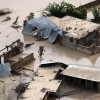
CUBA-CARIBBEAN: Forging an Alliance to Fight for Climate Action
When the U.N. Conference on Sustainable Development dubbed Rio+20 convenes in Brazil next year, Caribbean leaders want to ensure that the concerns of vulnerable low-lying coastal and Small Island Developing States (SIDS) will be heard.
Q&A: “Investing in the Fight against Hunger Brings Extraordinary Returns”
The man who played a key role in the design of Brazil's successful food security policies believes it is possible to eradicate hunger in the world, and intends to try by promoting "a simple idea."
Q&A: South-South Cooperation Complements North-South Cooperation
South-South cooperation can play a key role in boosting the economies of developing countries, but it is not going to replace North-South cooperation, says Nassir Abdulaziz Al-Nasser, president of the 66th session of the U.N. General Assembly.Brazil Pushes for Sustainable Development Goals
With seven months to go until the Rio+20 conference on sustainable development, Brazil is uniting in support of proposals to be included in the summit's draft final document, which aim to transfer its successful national social and environmental sustainability programmes to the global scale.
MALAWI: Changing Climate Compounds Environmental Degradation
As Daniel Chakunkha and Mussa Abu talk on the side of a dirt path in Makunje village, Malawi, a steady stream of bicycles loaded with charcoal passes by. The men stand at the halfway mark between Mwanza, a small city in the country’s southwest, and Blantyre, Malawi’s commercial hub.
AFRICA: Wanted: Greener Cities
In Africa, where urbanisation will be one of the major developments over the next few decades, it will be key for cities to figure out how to handle rapid urban expansion and much-needed economic growth, while creating more environmentally-friendly cities and reducing their carbon footprint at the same time.
CLIMATE CHANGE: A Threat to Food Security in Africa’s River Basins
While Africa has successfully avoided conflict over shared water courses, it will need greater diplomacy to keep the peace as new research warns that climate change will have an effect on food productivity.Global Crisis Makes U.N. Reform Imperative
Reinventing the United Nations is crucial to protect the poorest inhabitants of the planet, at a time when the global economic crisis, the effects of climate change, and food insecurity are undermining development efforts.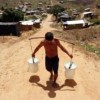
Brazilian NGOs Say Rio+20 Paper Short on Details
Environmentalists criticised the lack of concrete proposals in the Brazilian government's submission to the preparatory process for the Rio+20 conference, to be held in this city in June 2012.OP-ED: A Rio+20 Activist Manifesto and Action Plan
Unless civil society activists launch their own programme of action at the United Nations Conference on Sustainable Development in Rio de Janeiro next summer (Jun. 4-6), the event will be little more than an expensive talkfest.
Climate Change Could Unravel Development Progress
The United Nations unveiled its 22nd annual Human Development Report on Wednesday, with grave warnings that unless countries take action against climate change and implement sustainable solutions, progress in human development will be in serious jeopardy.
AFRICA: Regulating the Rush for Land
The adoption of international guidelines to regulate so-called land grabs has been pushed to next year after negotiators failed to agree on conditions for large-scale land investments and enforcement.
Hard Targets Needed to Halt Land Degradation Crisis
Every six seconds, a child dies of hunger-related causes. That disturbing reality seems as remote as the moon here in the ultra-modern Changwon Convention Centre, where delegates struggled to create effective ways to stem the ongoing decline of food-producing lands.DEVELOPMENT: Disgruntled Activists Meet in Seoul Ahead of Summit
As extreme weather conditions, rising carbon emissions, unprecedented global economic crises and widening social inequalities throw the planet increasingly off balance, the world is gearing up for another earth summit.« Previous Page — Next Page »


The Rio Plus 20 United Nations conference on sustainable development in June 2012 raised hopes over ushering in an new development paradigm through scaled-up international commitment to equitable, climate-conscious growth. Its outcome was less sweeping, leaving the development, NGO and private sector to search for alternatives to address current and impeding crises caused by resource depletion, pollution and climate change, exacerbating endemic global inequality. This special section of our site covers the full spectrum of the Earth Summit, from the lead up to the height of the conference, while continuing to track post-Rio implementation and emerging initiatives for sustainable development.

Donors & Partners


International Institute for Environment and Development

This content has been produced with the financial assistance of the European Union. The content is the sole responsibility of IPS, and can under no circumstances be regarded as reflecting the position of the European Union.

Connect for Climate

Alliance of Communicators for Sustainable Development

This website is funded through the support of the International Fund for Agricultural Development (IFAD).
