
Friday, October 23, 2026



News and Views from the Global South
Reframing Rio
No Strategy for Civilisation in Crisis
The Second United Nations Conference on Human Settlements (Habitat II) in Istanbul in 1996 was one of the international meetings most open to civil society participation.Asia Sees Red Over ‘Green Economy’
The just-ended United Nations sustainable development summit in Rio de Janeiro has exposed the discomfort that many developing Asian countries have over buzz words like ‘green economy’ and ‘green growth’ in development diplomacy.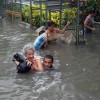
Climate Change: Waiting for a Catastrophic Wake-Up Call *
Disasters are the new midwives of history. But in order to play this role, they need to be catastrophic, like the accidents in Chernobyl in 1986 and Fukushima in 2011 that led governments to suspend and even abolish their nuclear energy programs.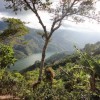
Climate-Smart Agriculture to Reduce Vulnerability*
Agroforestry is gaining ground as a tool for climate change adaptation and mitigation in Central America, a region where global warming could generate losses equivalent to 19 percent of gross domestic product.
Weak Rio+20 Agreement Anticipates New Noah’s Ark
The downpour that fell Friday in this Brazilian city was nature’s warning to the heads of state meeting at the Rio+20 summit. The generation of Noe (Noah), an environmentalist’s son who will be born a month from now, will have to save biodiversity that is more complex than that of his Biblical namesake.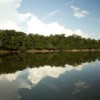
Amazon Countries Want Concrete Sustainable Development Goals*
The countries of the Amazon river basin are pursuing definite goals for the region, such as zero deforestation by 2020, even though the Rio+20 conference's outcome document does not include "sustainable development goals".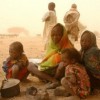
Climate Refugees – Today’s New Reality*
The continued exodus of Somalis to Kenya and Ethiopia has fuelled the debate on a new issue of global concern: climate refugees, driven from their homes and across borders by extreme weather events.
Increased Investment in Zambia’s Resources Means Displacement of Rural Poor
As social movements blasted the "new green economy" proposed at Rio+20 this week, environmental activists in Zambia worried about the role that poor people, especially those in rural areas, are going to play in it.
RIO+20: Promised Green Economy Was a Fake, Say Activists
When the Rio+20 summit on sustainable development ended Friday, there were winners and losers – mostly losers.
Bangladesh on the Green Brick Road
Bangladesh, a country highly vulnerable to climate change, is doing its bit to reduce greenhouse gas (GhG) emissions and glacier-melting soot by switching to ‘smokeless’ brick-making technology.
Mauritian Farmers Hooked on Fair Trade
In finding a way to survive a 36 percent cut in sugar prices, Mauritian farmers are not only exporting a variety of fruit and vegetables to the European Union, but they have also begun farming in a more environmentally sustainable way.
‘It Should be Named Planet Ocean, Not Planet Earth’
Oceans, seas and coasts provide over 200 million jobs globally, while 4.3 billion people get 15 percent of their intake of animal protein from the seas. Travel and tourism, ports and energy production use oceans and seas to create jobs and economic and social benefits for millions of people.
Will the World Listen to Women?
What does birth control have to do with reducing global emissions?
Agroecology Proves Cheap and Efficient on Brazilian Farm*
An agroecological farm outside of Rio de Janeiro is a testing ground for scientists and agronomists in Brazil, who have worked there for two decades to show that it is possible to produce a wide range of natural agricultural products in a cheap, efficient way that harms neither the environment nor human health.
Disasters Hold Climate Change Lessons for Thais
The Kiriwong community in southern Thailand is confident of handling climate change, thanks to lessons learned from a natural disaster that hit its village 25 years ago.
Earth Summits Fail Biodiversity in India
Heads of state and governments are meeting in Rio de Janeiro this week to decide how to renew their pledges made during the first Earth Summit held in Rio in 1992.
RIO+20: Reforestation Pledges Reach Only 12 Percent of Target
The world's countries have committed themselves so far to restoring just 18 million hectares of forests by 2020, barely 12 percent of the goal of 150 million hectares agreed by the Bonn Challenge in 2011.
RIO+20 Doubts over Impact of Sustainable Development Dialogues
Announced as an innovative way to encourage the participation of Internet users and the public in general in the debates at Rio+20, the proposal for Sustainable Development Dialogues also raised doubts about the impact its recommendations would have.
Rio’s Roadmap Falls Flat, Civil Society Groups Say
"Very disappointing." That was the term business and non-governmental organisations used to describe the formal intergovernmental negotiations at the Rio+20 Earth Summit as of Tuesday.
Rio Outcome Bleak With No New Funding*
Amidst recrimination, anger and charges of “strong arm tactics”, negotiators eventually endorsed a global plan of action for sustainable development following marathon sessions lasting over six weary days.
U.N. Paper Factory Threatened with Closure
One of the world's largest "paper factories" – a dubious title traditionally conferred on the United Nations - is on the verge of running out of business.« Previous Page — Next Page »





The Rio Plus 20 United Nations conference on sustainable development in June 2012 raised hopes over ushering in an new development paradigm through scaled-up international commitment to equitable, climate-conscious growth. Its outcome was less sweeping, leaving the development, NGO and private sector to search for alternatives to address current and impeding crises caused by resource depletion, pollution and climate change, exacerbating endemic global inequality. This special section of our site covers the full spectrum of the Earth Summit, from the lead up to the height of the conference, while continuing to track post-Rio implementation and emerging initiatives for sustainable development.

Donors & Partners


International Institute for Environment and Development

This content has been produced with the financial assistance of the European Union. The content is the sole responsibility of IPS, and can under no circumstances be regarded as reflecting the position of the European Union.

Connect for Climate

Alliance of Communicators for Sustainable Development

This website is funded through the support of the International Fund for Agricultural Development (IFAD).
