
Friday, October 23, 2026



News and Views from the Global South
Reframing Rio

Giving Women Farmers the Tools to Prevent Food Insecurity
If women had equal access to productive farming resources, they could increase their yields by 20 to 30 percent and potentially raise total agricultural output in developing countries by 2.5 to four percent.

Rio Summit’s Legacy Still a Question Mark
Academics gathered in Washington on Wednesday suggested that the mixed experience at the U.N. Conference on Sustainable Development, held in Rio de Janeiro in June, has increased the importance of citizen engagement and consumer accountability in issues of environment, renewable energy and sustainability.
Men and Women Farming Together Can Eradicate Hunger
Three years ago, the residents of the semi-arid Yatta district in Kenya’s Eastern Province lived on food aid due to dwindling crops of maize that could not thrive because of the decreased rainfall in the area. That was until a local bishop, trying to find ways to prevent mothers from forcing their teenage daughters into prostitution, changed everything.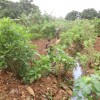
Farming Among the Waste in Cameroon
Cameroonian urban famer Juliana Numfor has six plots of land where she grows maize, cassava, sweet potatoes and leafy vegetables, including cabbages, wild okra and greens.
Riding Towards Sustainable Development, on Bamboo
In Ghana, a country burgeoning with traffic congestion, increasing economic growth, and a stark urban-rural divide, making frames of bicycles out of bamboo could be the key to promoting sustainable development. It also makes stronger, longer-lasting bikes.
Livelihoods Drying Up on Malawi’s Lake Chilwa
Fisherfolk and farmers living near Malawi’s second-largest water body, Lake Chilwa, are relocating en masse and scrambling for space around its shores as the lake has dried to dangerously low levels.
Q&A: Sustainability Now a Matter of Life and Death
Humanity is living beyond its means with the growing demand for food, medicines and other nature-based products, making sustainable consumption and conservation a matter of life and death. This is according to the world’s oldest and largest global environmental network, the International Union for Conservation of Nature.
Climate-Battered South Asia Looks to Rio+20 Formula
Far-flung South Asian communities, from the high Himalayan slopes to the Indian Ocean coasts, united in the face of extreme and uncertain weather, continue to hold on to the hope that the Rio+20 focus on disaster risk reduction (DRR) will positively influence national policies.
Scientists Discover New Threats to Corals
Most corals thrive only in shallow waters, where there is enough light for them to grow. But the rapid rise in sea level, due to the melting of polar ice, is making these conditions increasingly scarce.
Q&A: Transforming the Way the Global Environment is Managed
The Global Environment Facility (GEF) is ready to be a catalyst for transforming the way the global environment is managed, said the next CEO and chairperson of the multilateral institution, Dr. Naoko Ishii, in this interview with Tierramérica *.
The Bicycle Revolution in Paris, Five Years Later
In July 2007, many Parisians laughed at their mayor, Bertrand Delanoë, when he announced the creation of a public bicycle sharing system aimed at reducing traffic in the French capital.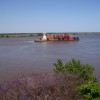
Asian Mussel Invasion Largely Ignored by Southern Cone Governments
The governments of most of the countries that share the Río de la Plata basin are doing little or nothing to halt the golden mussel invasion, despite the serious damages and losses it is causing.
Norwegian Study Calls for Research on Natural Causes of Climate Change
While there is no doubt that global warming is primarily a consequence of human activities, it is also true that there are natural phenomena contributing to climate change as well.Brazilian Environmental Activists Killed in Shadow of Rio+20
Far from the plush surroundings which hosted Rio+20, the most ambitious global conference on the environment of the past two decades, events in a fishing village in the state of Rio de Janeiro show the cost of fighting environmental crime can be as high as life itself.
After Rio+ 20, the Path Ahead
 Two weeks after the United Nations conference on sustainable development in Rio de Janeiro has left many lukewarm, activists, government representatives and U.N. officials are looking forward to setting new goals for the future.
China Battles Desertification
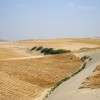
As scientists increasingly label desertification as one of the most burning challenges facing the world today, a small village in China’s semi-arid Northeastern region of Inner Mongolia is fighting back.
Q&A: Changing Argentina’s Energy Mix Will Take Intelligence and Time
The recovery of state control over the oil company YPF was a strategic move for Argentina, which is highly dependent on fossil fuels. But the country needs to incorporate cleaner sources of energy, and this will take time, says energy expert Mariana Matranga in this interview.
Going It Alone After the Rio Circus
The works starts now, UN Secretary-General Ban Ki-Moon said at the conclusion of the summit on sustainable development in Rio last week. This was about the only UN statement that civil society groups seem to agree with. It is on the precise task at hand that they differ.
Mapping out Climate Change Adaptation Plans on Kenya’s Airwaves
On a Wednesday morning in Mutitu-Andei township in Makueni County, one of Kenya’s driest areas, smallholder farmer Josephine Mutiso tunes into Radio Mang’elete 89.1 FM and listens as meteorological experts discuss the changes in rainfall patterns in the county.
Cameroon’s Baka Evicted from Forests Set Aside for Logging
As Lysette Mendum listens to the sound of bulldozers crashing through the forest clearing a road to a mining site near her small village of Assoumdele in the Ngoyla-Mintom forest block in Cameroon’s East Region, she has never been more fearful in her life.
Micro Hydels Power Indonesia’s Green Energy Plans
The nighttime glitter of Indonesia’s cities and urban centres contrasts sharply with darkness of the hinterland where some 90 million people live without the benefit of electricity.« Previous Page — Next Page »





The Rio Plus 20 United Nations conference on sustainable development in June 2012 raised hopes over ushering in an new development paradigm through scaled-up international commitment to equitable, climate-conscious growth. Its outcome was less sweeping, leaving the development, NGO and private sector to search for alternatives to address current and impeding crises caused by resource depletion, pollution and climate change, exacerbating endemic global inequality. This special section of our site covers the full spectrum of the Earth Summit, from the lead up to the height of the conference, while continuing to track post-Rio implementation and emerging initiatives for sustainable development.

Donors & Partners


International Institute for Environment and Development

This content has been produced with the financial assistance of the European Union. The content is the sole responsibility of IPS, and can under no circumstances be regarded as reflecting the position of the European Union.

Connect for Climate

Alliance of Communicators for Sustainable Development

This website is funded through the support of the International Fund for Agricultural Development (IFAD).
