Languages
Sunday, October 11, 2026



News and Views from the Global South
Asia-Pacific

Afghan Refugees, Medical Visitors Bemoan Treatment in Pakistan
Afghan refugees living in Pakistan face a host of problems, ranging from seeking medical treatment to shelter, business, police harassment and violence. Many of those affected have been there for four decades.
Gender Equality & Women’s Rights Wiped out Under the Taliban
In the year that has passed since the Taliban’s takeover in Afghanistan we have seen daily and continuous deterioration in the situation of Afghan women and girls. This has spanned every aspect of their human rights, from living standards to social and political status.
Pariah Solidarity Between Myanmar & Russia
On August 3rd residents of the Myanmar capital Naypyitaw were suddenly awakened by the sound of military helicopters in the air. The helicopters hovered over the city all day. The way to the regime's foreign ministry was also blocked for hours.
Managing sea cucumber fisheries in the Pacific region: a one-day training to educate key stakeholders in New Caledonia
Holothurians, also known as sea cucumbers, are an important source of income for coastal communities in the Pacific. Their exploitation has grown over the past decades, targeting international markets. In some parts of the world, they are considered a delicacy where they can fetch very high prices consequently, they are being overfished in some areas of the Pacific region.
‘Positive Sei’ Bringing Hope to Homes on the Airwaves
Tonga was still picking up the pieces after the Hunga volcanic eruption and tsunami waves when the pandemic reached its shores.
A Demographic Snapshot of the Philippines: One Step Forward, a Half Step Back
With the national election and transfer of power in the Philippines from outgoing President Duterte to incoming President Marcos Jr. in July 2022, it seems an appropriate time to briefly take stock of the country’s current demographic situation, as well as recent related developments.
The Myanmar Junta Continues to Wreak Death & Destruction
Myanmar has been embroiled in violence and civil unrest since the military ousted the elected government of Aung San Suu Kyi in a coup in February 2021. The initially widespread peaceful protests were crushed with deadly force by the military and police.
Frugal Innovation is Key to Advancing the UN’s Global Goal for Education
The world needs tens of millions of new teachers by 2030, according to UNESCO – an order of magnitude that requires “frugal innovation.” I’ve studied frugal innovation for more than a decade, and it holds a vital key to this global challenge. A model created by BRAC in Bangladesh deserves special attention in this worldwide pursuit.
Bangladesh Plans to Launch Toll-free SMS Flood Warning
Ziaur Rahman, a farmer of Pakuar Char under Sariakandi Upazila in Bogura, cultivated jute on a newly emerged river island (char) in the Brahmaputra River, but this year’s flood washed away his crop.
Introducing Hope Over Fate: the Story of Sir Fazle Hasan Abed and BRAC
About seven years ago, I started working on a project with Sir Fazle Hasan Abed, the founder of BRAC. It was originally supposed to be a memoir: the story of Abed, the mild-mannered accountant who would rid the world of poverty, as told by the man himself. I was privileged to be Abed’s speechwriter for the last several years of his life, and I would sit for hours listening to stories from his remarkable life: of his boyhood in British India, his love life in London in the 1960s, his three marriages, and how, in 1972, with a few thousand pounds from the sale of his flat in Camden, he launched a small nonprofit organization to aid refugees, originally called the Bangladesh Rehabilitation Assistance Committee. Many people would go on to call BRAC, which Abed led until his death in 2019, the world’s most effective anti-poverty organization.
Gender Sensitization, Not ‘Romeo’ Policing Needed, say Activists
Romeo is a bad word in Uttar Pradesh (UP), India's largest province with nearly 25 million people. While the name symbolises love, various shows of affection and love between women and men can be seen as a criminal offence in UP. For their safety, women are advised not to be seen cosying up with their lovers, especially in public places – because the state police department’s anti-Romeo squads could arrest them.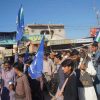
The Tragedy of Pakistan: Feudalism Camouflaged as Democracy
In recent days, as Pakistan’s economic woes have intensified, a veritable cottage industry has developed to suggest ways of putting the country back on track.
Digital Record-Keeping Eases the Burden of Mongolian Herders
“My son went after his cow. He will come soon. Our work starts as soon as the sun rises — milking the cows, herding the sheep, rearing the calves, and on it goes. There is nothing more difficult than losing cows and calves on hot summer days," says herder D. Chimiddulam, standing in green grass on one side of a tall wooden fence, looking at dozens of black and white sheep and goats in the enclosure.
Sri Lanka: Why a Feudal Culture & Absence of Meritocracy Bankrupted a Nation
Sri Lanka is officially bankrupt and a failed state in all but name. How did a country of 22 million people with a level of literacy on par with most of the developed world end up in such a dire position where the state coffers did not have the measly sum of 20 million dollars to purchase fuel to keep the country functioning beyond the next working day?
Achieving the SDGs in Extraordinary Times
The start of the “Decade of Action” to achieve the United Nations’ Sustainable Development Goals (SDGs) has also marked the start of an unprecedented period of overlapping crises.
BRAC celebrates 50 years: A case for social development founded and led by the Global South
As part of the 2022 United Nations High-Level Political Forum, BRAC, with the Permanent Mission of Bangladesh to the United Nations, and the Permanent Mission of the Republic of Rwanda to the United Nations, hosted a side event this week to discuss development opportunities led by the Global South. The event highlighted the NGO’s achievements over the last five decades in alleviating and eradicating poverty and the interconnectedness between the UN Sustainable Development Goals (SDGs) in their initiatives.
Soaring Temperatures Devastate Kashmir Farmers
The soaring temperatures this year in India’s northern state of Kashmir are proving calamitous for the region’s farming community. The place, otherwise known for its emerald streams, lush green hills, and ice sheets, is reeling under heat attributed to climate change this year. The heat wave of such intensity has left most of the water canals dead and dry, plunging the already conflict-torn region into a frightening agrarian crisis.
Entrepreneurship Blooms in Villages Bordering Pakistan Desert
Villagers living with a desert at their doorstep in Pakistan’s eastern Punjab province are finding life more bountiful thanks to recent training on how to use their smartphones to buy, sell and gather information.
Recalling Shinzo Abe with Respect
Shinzo Abe, the longest-serving Prime Minister of Japan, has died. It was a murder caused by a personal grudge rather than political terrorism. And it was not a direct grudge against Mr. Abe. A religious group had supported Mr. Abe, and a murderer with a grudge against the religious group killed him. Murders targeting politicians are often related to political messages or claims. This is a very unique case in that the murder was committed out of a personal grudge, not against the individual for what he did, but against the organization that supported the individual.
Differently-Abled Farmers Integrate Digital Technology, Aim To Set Example For Others
Hidden in Pathumthaini province just outside of Bangkok, 0.24 hectares of land adjacent to Seangsan temple has been turned into an urban vegetable farm managed by members of the Association of the Physically handicapped of Pathumthani.
Sri Lankan Beggar’s Opera
When Ceylon- now Sri Lanka- gained independence from Britain in 1948 after almost 450 years of colonial rule under three western powers, it was one Asia’s most stable and prosperous democracies.« Previous Page — Next Page »





The Week with IPS

NEXT STOP - SDGs
Tracking global progress towards a sustainable world
Tracking global progress towards a sustainable world
