Languages
Thursday, October 15, 2026



News and Views from the Global South
Asia-Pacific

The Myth of Development by Privatisation
Oxfam’s report ‘Inequality Kills 2022’ and its India supplement (hereafter referred to as the report) revealed some shocking facts about the growing gap between the rich and poor. India, which has the third highest number of billionaires in the world, endured one of the longest-lasting COVID-induced lockdowns in 2020. Yet, the same year, the top 10 percent of India held close to 45 percent of the country’s total national wealth.
Pakistan’s Historic Court Ruling: ‘Rome Has Spoken, the Case Is Finished!’
Pakistan’s impossibly debonair and incredibly urbane cricketing star turned politician, Imran Khan, is a man of a myriad parts. Where English is spoken and cricket is played, he remains a hero. Time was when leading his team in many a Test match he caused blood to rapidly pulsate through Pakistani veins. In a nation buffeted by the vicissitudes of misfortune and thirsting for pride, he had fulfilled his people’s dream by winning them the ultimate prize in cricket, the World Cup. But then he switched games and went into politics. The fates, with him for a while, eventually withdrew their favour. He gambled with a tactic that was no more than a political stunt. Alas it failed, and the Courts in his country refused him relief. But this essay is not so much about him. It about the Courts that finally caused his fall. It is also about the role the judicial organ of the State has played along the inscrutable path of Pakistan’s constitutional and political destiny.
Sri Lankan Economic Crisis Inflicted by Self-Serving Elite
Once deemed a basic human needs success story, Sri Lanka (SL) is now in its worst economic crisis since independence in 1948. Nonetheless, SL’s ‘moment of truth’ now offers lessons for other developing countries.
Climate Risk Insurance in Pacific Small Island Developing States: Possibilities, Challenges and Vulnerabilities
The World Bank lists Fiji, Kiribati, Marshall Islands, Federated States of Micronesia, Nauru, Palau, Samoa, Solomon Islands, Tonga, Tuvalu and Vanuatu as Pacific Small Islands Developing States (PSIDS). . Some listings also include the Cook Islands, Niue and Tokelau. In September 2019, these countries had a combined population of 2.3 million spread over hundreds of islands spread over an area roughly equivalent to 15% of the surface area of the earth. Of these, the most populated country – Fiji – has a population of 900,000. The World Bank’s World Development Indicators reveal that annual per capita GDP of these islands fell from $4,340 in 2018 to $3,768 in 2020. It has probably fallen further during the pandemic.
Tackling the Pandemic of Inequality in Asia and the Pacific
After two years of human devastation, the world is learning to live with COVID-19 while trying to balance the protection of public health and livelihoods. For countries in Asia and the Pacific, this is challenging not only because national coffers are heavily strained by record public spending to mitigate pandemic suffering, but also due to deeper structural economic issues.
China Debt Traps in the New Cold War
As China increases lending to other developing countries, ‘debt trap’ charges are growing quickly. As it greatly augments financing for development while other sources continue to decline, condemnation of China’s loans is being weaponized in the new Cold War.
Traditional, Time-Tested Methods and a Modern App Helps Beat Climate Change
Even as erratic weather and extremely high temperatures increase pest infestation and affect harvests, a combination of traditional methods, integrated pest management through intercropping and multilayering is helping farmers in Ahmednagar and Aurangabad districts of Maharashtra, India.
A Guardian of Pacific Culture: The Pacific Community at 75
The Pacific Community turned 75 on the 6th of February 2022. As we mark 75 years of the Pacific Community’s Service to the region, on the 6th of each month we will feature a key moment in history for the organisation.
Indian Agriculture Towards 2030
India began its journey as an independent nation in 1947 with fresh memory of the Bengal Famine of 1943 which claimed 1.5 to 3 million lives. Against this backdrop, the First Five Year Plan (1951-56) prioritized agriculture which, however, shifted to heavily industrialization in the second Plan.
Youth Icon’s Fight for Rights Among India’s Destitute
Pooja Shukla, 25, a socialist candidate, has lost her maiden elections to the provincial parliament in Uttar Pradesh (UP), India. But Shukla is no loser.
School Feeding Is Now the World’s Largest Social Safety Net
When Canada and Nepal are used in the same sentence it’s usually because the former is supporting development efforts in the latter. Not when it comes to feeding children at school.
In Sri Lanka, Rajapaksas on the Ropes
With the economy in freefall and basics such as food and fuel in dangerously short supply, there is mounting public anger against a failing and desperate government in Sri Lanka.
When Is Too Much Autism Awareness Still Not Enough?
When is too much Autism awareness still not enough? This thought recurs every April as we near World Autism Day on April 2, and parents reach out to me after reading enthusiastic and well-meaning news and journal articles – which are actually harmful and hurtful.
Can Legal Action Alone Put an End to Child Marriage?
On December 22, 2021, the Prohibition of Child Marriage (Amendment) Bill, 2021, which seeks to raise the legal age of marriage for women from 18 to 21, was sent to a parliamentary standing committee for further discussion.
Profound Effect of Covid Pandemic on Women and Girls in Asia-Pacific Documented
Women and girls in the Asia-Pacific region were adversely impacted due to COVID-19 pandemic responses – with marginalized women and girls’ access to sexual and reproductive health rights (SRHR) and gender-based violence (GBV) services profoundly affected.
Do we Really Need a World Ranking to Measure Happiness?
The 10th edition of the World Happiness Report was recently published and once again the findings raised an array of mixed emotions with many questioning the real foundations underpinning the most discussed aspect of the Report, the World Happiness Ranking,
We Must Do More to Remove People’s Negative Image of Leprosy from their DNA – Yohei Sasakawa
On a visit to Indonesia’s Papua Province, WHO Goodwill Ambassador for Leprosy Elimination Yohei Sasakawa had dinner with a man forced from his village and living alone because he was affected by leprosy.
India’s Gig Workers: Overworked and Underpaid
According to the Periodic Labour Force Survey (PLFS), the unemployment rate in urban India stood at 9.4 percent between January and March 2021, with an even higher proportion of youth unemployment (22.9 percent). In the same time period, more than 11 percent of the urban workforce reported working for less than 36 hours in a typical week.
The Cost of War: 23 Million Afghans Suffer Acute Hunger, 95% Don’t Eat Enough Food
Following 20 long years (2011-2021) of brutal war on Afghanistan by the US-led military coalition, which ended up in delivering the country to the Taliban in August 2021, 23 million Afghans now face severe and acute hunger, economic bankruptcy, healthcare system collapse, unbearable family indebtedness, and devastating humanitarian crisis.
Pandemic Pushes SDGs Further out of Reach of Asia and the Pacific
2022 marks the second anniversary of the COVID-19 pandemic, and while an end to the pandemic is in sight, it is far from over and the consequences will be felt for decades to come. At the same time, the 2030 Agenda for Sustainable Development is becoming increasingly distant. The region must use the 17 Sustainable Development Goals as a roadmap to a fairer recovery.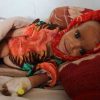
Why We Must Remember Afghanistan
While all eyes are on Ukraine, Afghanistan’s humanitarian crisis has been forgotten. But only with international aid can Afghans build a future.« Previous Page — Next Page »





The Week with IPS

NEXT STOP - SDGs
Tracking global progress towards a sustainable world
Tracking global progress towards a sustainable world
