Languages
Monday, October 19, 2026



News and Views from the Global South
Asia-Pacific

Pandemic Pushes SDGs Further out of Reach of Asia and the Pacific
2022 marks the second anniversary of the COVID-19 pandemic, and while an end to the pandemic is in sight, it is far from over and the consequences will be felt for decades to come. At the same time, the 2030 Agenda for Sustainable Development is becoming increasingly distant. The region must use the 17 Sustainable Development Goals as a roadmap to a fairer recovery.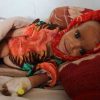
Why We Must Remember Afghanistan
While all eyes are on Ukraine, Afghanistan’s humanitarian crisis has been forgotten. But only with international aid can Afghans build a future.
What This Year’s “No 1 Central Policy Document” Tells Us about Beijing’s Food Security and Rural Revitalisation Ambitions
The recently published “No 1 central policy document” (“No 1 document”), China’s national blueprint for rural policy, further demonstrates Beijing’s commitment to safeguarding food security and advancing rural revitalisation. The document’s release comes against an increasingly complicated geopolitical environment which, along with factors, such as disruptions to the global food chain supplies and worsening climate change impacts, have forced Beijing to rethink how its national goals can be achieved.
Bangladeshi Lawyer Rizwana Hasan Awarded International Women of Courage Award
 In an exclusive interview to IPS UN Bureau, journalist Sania Farooqui is in conversation with Bangladeshi lawyer, Rizwana Hasan who was recently awarded the 16th Annual International Women of Courage Awards by the U.S Department of State. Hasan works primarily to protect the environment and defend the dignity and rights of marginalized Bangladeshis. Through landmark legal cases over the past 20 years, Hasan has changed the dynamics of development in Bangladesh to include a people-centered focus on environmental justice.

‘A Growing Number of Billionaires Is a Sign of Failure’
It is no secret that economic inequality has risen exponentially in the last few decades, both in India and globally. According to the World Inequality Report 2022, India is one of the most unequal countries in the world in terms of both income and wealth inequality. It is estimated that in 2021, the top 10 percent of Indians held 57 percent of the total national income while the bottom 50 percent’s share was just 13 percent.
International Women’s Day, 2022
How Bangladesh Became a Test Case for Women’s Empowerment
The increased empowerment of rural women in Bangladesh over the past 10 years has been no accident.
A decade ago, not even one in four rural women could be said to be “empowered” across five key metrics, a figure that surprised even those working on the ground with the country’s poorest. By 2015, this had risen to more than two in five, or 41 per cent, with continued gains in recent years.

International Women’s Day, 2022
Celebrating the Transformative Impact of Women as Non-Formal Educators
Women around the world play crucial roles in education as formal educators, school staff members, and parents of students. But women are also transforming education as non-formal educators in ways that can be scaled to improve education broadly. As we celebrate International Women’s Day (March 8), it’s important that this transformative role is recognized.

It’s Time to Step up for Street Vendors’ Rights
In the second week of January 2022, Purushottam—locally known as Prashant—a street vendor in central Delhi’s Connaught Place area, died by suicide. It was later discovered that the reason for his death was his inability to pay certain debts.
The Very Hungry Dragon: Meat-ing China’s Self-sufficiency Targets for Dairy and Protein
Food security has long been a high priority for the Chinese central government and has been linked to China’s national security in recent years. The Ministry of Agriculture and Rural Affairs recently released a national five-year plan under which China will seek to maintain a target to produce 95 percent of the protein domestically until 2025: China aims to become self-sufficient in poultry and eggs, 85 percent self-sufficient for beef and mutton, 70 percent for dairy, and 95 percent self-sufficient in pork. These targets intersect with many of the Chinese central government’s current aims to meet the growing demand for protein and dairy, safeguard food security, and other major policies.
Pacific Islanders: Failure to Commit to 1.5 Degrees at COP27 will Imperil the World’s Oceans
Oceans play a pivotal role in regulating the world’s climate and maintaining the conditions for human life on earth. And they are a crucial source of sustenance and economic wellbeing in many developing countries, including small island developing states. But Pacific Islanders are deeply concerned about the fate of the oceans if world leaders fail to secure the pledges needed to limit the global temperature rise to 1.5 Degrees Celsius above pre-industrial levels at the next COP27 climate change summit in November.
Women’s Voices Raised Against Hate in India
More and more women from different walks of life and corners of the world are raising their voices against the treatment of minorities in India today.
Renewable Energy vs Coal: Where Does India Stand?
Coal—considered to be one of the most polluting fossil fuels and, therefore, one of the biggest contributors to climate change—took centre stage at COP 26. A last-minute intervention by India during the negotiations resulted in a crucial amendment to the coal pledge in the Glasgow Climate Pact.
Is Big Power Rivalry Threatening to Sink the Indian Ocean Zone of Peace?
A former Indian ambassador once told an American audience that one of the biggest misconceptions about the Indian Ocean is that it belongs to India. “Not so, but we wish we did”, he said, amidst laughter.
APDA, AFPPD Celebrate Forty Years of Championing Population and Development Agenda
The Asian Population and Development Association (APDA) has been ahead of the international community in addressing population and development issues, says the former Japanese Prime Minister and Chair of APDA Yasuo Fukuda. 
International Accreditation in Education Can Bring Huge Benefits to the Pacific- If It Is Done Right
All over the world, students who attend tertiary education do so with the belief that the investment of their time, money and effort will provide them with returns on that investment that will change their lives and the lives of their families for years to come. As qualified graduates, those students emerge from their tertiary programmes with recognised skills and knowledge making them employable in their chosen fields, moving them forward along a career pathway and in many cases, bringing recognition to the institutions that trained them as they experience success and achievements related to their expertise.
Responding to New Threats to Poverty Eradication in Asia
With consistent, robust economic growth, countries across Asia have made monumental strides in eradicating extreme poverty over the past 30 years. In Bangladesh, for example, the population living in extreme poverty dropped from 43% in 1991 to 10.5% in 2019. Similarly in Cambodia, poverty incidence fell from 53% in 2004 to below 10% by 2016.
Pro-rich Policies Buoy Billionaires’ Rise in India
If India ranks among the world’s fastest growing economies it is also where inequity is growing the fastest, thanks to endemic features unique to the country such as the caste system.
Looking to the Future: China’s Priorities for Food Security in 2022 and Beyond
Safeguarding food security has long been a critical priority for the Chinese central government. President Xi’s latest comments and meetings demonstrate continued concerns at the top about China’s food security. Ahead of the 20th National Congress this year and the release of the No 1 policy document, there are already several hints regarding what the Chinese central authorities could prioritise in terms of food security for this year and beyond. Other factors, including the potential influences of gene-edited plants, commercialisation of genetically modified (GM) crops, and of a Russia-Ukraine conflict should also be considered.
An Unending & Uncertain Battle Against the Covid
The year 2021 began with several new vaccines showing efficacy in randomized trials, but despite 26 authorised Covid-19 vaccines globally, and at least another 200 in development (The Lancet, 2021), the first few weeks of year 2022 brought a sense of uncertainty.
Nepal Investing in Health Care but Equality of Access Lags
As the omicron wave of Covid-19 rose ominously in Nepal recently, to entice more people to get tested the government reduced the cost of PCR tests from 1,000 rupees ($8.37) to 800 rupees ($6.70) in government facilities and about double that in private ones.
A Clash of Alms
Driven by unprecedented hardship to pass round the begging bowl, Sri Lanka has become the centre of a tussle between Asia’s two superpowers.« Previous Page — Next Page »





The Week with IPS

NEXT STOP - SDGs
Tracking global progress towards a sustainable world
Tracking global progress towards a sustainable world
